Explore our industrial range of day-old poultry carriers, climate-controlled livestock haulers, and specialized feed transit solutions built for tier-1 integrated agribusiness operations.




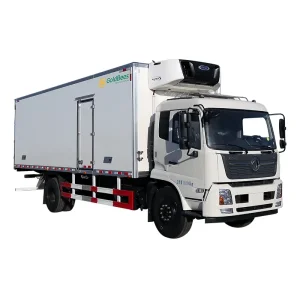

Analysis of thermodynamic control, biochemical isolation, and economic survival metrics in contemporary day-old chick (DOC) supply chain engineering.
Maintained across transcontinental routes exceeding 1,200 km through dynamic micro-environment compensation.
Multi-zone forced negative-pressure laminar airflow prevents heat pockets throughout cargo decks.
Automated sensor-triggered purge ventilation mitigates chick lethargy, yolk sac retention, and early mortality.
Medical-grade HEPA filtration units eliminate aerial cross-contamination during transit across agricultural corridors.
Historical poultry transport relied heavily on natural draft flaps and rudimentary mechanical exhaust blowers. Modern biological science demonstrates that day-old chicks lack autonomous thermoregulation during the first 72 hours post-hatch. The transition to fully hermetic, multi-stage HVAC systems balances sensible heat generation (approximately 0.15–0.25 W per chick) with fresh oxygenation, eliminating both dehydration and hypothermia.
With Highly Pathogenic Avian Influenza (HPAI) and Salmonella threats exerting immense financial pressure on global hatcheries, transport trucks are no longer mere rolling boxes—they serve as mobile biosafety containment units. Modern chicken seedling trucks feature seamless FRP inner liners, IP69K washdown resistance, and chemical aerosol decontamination loops to stop inter-farm transmission vectors.
Leading enterprise poultry operations require transparent data assurance for every hatch delivery. Cloud-interfaced IoT architectures monitor cockpit and box conditions across hundreds of payload coordinates. Automated alert triggers notify drivers and fleet dispatchers instantly of ambient drift, fan stalls, or humidity anomalies, ensuring verifiable welfare compliance for commercial audits.
How Tier-1 integrators mitigate capital risks, reduce Total Cost of Ownership (TCO), and satisfy international animal welfare benchmarks through precision vehicle engineering.
Procurement Challenge: Dehydration during highway haulage directly degrades day-7 chick survivability and overall Feed Conversion Ratio (FCR). Even a 2% body mass loss in transit hampers future broiler development.
GoldBees Engineering Solution: Closed-loop vapor micro-injection keeps relative humidity strictly bounded at 55%–65% RH. Laminar air distribution eliminates localized draft desiccation, preventing moisture evaporation from sensitive chick lungs and yolk reserves.
Procurement Challenge: Escalating diesel expenditures require maximizing bird haulage capacities (80,000 to 120,000 DOCs per truck) without breaching regional axle weight restrictions or compromising stability.
GoldBees Engineering Solution: Monocoque aerospace-grade aluminum alloy framework bonded with high-pressure polyurethane composite sandwich panels. Cuts tare weight by up to 22% compared with traditional steel panels while increasing thermal resistance to R-value 25+.
Procurement Challenge: A single generator breakdown or belt failure on a remote transit route can cause thermal suffocation of an entire chick payload worth hundreds of thousands of dollars within thirty minutes.
GoldBees Engineering Solution: Fully redundant auxiliary diesel-electric generator pairs linked with automatic failover transfer switches. If primary cooling or ventilation fails, auxiliary backup initiates in under 1.5 seconds with driver audio-visual cues.
Our dedicated vehicle architectures are tailored to meet stringent localized operating environments, environmental protocols, and safety standards globally.
Our transport bodies integrate seamlessly with premier global and domestic commercial chassis platforms, including Volvo, Scania, Mercedes-Benz, MAN, Isuzu, FAW, and Sinotruk. Power Take-Off (PTO) hydraulics, CAN-bus electrical connectors, and subframe bolt configurations adhere strictly to manufacturer mounting guidelines.
From high-humidity tropical sectors across Southeast Asia to sub-zero high-latitude winter routes in Northern Europe and North America, GoldBees units deploy specialized thermal packages. Thermal profiles include supplemental hydronic heating units (Webasto/Eberspächer), independent tropical condenser coil arrays, and heavy-duty dust centrifuges.
Designs strictly reflect EU Council Regulation (EC) No 1/2005 on animal welfare in transit, guaranteeing continuous volumetric air exchange rates (minimum 45 m³/h per 1,000 day-old chicks). Certified by CE industrial safety directives, ISO 9001 quality audits, and ATP international perishable transit provisions.
Strategic milestones in electrified powertrains, AI-driven climate optimization, and automated bio-handling systems developed in partnership with leading agricultural research institutes.
Integration of forward route topography and weather forecasts into vehicle thermodynamic controllers. Pre-cools or pre-heats compartments ahead of elevation climbs or sudden weather changes.
Full commercialization of purpose-built pure electric chicken seedling transport trucks. Electric PTO architectures power air compressors and heat pumps with zero tailpipe emissions on farm grounds.
Internal motorized conveyor floors and robotic dock synchronization eliminate human crate-carrying inside the van body, reducing transit loading time by 65% and preventing bio-vector breaches.
Autonomous closed-loop vaporized hydrogen peroxide (VHP) dry-fogging cycles coupled with UV-C air scrubbers activate upon chick discharge, sanitizing the compartment to pharmaceutical grades.
Detailed technical, compliance, and warranty clarifications for corporate fleet managers and agricultural engineers.
We employ a negative-pressure, multi-channel ceiling duct distribution system paired with floor-level return plenums. Conditioned air is pushed evenly over chick boxes rather than directly blasted onto them, ensuring thermal variance never exceeds ±0.5°C across all tiers, eliminating hot spots and chilling risks.
Interior panel surfaces are manufactured from seamless, non-porous antimicrobial fiberglass reinforced plastics (FRP) with radiused corner joints. All interior electrical lines, smart sensors, and linear actuators are IP69K rated to endure repeated high-pressure hot water and caustic quaternary ammonium washes.
Yes. Every compartment interior layout is CAD-modeled specifically around your operational crate sizes (standard plastic, cardboard, or nesting trays) and transport trolleys. Adjustable internal retaining rails, anti-rebound latches, and hydraulic tailgates are customized to your specific loading dock workflow.
Our on-board IoT telemetry gateway logs real-time temperature (multi-probe), relative humidity, CO2 ppm levels, door access status, fan RPMs, GPS location, and vehicle speed. Data synchronizes continuously to the cloud and can be directly exported to your company's ERP for full quality traceability.
Complementary transport technologies and high-capacity equipment lines supporting end-to-end livestock logistics across international agribusiness complexes.



