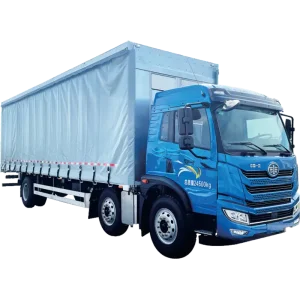
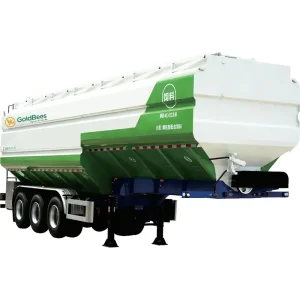
Industrial-grade precision engineering for modern day-old poultry delivery, bulk feed discharge, and temperature-controlled logistics networks.







The shift from conventional ventilated transit to intelligent HVAC biological containment is redefining hatchery survival margins and lifetime broiler feed conversion ratios.
Global commercial broilers and layers are centralized in mammoth hatchery complexes producing 500,000 to 2,000,000 chicks per week. Distribution radii have extended from local 50-kilometer hops to inter-provincial and transnational routes exceeding 1,200 kilometers. This spatial dispersion makes passive louvers obsolete, mandating self-powered multi-stage auxiliary climate control on proven commercial chassis platforms such as Foton Aumark and Auman.
Cross-contamination of Avian Influenza (HPAI), Salmonella Enteritidis, and Infectious Bronchitis (IBV) remains the primary operational risk for mega-integrators. Modern Foton-based chick carriers must serve as mobile biocontainment capsules, featuring sealed interior aluminum-alloy skins, welded seam joints, and positive air filtration units that prevent pathogen intrusion from outdoor roadside vectors.
A single transit load of high-value grandparent (GP) or parent stock (PS) chicks can represent inventory valuations exceeding $150,000 USD. A 2% reduction in transit mortality and dehydration-induced morbidity offsets the procurement premium of an advanced Foton specialized chick transport vehicle in under 14 operating months, transforming fleet procurement from a cost burden into an operational margin protector.
Holistic thermo-fluid dynamics, redundant mechanical architectures, and smart IoT control systems engineered for extreme operating environments.
Utilizes pressurized roof duct plenums combined with variable-speed brushless circulation blowers to deliver uniform conditioned air down chick box stacks. This eliminates traditional 'dead micro-climate corners' where heat accumulation triggers fatal dehydration.
Equipped with an independent Cummins/Perkins diesel auxiliary power unit (APU) backed up by high-voltage vehicle power take-off (PTO). If the primary truck engine fails on remote highways, environmental control continues uninterrupted for over 48 hours.
Automated Proportional-Integral-Derivative heating and cooling logic dynamically coordinates fuel-fired heaters, liquid chillers, and fresh air intake louvers to maintain a strict 24.0°C to 27.5°C cabin atmosphere regardless of external weather volatility.
Box interiors feature IP67-rated electrical harnesses, seamless composite flooring, anti-corrosive stainless fasteners, and negative pressure UV germicidal irradiation modules, withstanding high-pressure thermal foaming sanitization.
Field deployment case models: Customizing HVAC and chassis configurations across tropical humidity, sub-zero winters, and unpaved farm access roads.
In regions with ambient temperatures reaching 42°C and 90%+ relative humidity (such as Thailand, the Philippines, and Brazil), Foton vehicles are outfitted with twin heavy-duty tropicalized rooftop chillers, desiccant air drying units, and reinforced polyurethane sandwich panels (thermal conductivity <0.024 W/m·K) to prevent asphyxiating condensation and thermal stress.
Operating across deserts and mountains (Saudi Arabia, Kazakhstan, Western China) requires dual-stage cyclonic desert engine air intake filters, multi-stage HEPA G4 dust pre-filters for fresh air intakes, and fuel pre-heaters to safeguard operations against rapid 30°C day-to-night temperature drops.
Sub-zero operation (-30°C) demands independent hydronic diesel cabin heating manifolds, heat exchanger recycling loops, and heated defroster louvers to guarantee that sensitive chick boxes along perimeter body walls remain within physiological comfort boundaries without freezing drafts.
Xinbaiqin Special Vehicle Co., Ltd. (CP M&E) aligns vehicular hardware with industrial agri-processing systems to maintain unbroken bio-security barriers.
Direct interface engineering between commercial hatcher sorting lines and vehicle deck layouts. Custom loading ramps, multi-tier pneumatic tail lifts, and locking tracks securely anchor chick carton dollies to prevent transit shifting and stress during sudden highway braking events.
Each Foton transport unit transmits live data feeds to headquarters via 4G/5G IoT gateways. Fleet managers track cabin air temperatures, static pressure gradients, relative humidity, oxygen/CO2 concentrations, driver acceleration curves, and door lock interlocks in real time.
Benefiting from decades of direct engineering integration inside Charoen Pokphand Group's international feed mills, breeding complexes, and meat processing supply chains, our vehicles are engineered and refined by active field practitioners, not catalog assemblers.
Detailed technical answers for operational managers and fleet procurement specialists evaluating high-performance Day-Old Chick transporters.
Standard refrigerated vans operate on closed loops designed to preserve dead freight, relying on cold air circulation without fresh air exchange. Day-old chicks are living, respiring biological entities that generate high metabolic heat (approx. 0.1 to 0.15 watts per chick), rapid carbon dioxide, and significant moisture. Foton specialized chassis configurations incorporate secondary auxiliary generators, heavy-duty alternators, high-volume variable fresh air intake ports, and CO2 exhaust duct systems essential for biological survival.
When the vehicle stops in traffic, the independent onboard APU generator maintains total electrical power for the ventilation blowers and chillers. Differential atmospheric pressure sensors and nondispersive infrared (NDIR) CO2 monitoring arrays trigger automated roof discharge exhaust fans whenever CO2 concentrations exceed 1,500 ppm, pumping in conditioned, pre-filtered fresh air without relying on truck movement.
The box interior is manufactured from anti-corrosive marine-grade fiberglass reinforced plastic (FRP) and continuous-welded seamless aluminum floor pans. The entire electrical wiring network uses IP67/IP69K sealed connectors. Fleets can safely apply high-pressure water blasting (up to 70 bar), thermal disinfectant chemical foaming, and hot drying without risking moisture penetration into insulation cores or electrical junction boxes.
Yes. We engineer bespoke vehicle superstructures adapted to Foton Aumark (4x2 rigid light/medium-duty) or Foton Auman (6x2, 8x2, and 6x4 heavy platforms, including semi-trailers). Body internal track rail spacing, floor ramps, dolly retention mechanisms, and payload dimensions are drafted around customer-specific plastic chick box dimensions and processing facility layouts.
Comprehensive vehicle solutions supporting agricultural distribution, modern breeding facilities, and food-grade supply lines.