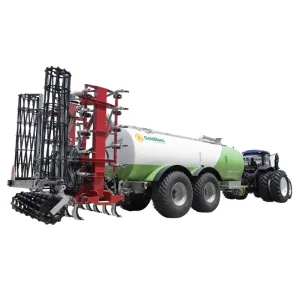
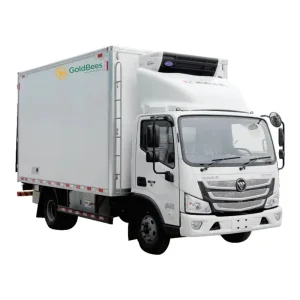
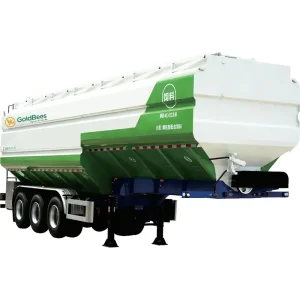
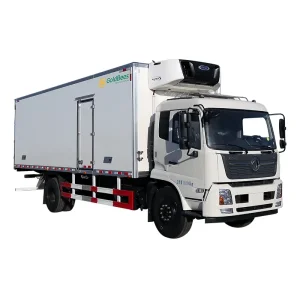
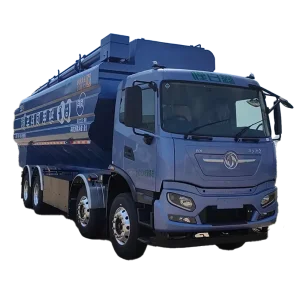
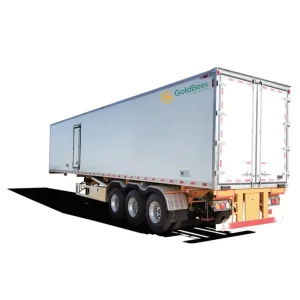
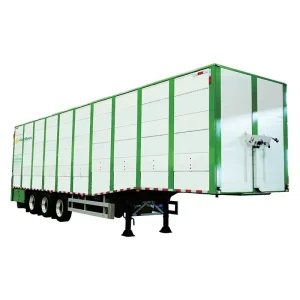
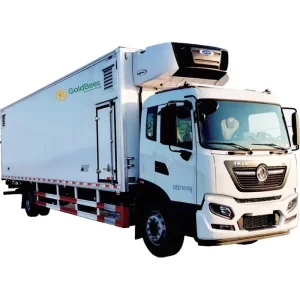
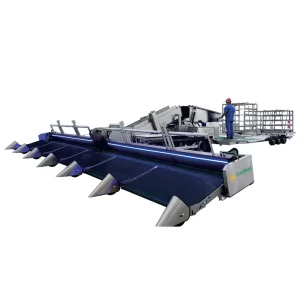
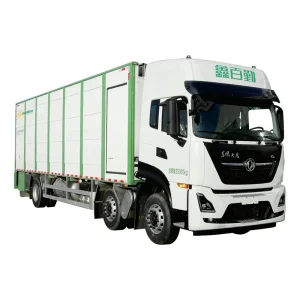
Explore our foundational series of mobile auger elevators, liquid nutrient spreaders, and heavy-duty cold chain platforms manufactured to stringent biosecure standards.
Analyzing the pivotal mechanical transition from manual intake to high-throughput, hermetically sealed ground-to-silo conveying systems in contemporary animal nutrition logistics.
By shifting delivery couplings to the outer security perimeter via underground or ground-level pneumatic transfer pipelines, heavy off-site logistics trucks avoid penetrating the sanitary farm boundary entirely, mitigating cross-farm transmission vectors.
State-of-the-art ground feeding conduits apply optimized curve radii and managed friction liners, preserving the Pellet Durability Index (PDI > 96%) and curbing the formation of fines that compromise animal gut health and feed intake rates.
Integrated load-cell feedback loops and pneumatic variable-speed frequency drives modulate conveying air-to-material ratios in real time, preventing pipeline bridging, choked discharge elbows, and motor overcurrent trips.
From mechanical friction screws to multi-stage dense phase pneumatic transport: how precision automation and environmental standards are reshaping animal nutrition infrastructure.
Modern ground feeding installations are transitioning from tractor PTO mechanical linkages to closed-loop electric drives managed by programmable logic controllers (PLC). Real-time telemetry tracks phase amperage, bearing vibration frequency, and pipeline static pressure. Integrated cloud connectivity automatically alerts operators to flight wear, auger deflection, or motor thermal spikes before terminal mechanical failure occurs.
Feed dust generated during rapid ground transfer represents an acute deflagration hazard. Tier-1 manufacturers now construct ground feeding hoppers, rotary valves, and pneumatic airlocks with certified ATEX Zone 21/22 and NFPA 61 compliance. This involves flame-arresting quick-action slide gates, heavy-gauge antistatic polymer ducting, and grounding interlocks that prevent unloading if electrical bonding is unverified.
While dilute phase conveying (high air velocity, low material concentration) dominated previous decades, modern high-capacity ground feeding embraces dense phase conveying. Operating at velocities under 8 m/s with a high solids-to-gas ratio, dense phase systems significantly decrease internal pipe scuffing, suppress dust generation, and prevent lipid-enriched pelleted feeds from melting or de-mixing during vertical transport.
Evaluating Capital Expenditure (CAPEX) versus Operational Expenditure (OPEX) metrics across mega-integrators, commercial feed processors, and livestock cooperatives.
| Performance Pillar | Conventional Market Baseline | Premium Engineering Benchmark (GoldBees / Xinbaiqin) | Quantified Commercial Impact |
|---|---|---|---|
| Wear Liner Longevity | Carbon steel Q235, 3-4mm (fails in ~24 mos) | Ultra-high-molecular-weight PE / Hardox 450 (8-10mm) | Eliminates $14,000 in scheduled bi-annual pipe relining downtime |
| Pellet Breakdown Rate | 3.5% - 6.0% additional fines per cycle | < 0.5% additional fines across 30-meter elevation | Saves $65,000 annually per 100,000 broilers in recovered FCR |
| Biosecure Turnaround | Manual dry sweeping + open hose wash (2 hrs) | Clean-In-Place (CIP) sealed steam & chemical sanitization | Recovers 1.5 trailer round-trip cycles per operating day |
| Acoustic & Dust Footprint | > 88 dBA, uncontained particulate plume | < 74 dBA sound-dampened housing, zero-emission seals | Ensures full compliance with strict suburban environmental permits |
Inside Xinbaiqin Special Vehicle (CP M&E): Leveraging vertical integration, advanced robotics, and comprehensive metallurgy to guarantee structural durability.
Tolerances for internal auger housings must remain within ±0.5mm across an 11-meter length to avoid internal friction and material shear. Multi-axis CNC robotic fiber laser cutters sculpt complex flighting profiles from continuous high-tensile steel plate, eliminating stress concentration points and micro-cracking common in manual plasma cuts.
Heavy tubular transfer columns and vehicle-mounted tank bodies undergo automatic continuous submerged-arc welding (SAW). This process generates deep, uniform penetration without slag inclusion or gas porosity, yielding airtight vessel walls that withstand both positive pneumatic pressures and intense road torsion.
Feed dust mixed with atmospheric moisture creates highly corrosive organic acids. Xinbaiqin subjects all welded chassis, transfer legs, and steel modules to complete immersion zinc-phosphate pretreatment, cathodic electro-deposition (E-coating), and two-pack polyurethane topcoats, surpassing 1,500 hours of neutral salt spray testing (ASTM B117).
Adapting ground feed intake and conveyance engineering to contrasting geographical, regulatory, and infrastructural realities across international markets.
Integrators require massive conveying rates (> 70 tonnes/hour) to minimize driver standby charges. Equipment must comply with DOT bridge formulas, featuring ultralight aluminum alloys, dual-drive electro-hydraulic augers, and automated hydraulic boom swing capabilities operable from within the cab via wireless remote consoles.
Extreme focus on decibel containment (< 72 dB at 7 meters) and zero-emission delivery in agricultural corridors. NEV electric bulk feed trucks powered by lithium-iron-phosphate (LFP) battery packs power low-noise electric screw motors, eliminating diesel idling emissions near sensitive multi-tier layer complexes.
High ambient humidity (exceeding 85% RH) and persistent tropical heat accelerate feed cake accumulation and mold proliferation inside transport tubes. Equipment demands marine-grade SS304/SS316 stainless contact surfaces, rapid-access cleanout slide doors, and dehumidified pneumatic conveying air intercoolers.
Extreme ambient temperatures (approaching 50°C) degrade standard hydraulic oils and elastomer seals. Systems are engineered with oversized industrial oil coolers, dual tropicalized fan stages, high-efficiency sand filtration cyclones, and UV-stabilized polyurethane electrical conduits.
Review our specialized poultry harvesters, multi-deck live animal logistics trailers, and integrated turnkey feed mill handling assets.
Examining operational parameters inside landmark projects spanning mega-scale layer egg complexes, elite swine genetic hubs, and regional feed distribution loops.
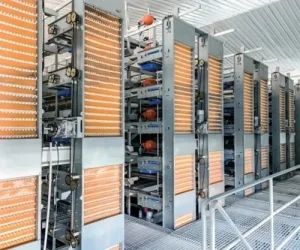
Challenge: Delivering 180 tonnes of formulated layer mash daily to multiple 8-tier vertical housing units across strict sanitary buffer zones without dust contamination.
Engineering Solution: Implementation of dedicated perimeter ground reception hoppers coupled to automated 40-tonne/hour dense-phase pneumatic lifters. Bulk trucks discharge outside the house perimeter, reducing external vehicle visits inside the barn rows to absolute zero.
Challenge: Absolute biosecure exclusion of swine respiratory and digestive pathogens. Total avoidance of driver interaction with internal farm structures during drop-offs.
Engineering Solution: GoldBees multi-compartment auger semi-trailers fitted with wireless RF link discharge booms and CIP high-temperature chemical mist nozzles. Drivers mate closed-loop ground couplings without leaving their vehicle cabs, followed by automatic dry-break purging.
Challenge: High-frequency rural transport spanning mountainous terrain, requiring extreme vehicle chassis rigidity and dual-mode auger/pneumatic discharge flexibility.
Engineering Solution: Hybrid GoldBees bulk feed semi-trailers engineered with high-strength structural steel chassis and electro-hydraulic auxiliary power units (APU). Vehicles can unload either via overhead hydraulic auger into traditional silos or via bottom pneumatic pressure into sealed farm intake bins.
Direct technical answers addressing system integration, throughput capacities, maintenance requirements, and custom chassis specifications.
Mechanical screw auger systems convey material by the rotational force of continuous helical flights within a steel casing, offering high mechanical energy efficiency (> 85%) and substantial volumetric throughput for short-to-medium elevations up to 15 meters. However, augers contain wearing contact parts and require straight-line runs. In contrast, pneumatic ground feeding systems utilize clean air velocity (dilute or dense phase) generated by roots blowers to fluidize and push feed pellets through flexible or curved pipeline networks over distances exceeding 100 meters. Pneumatics excel in biosecure perimeter delivery and complex routing, though they consume slightly higher electrical power per conveyed tonne.
Cross-batch contamination is mitigated through three structural features: First, multi-compartment hopper tanks feature isolated knife-gate valves with zero bottom pockets where residual pellets can stall. Second, horizontal trough augers are fitted with bottom cleanout trapdoors operated by pneumatic cylinders for rapid pneumatic evacuation between loads. Third, our blow-through rotary airlocks feature polished anti-stick rotor pockets and pressurized air-purged shaft seals that clear all micro-particulates after each batch transfer sequence.
Yes. Xinbaiqin regularly executes CKD (Completely Knocked Down) and SKD (Semi-Knocked Down) engineering supply contracts. Our specialized feed delivery superstructure, subframes, hydraulic pumping groups, and electronic PLC switchgear are engineered to bolt seamlessly onto major global commercial truck chassis including Mercedes-Benz Actros, Volvo FH/FM, Scania, MAN, Isuzu Giga, and FAW/Dongfeng configurations. We provide comprehensive CAD subframe mounting drawings, hydraulic interface blueprints, and CAN-bus electrical interface harnesses for localized assembly.
Key maintenance procedures involve: (1) Periodic verification of auger flight thickness using ultrasonic gauges at high-wear elbow junctions every 500 operating hours; (2) Greasing of high-temperature double-row spherical roller bearings via automated central lubrication banks; (3) Weekly inspection of rotary airlock flexible rotor tip clearances, adjusting shims to maintain the 0.10mm gap necessary to prevent pneumatic bypass leakage; and (4) Calibration of inline load-cell transducers and pressure safety release valves every 6 months to guarantee precise flow telemetry and overpressure protection.
All international export shipments are accompanied by comprehensive compliance dossiers, including European CE Machinery Directive declarations (2006/42/EC), ATEX compliance certificates for dust-ignition prevention where specified, ISO 9001:2015 quality control certificates, mill test certificates (MTC) verifying steel metallurgy (EN 10204 3.1), and complete English-language operation, maintenance, and hydraulic schematics. Full container loading inspection reports and ocean transport anti-corrosion barrier packaging documentation are systematically provided.