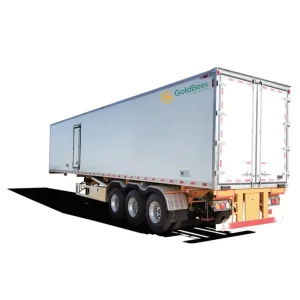
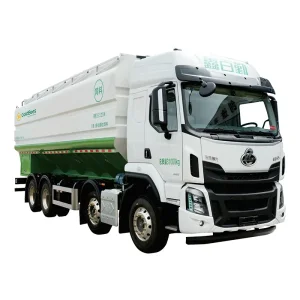
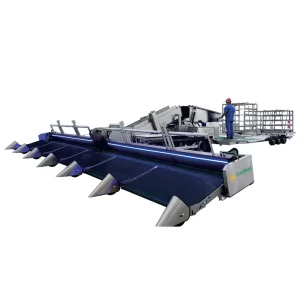
Engineered by Xinbaiqin Special Vehicle (GoldBees) to eliminate transit mortality, optimize liveweight retention, and fulfill strict international biosecurity mandates.


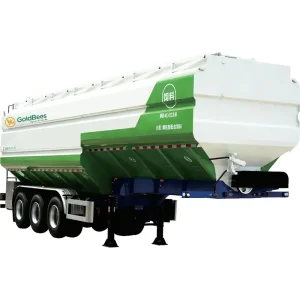

Live poultry transit has evolved from standard open-slatted crate hauling into a hyper-controlled thermodynamic mobile cleanroom operation governed by stringent biosafety protocols.
Global poultry production across APAC, Europe, and the Americas is consolidated within high-density agro-industrial conglomerates. Modern operations demand daily synchronized transport moving upwards of 200,000 birds from hatcheries to grow-out houses and processing plants without compromising biosecurity perimeter seals.
Thermal variance inside transit trailers causes dehydration, metabolic stress, and dead-on-arrival (DOA) financial write-offs. Leading corporate logistics groups now enforce active climate-regulated poultry trailers to stabilize bird body core temperatures, directly retaining live harvest weight margins by 1.8% to 3.2% per shipment.
Outbreaks of Highly Pathogenic Avian Influenza (HPAI) have forced logistics design away from porous wood and low-grade iron frames. Modern trailers integrate non-porous 6061-T6 aluminum alloys and automated CIP (clean-in-place) interior plumbing designed to withstand heavy caustic washdowns without micro-fissuring.
Discover how the integration of automation, lightweight structural design, and digital telemetrics is transforming poultry transport logistics.
Traditional passive curtain haulers rely entirely on truck road speed to push air across crates, resulting in stagnant suffocation pockets during traffic halts. Next-generation transport trailers utilize high-output DC brushless induction fan arrays combined with honeycomb diffusers, creating uniform positive/negative pressure laminar circulation that exchanges total internal trailer air volume every 45 to 65 seconds.
Strict axle-load limits worldwide directly restrict the number of birds transportable per journey. By shifting to aeronautic-grade extruded aluminum chassis crossmembers and robotically welded profiles, tare weight is slashed by up to 28% compared to structural steel. This weight reduction unlocks maximized legal bird density without exceeding regulatory per-axle gross vehicle weight limits (GVWR).
Modern fleet dispatchers cannot afford environmental blindspots. Industrial trailers now embed multi-point NDIR CO₂ sensors, relative humidity (RH) probes, and infrared poultry surface temperature scanners. These sensors continuously stream real-time data to driver telematics screens and central cloud ERPs, triggering auto-adjusting fan speeds, water mist cooling nozzles, or supplementary heating systems instantly.
Manual catching causes high rates of wing dislocation, bone breakage, and breast muscle bruising. Emerging poultry logistics architectures integrate automatic chicken harvesters directly with self-aligning hydraulic trailer decks. Palletized drawer systems are loaded seamlessly via powered lifters, decreasing operational turnaround times at the grow-out shed by over 55%.
Climate patterns, route topographies, and jurisdictional welfare laws dictate divergent engineering demands for poultry logistics across worldwide territories.
Exotic ambient conditions reaching 48°C demand high-capacity evaporative wet-curtain cooling, high-pressure sanitizing mist injectors, and reflective polyurea exterior coatings. Trailers operate independent diesel auxiliary power units (APU) ensuring relentless HVAC cooling during farm quarantine checkpoints or extended border stops.
Freezing environments risk widespread pulmonary frostbite and flock mortality. Trailers deployed in these latitudes feature closed-circuit insulated sandwich wall panels (35mm PU foam core), modulated heated ventilation air-ducts recuperated from tractor engine heat, and thermostatically regulated intake shutter louvers.
Compliant with EC 1/2005 animal protection norms, these trailers feature mandatory continuous internal temperature datalogging, calibrated acoustic noise suppression (fans rated under 65 dB), high-headroom deck clearances, and automated satellite tracking that transmits trailer microclimate logs directly to regulatory veterinary inspection portals.
Xinbaiqin / GoldBees designs equipment within the broader electromechanical farming framework of Charoen Pokphand Group (CP M&E), unifying farm, feed mill, and abattoir operations.
Trailers serve as a primary physical barrier. Internal plumbing, deck structures, and ventilation channels are hydro-dynamically optimized without blind corners, enabling fast thermal baking disinfection cycles (up to 70°C for PRRS and Avian Flu virus eradication) without degrading electronic harnesses.
Industrial agricultural transport is notoriously harsh on vehicles. GoldBees incorporates electro-coating (cataphoretic dip primers), hot-dip galvanized suspension mounts, and marine-grade stainless hardware, extending trailer operational life cycles past 12 years with lowest life-cycle total cost of ownership (TCO).
Trailers are fully integrated into broader agricultural production setups. From bulk pneumatic feed semi-trailers discharging directly to silo arrays, to automated chicken harvesting equipment and multi-temperature cold chain trailers, fleet hardware is unified under shared software architectures.
The strategic innovation vector focuses on net-zero agricultural logistics, AI microclimate controls, and autonomous modular docking systems.
Scale dedicated 800V high-voltage commercial battery electric chassis architecture for short-haul feed delivery and broiler logistics, eliminating all yard diesel idling emissions.
Deploy edge-computing microcontrollers processing real-time highway meteorological data, road congestion forecasts, and flock metabolic loading to dynamically pre-cool trailer compartments.
Interface trailers directly with automated processing plant receiving bays, eliminating manual forklift operations via automated self-rolling hydraulic pallet decks.
Integrate immutable encrypted onboard RFID event logs verifying strict continuous temperature and sanitation cycles across every transport stage for global food export compliance.
Technical and procurement clarifications for industrial fleet managers, farm integrators, and equipment distributors.
All poultry and livestock units are manufactured with seamless, high-tensile 6061-T6 aluminum or laser-welded stainless alloys. Internal electrical wiring is hermetically sealed within IP69K-rated conduits. Internal surfaces withstand harsh pressurized sanitizers, and high-temp disinfection baking cycles ensure full viral neutralization between transport loads.
We configure straight trucks and multi-axle semi-trailers handling between 6,000 to over 15,000 broilers per run depending on regional gross vehicle weight restrictions (GVWR). Configurations feature modular multi-tier aluminum crate layouts, hydraulic tail-lifts, and automated drawer loading adapters matching major harvest machinery.
Yes. For regions with extreme ambient heat or potential transit hold-ups, GoldBees trailers can be optioned with independent onboard diesel generator sets (APUs) or high-capacity lithium iron phosphate (LiFePO4) battery packs. These power cooling fans, water atomizers, and sensors continuously, regardless of tractor engine state.
Standard lead times range from 35 to 60 days depending on the level of chassis customization and climate package specifications. We provide complete homologation documentation, including CE certification, ISO9001 compliance certificates, and export documentation for seamless customs clearance worldwide.
Complete your supply chain ecosystem with factory-direct solutions engineered to lower operation costs across feed-to-food processing.