

Engineered to comply with stringent biosecurity regimes, ATP continental international transit treaties, and continuous closed-loop temperature performance.




The refrigerated truck sector is undergoing a generational shift driven by sustainability goals, digital biosecurity requirements, and the globalization of perishable value chains.
The contemporary cold chain transport environment demands thermal integrity paired with structural efficiency. Traditional wet-bonded sandwich panels have given way to vacuum-infused, continuous-press polyurethane (PU) formulations stabilized by fiber-reinforced polymer (FRP) and aviation-grade aluminum substructures. As a premier reefer refrigerated truck factory, our manufacturing philosophy eliminates thermal bridging by implementing broken-bridge polyurethane profiles and high-density, closed-cell extruded polystyrene (XPS) internal reinforcements.
By engineering insulated bodies that maintain a verified heat transfer coefficient (K-factor) under 0.38 W/m²K, fleet operators achieve a measurable 22% reduction in compressor runtime. In heavy-duty distribution scenarios, reduced thermal conductivity correlates with fuel economy, lower carbon output, and prolonged compressor operating life, providing defense against product degradation across demanding inter-provincial shipping corridors.
Addressing strict city-center emission restrictions and global net-zero commitments, our production ecosystem incorporates high-capacity lithium iron phosphate (LFP) battery architectures, delivering standalone, zero-emission multi-temperature control systems without engine idling dependencies.
Integrated IoT nodes monitor real-time temperature, humidity, air quality index (AQI), and defrost cycles. Automated cloud-based telemetry tracks door actuation counts and issues pre-failure diagnostics to safeguard perishable inventory before arrival.
In biological transport—such as day-old chicks and livestock—surfaces must withstand harsh cleaning and chemical washdowns. Smooth non-porous antimicrobial resins and fully sealed IP67/IP69K wiring keep sanitation workflows repeatable and durable.
Procurement officers evaluate Total Cost of Ownership (TCO), multi-zone adaptability, payload-to-tare ratio, and direct manufacturing accountability.
Acquisition cost makes up less than 28% of total lifetime operational expenditures. Precision refrigeration sizing, aerodynamic cab-to-box profiling, and lightweight composite walls curb fuel consumption and mechanical wear across multi-hundred-thousand-kilometer service runs.
Modern grocery, dairy, and pharmaceutical logistics rarely support single-temperature itineraries. Movable insulated transverse bulkheads, secondary evaporators, and dual-zone airflow systems allow frozen, chilled, and ambient cargo to coexist within one run without cross-contamination.
Fleet operations must maintain standard vehicle brands regionally. Our engineering facility custom-adapts mounting subframes, hydraulic drives, and auxiliary alternators across major chassis platforms, including Volvo, Scania, Isuzu, FAW, Foton, and Sinotruk.
Xinbaiqin Special Vehicle (associated with CP M&E of Charoen Pokphand Group) provides customized transport assemblies for demanding food supply chains.
Animal welfare directly impacts mortality rates and carcass yield. GoldBees livestock transporters combine multi-tier hydraulic lift decks, high-volume negative-pressure ventilation fans, built-in misting nozzles, and drinking water manifolds to maintain calm environments over 1,500+ km transfers.
Eliminating post-harvest heat quickly preserves shelf life. Our combined produce sorting and transport vehicles feature integrated sorting platforms, variable speed floor conveyors, and rapid cooling circulation to stabilize fruit and vegetables directly at harvest hubs.
For temperature-sensitive vaccines, insulin, and active biological reagents, our premium bodies maintain tight tolerances within ±0.5°C using dual-redundant refrigeration, backup battery setups, and real-time electronic data logging conforming to international Good Distribution Practice (GDP) protocols.
Every reefer body undergoes thermal leak testing, structural stress analyses, and environmental exposure protocols before export deployment.
Operating inside an expansive 66,667 m² facility in Cixi, Zhejiang, Xinbaiqin blends advanced industrial automation with end-to-end quality control. Subframe weldments rely on high-precision robotic metal active gas (MAG) cells, ensuring resilient welds that handle rough, unpaved farm access roads. Our multi-layer sandwich panels are assembled under high-tonnage vacuum negative-pressure presses, eliminating interior voids that can degrade insulation over extended fleet service.
Before shipment, completed vehicles undergo 360-degree high-pressure water testing to verify weatherproof seals, accompanied by 24-hour continuous cold testing to certify temperature pull-down rates, defrost cycles, and sensor calibration. This testing baseline satisfies ISO 9001, CE, and ATP Class FRC thermal criteria for cross-border logistics.
Designed to align with ATP Class FRC designations (-20°C carrying at +30°C ambient). Heavy-duty wall systems, multi-lip EPDM door seals, and reinforced corner castings minimize cold loss across long routes.
Cargo areas feature food-grade seamless gel-coat fiberglass surfaces that resist biological growth and chemical cleaners, with extruded aluminum T-flooring designed for balanced airflow and rapid sanitization.
Comprehensive technical documentation, homologation support, spare parts packages, and engineer-backed remote diagnostics ensure smooth fleet rollouts across Southeast Asia, Europe, the Americas, Africa, and Australia.
How our R&D team addresses emerging cold chain challenges with low-GWP refrigerants, advanced composites, and automated harvesting technologies.
Anticipating bans on high-GWP HFCs (such as R404A and R452A), we are engineering modular refrigeration circuits compatible with natural R744 systems and ultra-low GWP synthetic options, ensuring regulatory compliance worldwide.
Integrating silica aerogel layers and PCM eutectic thermal accumulators into insulated walls provides up to 10 hours of passive temperature stability during unexpected compressor shutdowns or long loading pauses.
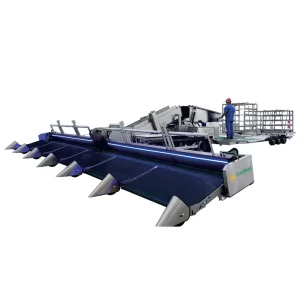
Connecting specialized poultry transport bodies directly with our intelligent automated chicken harvesters reduces bird catching stress, speeds loading times, and preserves flock health before transit.
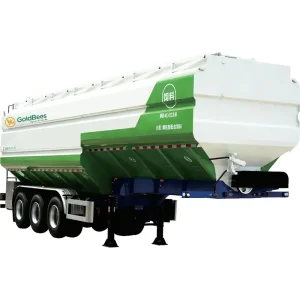
Explore additional specialized semi-trailers, bulk feed trucks, and intelligent harvesting platforms engineered for enterprise operations.



Practical answers covering core design, international certification, cold chain insulation, and custom manufacturing.