Explore our export-certified heavy commercial semi-trailers and specialized transporters built for stringent biosecurity, long-haul animal welfare, and optimal payload-to-tare ratios.

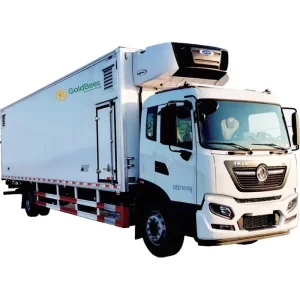





An exhaustive technical examination of structural transitions, regulatory compliance protocols, and total lifecycle value generation in contemporary animal protein supply networks.
Across the global animal protein sector, live animal transport has transitioned from a basic freight handling task into an exacting science combining veterinary medicine, biosecurity engineering, and aerodynamic mechanical architecture. Historically, livestock road haulage relied on open-sided wooden or steel stake trailers with rudimentary natural ventilation. These legacy configurations subjected swine, cattle, sheep, and poultry to severe environmental exposure, thermal stress, transport-induced dehydration, physical bruising, and pathogen vectors.
In modern intensive livestock integration, the vulnerability of open transport has proven unsustainable. Epizootic crises—such as African Swine Fever (ASF), Porcine Reproductive and Respiratory Syndrome (PRRS), Highly Pathogenic Avian Influenza (HPAI), and Foot-and-Mouth Disease (FMD)—demonstrate that unprotected transit routes serve as primary transmission superhighways between isolated production zones. Concurrently, rigorous legislative frameworks, such as the European Union's Council Regulation (EC) No 1/2005 on the protection of animals during transport and corresponding North American and Asian livestock welfare directives, mandate strict controls on interior temperatures, continuous hydration availability, headroom clearances, air turnover frequencies, and journey durations.
“Modern livestock logistics is no longer measured solely in freight cost per kilometer, but in survivability, carcass yield preservation, biosecure containment, and the elimination of pathogen transmission between production biomes.” — Xinbaiqin Technical Directorate.
The global manufacturing paradigm has shifted toward specialized multi-deck semi-trailers fabricated entirely from high-grade structural aluminum extrusions (such as 6005A-T6 and 6082-T6) and corrosion-resistant alloys. Aluminum structural construction offers three decisive operational advantages over carbon steel:
Closed-body configurations engineered with multi-stage primary, secondary, and H14 HEPA air filtration arrays prevent airborne virus ingress during highway transit near outside farming zones, with negative-pressure fan extraction expelling exhaled contaminants safely away from intake zones.
Precision cable-cylinder or direct-acting hydraulic ram lifters enable seamless, multi-tier loading (up to 4 decks for weaned piglets or 3 decks for finishing swine/sheep). Independent floor lock mechanisms secure each platform under dynamic highway acceleration without hydraulic backpressure creep.
Microprocessor-managed high-capacity water misting nozzles coupled with variable-frequency axial intake and exhaust fans dynamically stabilize temperatures within optimal thermoneutral ranges (15°C–25°C), mitigating heat stress and transit weight shrinkage.
Patented non-slip convex aluminum diamond treadplate decks incorporate continuous perimeter collection troughs and high-capacity waste accumulation tanks, fully isolating slurry leakage from road networks while facilitating 360-degree high-pressure chemical washdown cycles.
How GoldBees by Xinbaiqin combines CP M&E agricultural heritage with advanced automotive body engineering to resolve industry bottlenecks.
During extended transit, animals suffer dehydration, muscle fatigue, and elevated cortisol levels, resulting in up to 4%–8% live weight shrinkage and PSE (pale, soft, exudative) meat defects. Our Solution: Automated stainless steel nipple drinkers distributed throughout every compartment, combined with continuous fresh air turnover (up to 48 air changes per hour) and anti-vibration air suspension, limiting average shrinkage to under 1.2% on journeys up to 1,500 km.
Traditional wood or porous trailer flooring retains viral particles and bacteria, requiring lengthy manual washout times that reduce vehicle availability and increase farm infection risks. Our Solution: Hermetically welded internal joints, rounded corner radii, and wash-down sealed electrical harnesses (rated to IP69K) withstand 85°C high-pressure washing and chemical sanitizers, reducing total turnaround wash-and-bake cycle times by 60%.
Different international jurisdictions impose divergent axle weight distributions, overall vehicle heights, bridge clearance limits, and safety standards. Our Solution: Modular chassis layouts compatible with European standard 13.6m lengths, American 53ft highway standards, and Asian 11m–13.7m profiles. Chassis mounting options feature high-performance SAF-Holland or BPW air suspension axles with electronic braking systems (EBS) and roll stability support (RSS).
Primary Regions: Southeast Asia, Central America, Southern China.
Design Profile: Enhanced multi-fan extraction arrays, high-flow misting nozzles, UV-reflective exterior finishes, and high-capacity slurry collection tanks to manage excessive liquid output during humid transit.
Primary Regions: Northern Europe, Canada, Northern China.
Design Profile: 40mm thick insulated sandwich side shutters with electric/pneumatic proportional actuators, auxiliary diesel interior pre-heaters, anti-freeze water lines, and floor heating arrays to prevent animal hypothermia.
Primary Regions: Australia, Middle East, Western United States.
Design Profile: Heavy-duty dust pre-filtration cyclones, oversized primary water storage tanks (up to 800 liters), independent auxiliary generators, and heavy-duty tri-axle mechanical suspensions designed for rough corrugated roadways.
Primary Regions: Europe, East Asia, Mercosur.
Design Profile: Fully integrated telematics transmitting continuous compartment temperature, relative humidity, CO2 ppm, NH3 ppm, and GPS location via cellular/satellite to central biosecurity command centers.
Operating within CP M&E (the electromechanical equipment arm of the global Charoen Pokphand Group), Xinbaiqin Special Vehicle Co., Ltd. unifies heavy industrial fabrication with first-hand commercial farming expertise.
Complete deployment of 6000-series structural aluminum alloy profiles across all chassis and body systems, integrated with full CAN-bus sensor networks for real-time remote environmental reporting.
Equipping semi-trailers with integrated lithium-iron-phosphate (LFP) auxiliary power packs, enabling continuous ventilation, HEPA filtration, and temperature control during prolonged rest stops without tractor idling.
Integrating non-contact infrared thermal imaging for individual animal fever detection in transit, paired with onboard ozone/photocatalytic sanitization docks for instant automated decontamination cycles.
Key technical, regulatory, and engineering questions addressed by our chief commercial engineers to guide your fleet configuration decisions.
Our semi-trailers are engineered to satisfy both European EC 1/2005 standards and North American animal transport mandates. Each compartment features regulated headroom, integrated drinking nipples supplied by an onboard pressurized water system, continuous environmental sensors, and mechanical ventilation delivering up to 48 air changes per hour, preventing toxic ammonia or CO2 buildup.
Extruded 6005A and 6082 aluminum alloys provide high tensile strength with a 30% reduction in tare weight compared to steel. This weight reduction directly translates to increased legal payload capacity per haul. Furthermore, aluminum forms an inert natural oxide film that resists corrosion from swine urine and animal slurry, extending the semi-trailer operational lifespan beyond 15 years.
Our lifting decks are designed to move livestock safely between loading levels, featuring mechanical safety lock pins that secure each tier in transit. However, optimal operational practice is to walk animals directly onto each level as it aligns with the loading dock ramp to minimize animal agitation and hydraulic stress during fleet handling.
The system utilizes sealed vehicle architecture where all incoming fresh air must pass through G4 primary pre-filters and high-efficiency H14 HEPA filters that capture 99.97% of airborne particulate matter, including viral aerosols carrying PRRS, ASF, and Avian Influenza. Negative-pressure exhaust fans maintain a stable directional gradient, preventing untreated external air infiltration.
We configure semi-trailers to fit customer regional road codes, offering 2-axle, 3-axle, and 4-axle layouts equipped with premium BPW, SAF-Holland, or FUWA air-suspension axles. Braking configurations incorporate WABCO or Knorr-Bremse Electronic Braking Systems (EBS) with integrated Roll Stability Support (RSS) to deliver maximum dynamic stability on highway curves.
All internal structures feature smooth, seamless robotic welds, coved perimeter corners, and IP69K sealed electrical conduits. Waste flows through integrated floor drainage channels directly into sealed biological waste holding tanks. The interior structure withstands high-pressure washing at 85°C with caustic alkaline foams and formal hot-air drying/baking protocol stations up to 70°C.
Yes. As a direct design and manufacturing facility, we engineer semi-trailer overall dimensions (length, deck height, roof curvature, kingpin positioning) around your specific local regulatory framework, tractor fifth-wheel height, and route clearances while preserving interior volume and load balance.
Standard custom semi-trailers require an engineering fabrication cycle of 35 to 55 working days from final drawing approval. Export units are delivered via RORO (Roll-On/Roll-Off) vessels or specialized breakbulk shipping from Ningbo or Shanghai port, complete with full CE, CCC, and ISO documentation, structural warranties, and spare parts packages.
Engineered for high-volume integrators, industrial hatcheries, breeding networks, and processing facilities demanding long-term operational durability.




Planning a modern biosecure transport fleet or seeking high-payload aluminum semi-trailer designs for your regional routes? Connect directly with our international engineering team in Cixi, Zhejiang for customized blueprints, finite element analysis (FEA), and factory-direct export proposals.
