Explore GoldBees engineered transport and mobile cleaning assets engineered to withstand industrial thermal wash-down and high-throughput sterilization protocols.





Stringent global biosecurity mandates, African Swine Fever (ASF) vectors, and cross-border avian pathogens have shifted industrial washing from manual labor to high-precision robotic and automated CIP infrastructures.
Global animal husbandry operations face existential disease risks. Automated vehicular chassis wash stations and enclosed chamber sterilizers have transformed from capital luxuries to non-negotiable operational barriers required by multinational food integrators.
Conventional manual high-pressure washing wastes between 600–1200 liters of water per vehicle wash cycle. Modern ODM automated wash bays integrate multi-stage hydrocyclone recycling and automated titration to cut resource consumption by up to 72%.
Modern regulatory regimes require verifiable validation of every decontamination phase. Automated cleaning architectures capture dwell time, water temperature (up to 85°C thermal sanitization), and disinfectant ppm in tamper-proof IoT telemetry logs.
Backed by over 15 years of operational excellence in electromechanical fabrication and agricultural logistics across a 66,667 m² advanced manufacturing complex in Cixi, Zhejiang, China.
High-tensile robotically welded chassis, internal anti-corrosion polyurea coatings, and laser-profiled stainless steel delivery conduits withstand acidic, caustic, and thermal CIP cycles.
Formed directly through operational feedback from Charoen Pokphand Group’s extensive mega-scale livestock operations, guaranteeing field-tested durability over synthetic lab theories.
Electrical wiring harnesses, high-torque hydraulic motors, and sensor nodes are potted and shielded to endure direct 100-bar jet streams, thermal steam sterilizers, and toxic fogging.
End-to-end global supply chain services, ranging from custom CAD/CAM co-engineering and CE-certified fabrication to complete knocked-down (CKD) international container shipments.
Discover how custom-designed cleaning equipment, sanitation gates, and biosecure transport matrices eliminate biological risks across multiple tiers of modern industry.
Fully autonomous decontamination drive-through gantries deployed at external farm boundaries. High-impact undercarriage oscillating jets neutralize wheel-well pathogens, while electrostatic misting curtains envelop cabins with zero human intervention.
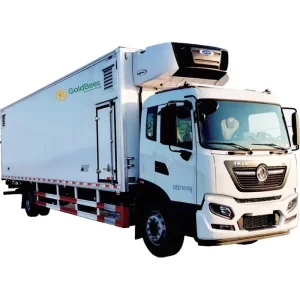
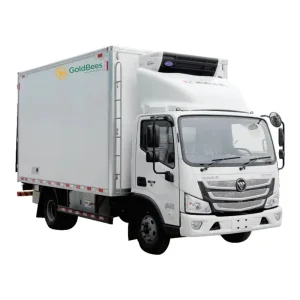
Integrated cleaning protocols for refrigerated reefers, slaughterhouse delivery trailers, and multi-temperature containers. Eliminates listeria and salmonella biofilms through automated alkaline foaming followed by high-temp sanitization rinse.
Eliminating mycotoxin and mold formation inside bulk delivery tanks. Specialized rotary cleaning spray heads (CIP) automatically scrub auger troughs and pneumatic lines between disparate formula batches, preventing cross-contamination.
Xinbaiqin R&D continues to lead the evolution toward unmanned, sensor-directed sterilization ecosystems. Review our engineering roadmap across system tiers.
Eliminating fixed nozzle blind spots. Multi-axis articulating spray rings dynamically contour to specialized vehicle silhouettes, delivering consistent 120-bar water knives directly against high-risk organic accumulation points.
Mechanical wash alone cannot guarantee virus denaturation. Integration of automated high-throughput drying bays that elevate internal cabin skin temps to 72°C for 30 minutes to achieve verified 99.999% pathogen inactivation.
Transitioning from timed cycles to AI verification. Overhead hyperspectral sensors examine post-wash vehicle surfaces, autonomously flagging retained bio-matter and directing localized secondary wash sequences automatically.
Advanced electrocoagulation and continuous ultrafiltration skids that reclaim 85%+ of wash water, self-monitoring detergent saturation and neutralizing biological sludge into eco-compliant solid waste.
Authoritative technical guidance for agricultural integrators, fleet managers, and procurement engineers planning global specialized wash and logistics infrastructure.
An original design manufacturer (ODM) delivers end-to-end design, custom tooling, structural CAD/CAM optimization, PLC automation programming, and production execution. Unlike simple assemblers, our engineering team tailors pump flow dynamics, stainless steel piping schematics, chemical injection dosages, and vehicle structural envelopes to meet specific biosecurity regulations, payload limits, and local road conditions worldwide.
Biosecurity is only as resilient as its weakest mechanical component. GoldBees vehicles are intentionally constructed with IP69K sealed wiring, flush anti-retention flooring geometries, sealed multi-compartment internal augers, and non-porous composite walls. This allows external automated gantry wash stations and internal clean-in-place (CIP) sprayers to sanitize vehicles in minutes without damaging sensitive electronics or mechanical drivetrains.
Yes. Our automated wash facilities utilize optical light curtains, ultrasonic proximity sensors, and programmable PLC arrays to map each vehicle's dimensional profile upon entry. Whether washing an NEV electric bulk feed carrier, a multi-tier pig transport truck, or a standard 13.5m refrigerated semi-trailer, the oscillating spray nozzles automatically adjust distance and spray geometry to ensure complete structural coverage.
Environmental stewardship is central to our design ethos. Our automated cleaning configurations integrate multi-stage hydrocyclone sediment separators, activated sludge biological digestion chambers, and sand-anthracite filtration banks. This closed-loop configuration recovers up to 80% of greywater for initial undercarriage degreasing cycles, reserving fresh RO water exclusively for final disinfectant application.
Every GoldBees specialty transport and integrated cleaning vehicle conforms strictly to international standards, including CE certification, ISO 9001 quality management, and regional vehicular homologation requirements. Furthermore, our collaboration within the CP M&E engineering ecosystem provides our global clients with responsive spare-parts logistics, remote PLC diagnostic support, and on-site commissioning.
Review additional models engineered for maximum efficiency, biosecurity longevity, and high-performance agricultural handling.



