Engineered for high hatchability retention, live embryo preservation, and uninterrupted farm-to-processing cold chain logistics.


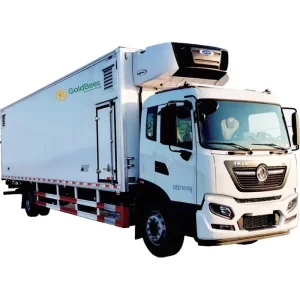

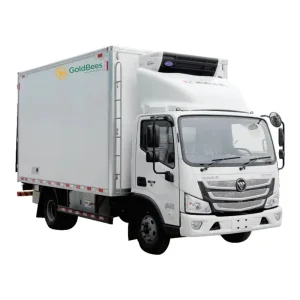

In modern industrial aviculture, incubator performance is not merely measured in mechanical run-time, but in physiological uniformity, chick livability index, and energy conservation across massive hatch volumes.
Industrial poultry production has transitioned almost universally from multi-stage incubation systems toward single-stage, all-in/all-out hatching paradigms. The bio-mechanical justification lies in the dynamic metabolic curve of the developing avian embryo. During the embryonic phase (days 1–9 for Gallus gallus domesticus), the egg acts as an endothermic organism requiring steady, homogeneous heat injection at precisely 37.5°C to 37.8°C (99.5°F–100.0°F) with strict relative humidity maintained between 53% and 58%.
As the vascularized chorioallantoic membrane expands past day 11, the embryo turns strongly exothermic, emitting metabolic heat that can induce catastrophic hyperthermia if directional multi-point laminar air circulation is missing. ODM incubator designs must deploy variable-frequency air sweep impellers, multi-channel thermal feedback sensors, and modulated chilled-water cooling grids. This level of precise thermal control ensures that embryonic shell temperatures never exceed the critical threshold of 38.3°C (101.0°F), thereby preventing embryonic mortality, unhealed navels, and muscular dystrophy in day-old broilers.
Multi-point velocity sensors feed microcontrollers that govern variable-frequency brushless blowers. Stagnant dead zones are systematically removed, ensuring uniform trans-shell gas exchange across all incubation trays.
Fabricated with high-density polyurethane (PU) core sandwich panels encased in chemical-resistant FRP or SUS-304 stainless steel, preventing heat loss and tolerating abrasive vaporized hydrogen peroxide disinfection.
Integrated solid-state non-dispersive infrared (NDIR) sensors monitor ambient carbon dioxide. Motorized intake dampers automatically calibrate oxygen influx to simulate maternal nesting cues throughout embryonic development.
Harnessing world-class industrial ecosystems, precision machining, and agricultural equipment vertical integration to slash procurement cycles and optimize total cost of ownership.
The manufacturing capabilities of Chinese poultry equipment builders—such as Xinbaiqin Special Vehicle Co., Ltd. operating within the CP M&E industrial matrix—stem from direct structural access to a complete supply chain. Within an 80-kilometer radius in Zhejiang and adjoining manufacturing belts, high-precision fiber laser cutting, automated robot welding, structural stamping, aluminum extrusion, and PCB design take place in a synchronized manufacturing loop.
Unlike Western equipment aggregators that outsource mechanical sub-assemblies to diverse foreign contractors, our factory runs body stamping, motor winding, wiring harness potting, insulation foaming, and climate calibration under unified ISO 9001 and CE compliance routines. This vertical integration allows agricultural integrators to modify egg capacity, intake duct dimensions, voltage configurations, and controller algorithms with minimal tooling setup expenses and short turnaround times.
Direct supply ties with Schneider, Omron, and Siemens for industrial automation, alongside localized manufacturing of high-stress brushless fans and heating elements.
Rapid CNC toolpathing and laser-cut die assemblies facilitate custom egg setter tray designs—handling quail, pheasant, layer, broiler, and goose eggs without expensive retooling.
Optimized manufacturing throughput, integrated metal fabrication, and lean assembly cut unit capital requirements by up to 45% compared to North American and European equivalents.
Our dedicated 66,667 m² plant in Cixi produces over 2,000 heavy commercial agricultural vehicle bodies and high-volume incubation panels annually, maintaining rapid 30-day build schedules.
Analyzing procurement mandates across diverse regional integrators, mega-scale poultry hatcheries, and rural developmental cooperatives worldwide.
Target Region: North America, Brazil, Southeast Asia.
Operational Mandate: Seamless SCADA integration, automated tray turning telemetry, and compatibility with continuous robotic egg handling and candling lines. Prioritizes low operational cost per set egg, rapid turnarounds, and minimal cross-contamination vulnerabilities.
Target Region: East Africa, Andean South America, Central Asia.
Operational Mandate: Reinforced heating arrays, integrated double air filtration (G4 + F7), internal power stabilizers, and dual cooling loops. Built to handle shifting ambient conditions, high dust levels, and unstable local power grids without hatch loss.
Target Region: Western Europe, Japan, Domestic Hubs.
Operational Mandate: Micro-chamber partition controls, individual egg weight loss tracking sensors, HEPA H14 filtration, and high-level biosecurity wash-down capability to safeguard irreplaceable pure genetic lines.
A frequent blind spot in poultry chain management occurs at the junction where day-old chicks exit the hatcher baskets and enter transit fleets. Even highest-grade incubation yields drop if neonate chicks experience thermal shocks, draft-induced dehydration, or high ammonia levels on the way to grow-out farms.
Our GoldBees day-old chick transport vehicles directly extend the controlled environment of the incubator cabinet. Equipped with isolated multi-tier climate regulation, negative-pressure fresh air loops, auxiliary standby diesel-generator power, and automated misting systems, our transport platforms guarantee that the physiological vitality achieved during incubation is preserved until the birds reach the brooder floor.
Navigating cross-border electrical directives, refrigerants, veterinary biosecurity certifications, and overseas on-site commissioning.
Factory-wired for regional standards: 380V/50Hz 3-Phase for European/Asian grids, 460V-480V/60Hz for North American facilities, and 220V single-phase emergency circuits. Integrated protection handles electrical surges and phase drops smoothly.
Climate control chillers and vehicle refrigeration modules use eco-compliant refrigerants (R448A, R452A, and R134a) with zero ozone-depletion impact, matching EPA SNAP, CE Machinery Directives, and EU F-Gas parameters.
Supported by CP M&E international logistics hubs and factory engineers. Our technical teams deliver turnkey site layout planning, duct commissioning, control board servicing, and operational staff training worldwide.
The emergence of intelligent poultry processing, from embryonic acoustic monitoring to autonomous loading vehicles and zero-emission delivery fleets.
Next-generation ODM setters feature bio-acoustic sensor arrays that pick up early embryonic clicking sounds. Machine learning engines track piping synchrony, adjusting ambient humidity in real-time to compress hatch windows down to 8–10 hours.
Automated hyper-spectral transmission imaging identifies unfertilized eggs and early embryonic gender on day 9 of incubation, avoiding unnecessary incubation costs and boosting overall hatcher throughput.
As poultry integrators move toward lower carbon footprints, electric chassis are entering short-range logistics. GoldBees NEV feed trucks and battery-conditioned chick vehicles deliver zero-emission transport between hatchery hubs and brooding farms.
Key technical details, customization options, and export protocols for procurement managers and poultry engineers.
Heavy-duty, biosecure transport units engineered for continuous operational duty cycles across commercial agribusiness routes.



