Direct manufacturer solutions engineered by Xinbaiqin and CP M&E for maximum biosafety and operational ROI.

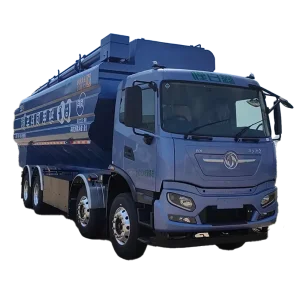

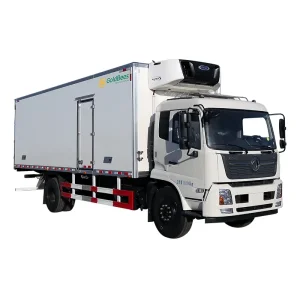

The transformation from open-crate flatbed transport to micro-climate engineered containment.
The live poultry transportation sector is experiencing an unprecedented structural transition driven by stringent animal welfare regulations, heightened biosecurity imperatives against Highly Pathogenic Avian Influenza (HPAI), and the acute financial necessity to minimize Dead on Arrival (DOA) ratios. Modern agro-industrial integrators no longer evaluate transport units simply as vehicular bodies, but as self-sustaining mobile bio-containment incubators.
Historically, commercial broiler and layer transit suffered significant yield erosion stemming from thermal stress, dehydration, and atmospheric shifts during transit. Recent physiological research affirms that prolonged exposure to temperatures outside the thermoneutral zone (22°C to 28°C for adult poultry; 32°C to 35°C for day-old chicks) initiates rapid glycogen depletion, muscle fatigue, and elevated mortality. In response, Original Design Manufacturer (ODM) engineering has advanced systematically toward closed-loop telemetry, positive-pressure air filtration, and autonomous thermodynamic buffering.
Multi-stage ducted airflow coupled with variable-capacity HVAC cooling coils ensures that microclimates stay within ±0.5°C across every crate tier, entirely eliminating thermal dead zones and transit-induced dehydration.
Engineered positive-pressure cab environments equipped with F9 to H14 class filtration stop airborne pathogens at external boundaries, securing SPF day-old chicks and grand-parent breeding lines against cross-contamination.
Real-time arrays continuously monitor core vehicle variables: carbon dioxide levels, relative humidity, barometric pressure differentials, and thermal gradients, transmitting status logs to central fleet monitoring consoles via 4G/5G links.
Combining structural alloy engineering, automated robotic welding, and agile custom manufacturing capabilities.
We leverage aviation-grade 6000-series structural aluminium alloy for walls, floors, and chassis sub-assemblies. This cuts tare weight by up to 35% relative to conventional steel assemblies, expanding legal payloads and reducing cycle emissions.
Operating under the CP M&E supply network provides direct procurement leverage across heavy commercial chassis (Scania, Volvo, FAW, Foton), precision refrigeration modules, and hydraulic lifters, delivering a high quality-to-investment ratio.
From crate latch layouts and internal pneumatic deck lifters to multi-voltage auxiliary power units (APU), our specialized engineering teams adjust vehicle architecture to fit local road limits, bridge thresholds, and loading dock profiles.
How global protein integrators configure GoldBees vehicle designs to match diverse geographical constraints.
Southeast Asia & LatAm: High ambient heat index conditions demand high-capacity auxiliary refrigeration, dual-engine redundancy, and specialized water atomization misters to offset rapid thermal loading during traffic stalls.
Eastern Europe & Central Asia: Extreme cold demands insulated sandwich panel bodies (extruded polystyrene cores), positive air pre-heating ductwork, and automated air shutters to prevent pulmonary shock in day-old chicks.
North America & Australia: Large-scale processing integrations require rear-dock loading compatibility, hydraulic container deck levelling, and smooth interiors designed for rapid pressure washing.
Metropolitan Peripheries: High-density urban corridors demand Euro VI or NEV (New Energy Vehicle) fully electric cab chassis, zero-emission auxiliary battery banks, and low-noise air intake geometries.
End-to-end integration covering automated catching, bulk delivery, and feed conveying systems.

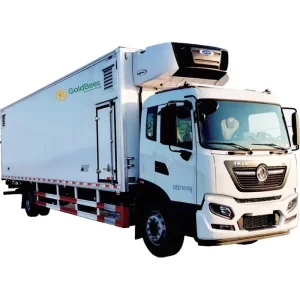
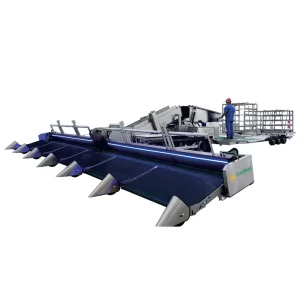


A procurement checklist for corporate livestock managers, veterinary specialists, and transport directors.
When selecting a specialized OEM/ODM supplier for live poultry fleets, global procurement teams must balance initial capital expenditure with Total Cost of Ownership (TCO), lifetime serviceability, and strict microbiological compliance. A purpose-built poultry vehicle operates under severe service conditions, facing frequent corrosive disinfection, abrasive road shocks, and high thermal loads during peak operations.
Uric acid, organic guano, and high-pressure chemical sanitizers deteriorate standard galvanized steel. We utilize seamless extruded aluminium profiles with integrated drainage channels and slip-resistant grip ribs to prevent corrosion and injury.
Every electrical harness, ECU box, fan terminal, and sensor interface is built to IP67/IP69K standards, withstanding 100-bar hot-water washdowns, foam sanitisers, and high-temperature drying tunnels.
To eliminate reliance on main truck engine power during ferry transits, border crossings, or maintenance stops, independent sound-attenuated diesel or lithium battery APUs maintain continuous ventilation without interruption.
Expert answers regarding vehicle configurations, export compliance, chassis integration, and field deployment.
