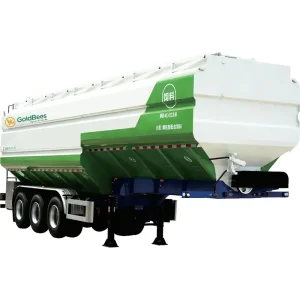
Constructed by Xinbaiqin Special Vehicle (CP M&E Ecosystem) under rigorous ISO 9001 and CE animal welfare compliance, reducing stress-induced shrinkage and eliminating bio-pathogen cross-contamination.



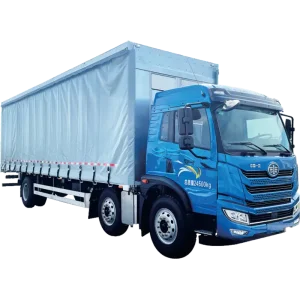



Transitioning from passive transit crates to autonomous micro-climate containment: Why Tier-1 agribusiness groups are migrating towards smart specialized vehicle fleets to secure global animal protein yields.
With the ongoing threats of African Swine Fever (ASF) and Avian Influenza (HPAI), transport logistics represent the highest-risk vector for transmission. Modern ODM engineering enforces clean-in-place (CIP) spray manifolds, fully sealed monocoque bodies, micro-positive pressure air filtration (HEPA H13/H14), and thermally isolated wiring harnesses capable of withstanding 85°C high-pressure decontamination cycles.
Feed represents up to 70% of livestock operational cost. Conventional pneumatic handling or abrasive augers shatter nutritional pellets into dust, increasing feed conversion ratios (FCR) by up to 4.2%. Xinbaiqin's low-velocity high-torque discharge augers and laminar-flow pneumatic tanks maintain pellet integrity above 98.8%, dramatically curbing milling losses.
Animal transport regulations (such as EU Council Regulation EC 1/2005) demand continuous sensory telemetry of internal cabin temperatures, CO2, ammonia, and humidity. Our ODM livestock carriers leverage zoned HVAC, high-rate variable air volume (VAV) ventilation, and thermal barrier sandwich walls to eliminate thermal stress, preventing live-weight shrinkage and metabolic shock.
Our engineering ecosystem directly leverages the operational insights of CP M&E (Charoen Pokphand Group), converting empirical agricultural data into robust mechanical solutions.
Utilizing aerospace-grade 6061-T6 aluminum alloys and high-yield domex structural steels, our dry tare weight is reduced by 15–22% compared to standard steel transporters. This allows fleet operators to maximize legal payload per trip, lowering carbon emissions per ton-kilometer.
Multi-deck livestock semi-trailers incorporate hydraulic lift floors powered by proportional valve manifolds. Operators can load multiple tiers without internal ramps, avoiding joint injuries and stress in swine and cattle while cutting turnaround time by 50%.
Engineered for extreme vertical discharge heights up to 28 meters, our fluidizing aeration beds prevent bridging of high-viscosity feed formulations, maintaining continuous volumetric discharge without dust blow-back or silo over-pressurization.
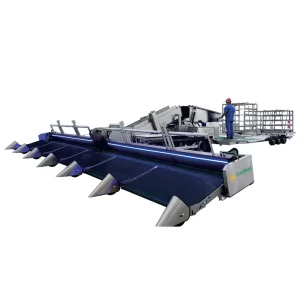
GoldBees intelligent chicken harvesters utilize soft-contact counter-rotating silicone collection fingers, elevating broilers gently onto integrated sorting conveyor systems. Labor requirement is decreased from 8 handlers to 2 operators while reducing bruising by 91%.
| Vehicle / Equipment System | Propulsion / Kinematic Type | Payload / Volumetric Range | Biosecurity & Climate Spec | Key Operational Advantage |
|---|---|---|---|---|
| Hydraulic Auger Bulk Feed Truck | PTO / Dual Electric Motor 380V | 18 m³ – 55 m³ (3 to 6 Bins) | Multi-gasket sealed compartments | Zero cross-contamination between feed formulas; <0.5% breakage |
| Pneumatic Discharge Silo Hauler | Oil-free screw blower / Aux Engine | 25 m³ – 65 m³ (Semi-trailer) | Laminar aeration pads, dry clean cycle | Direct connection to 28m towering farm silos; dustless transfer |
| Multi-Tier Pig Transport Truck | Electro-hydraulic 2–4 level floor | 60 – 240 Market Hogs / Load | Positive-pressure HEPA H13, water misting | Ramp-free hydraulic loading; zero thermal distress weight loss |
| Day-Old Chick Climate Transporter | Independent auxiliary diesel generator | 50,000 – 120,000 chicks per trip | Constant 32°C ± 0.5°C, laminar air ducts | Prevents hypothermia & hypoxia; hatchery-to-farm vitality guarantee |
| NEV Electric Bulk Feed Vehicle | Lithium Iron Phosphate (LFP) Battery | 12 m³ – 30 m³ urban/regional | Silent night discharge, zero tailpipe | Meets strict ESG and municipal agricultural green-zone directives |
From equatorial tropical moisture to Scandinavian freeze conditions, our ODM engineering incorporates targeted metallurgical and thermal adaptations for regional infrastructure.
Operating in ambient temperatures exceeding 42°C with 90% humidity demands high-capacity dual refrigeration backups, anti-condensation interior panel finishes, and active exhaust fans running at 45,000 m³/h capacity. Aluminum feed tanks feature specialized UV-reflective polyurethane coatings to prevent internal grain fermentation during delayed journeys.
Sandstorms and fine quartz dust accelerate engine wear and choke ventilation circuits. Xinbaiqin integrates multi-cyclonic air pre-cleaners, self-flushing intake louvers, and reinforced chassis suspensions engineered with parabolic heavy-duty leaf springs and hub reduction axles to master off-road desert access roads.
For North America, Eastern Europe, and Northern China winters reaching -35°C, vehicle superstructures integrate 100mm closed-cell polyurethane thermal insulation, pre-heated fuel delivery circuits, floor heating elements, and automated intake louvers that recirculate filtered body warmth to protect livestock from frostbite.
Xinbaiqin bridges the traditional chasm between static farm equipment and mobile logistics, establishing a complete uninterrupted cold-chain and biosecure perimeter from grain receipt to grocery refrigeration.
By harmonizing feed mill batch loaders directly with GoldBees high-capacity semi-trailers, bulk animal feed is never exposed to external air or human handling. Automated top-loading pneumatic valves connect with mill silos, safeguarding against salmonella and mold proliferation throughout distribution.
Fleet operators receive live IoT sensor updates on every consignment: cabin air quality metrics, axle loads, temperature logs, gate-seal states, and geofenced sanitization station validation. All telemetry integrates directly into enterprise ERP/MES farming software.
Through precision robotic laser welding, modular chassis sub-frames, and standardized wear parts, our specialized bodies extend commercial operating lifespans beyond 12–15 years, delivering an estimated 28% reduction in life-cycle capital maintenance expense.
Clear, direct answers regarding custom body fabrication, international homologation, sanitation survivability, and chassis matching.
Our bodies are manufactured from corrosion-resistant 6061 aluminum alloy or 304 stainless steel with robotic continuous weld seams that eliminate micro-crevices. All electrical harnesses carry IP68/IP69K ingress protection, specifically tested to survive repeated exposure to foaming alkaline detergents, chlorine dioxide, and thermal baking drying halls operating at 70°C–85°C for 60 minutes.
Our factory works seamlessly with world-class commercial chassis manufacturers including Scania, Volvo, Mercedes-Benz Actros, MAN, DAF, Isuzu, FAW Jiefang, Foton, Dongfeng, and Sinotruk. We can build on customer-supplied cab-chassis platforms or deliver complete built-up vehicles conforming to regional homologation standards (such as CE, GCC, DOT, or ADR).
Hydraulic/Electric augers rely on physical rotational screws to transport compound feed upwards into silos. They are ideal for fragile pelleted rations where zero dust and minimum pellet shear are critical. Pneumatic discharge utilizes high-volume, low-pressure compressed air (oil-free screw compressors) to fluidize the feed along pipe manifolds, making it ideal for tall towers (up to 28m), complex silo access paths, or powdery meal feeds.
Day-old chicks are incapable of internal thermoregulation. Our transport box utilizes an independent auxiliary diesel generator powering continuous roof-mounted HVAC chilling and heating units. A laminar false-ceiling plenum delivers filtered air evenly over every crate tier, maintaining temperature across all 120,000 birds within 32°C ± 0.5°C with active CO2 extraction below 1,000 ppm.
All export units are supplied with CE, ISO 9001:2015, and ISO 14001 certifications along with complete weld inspection reports, pressure test certificates, and English-language electrical/hydraulic schematics. Xinbaiqin provides a 12-to-24 month standard structural warranty backed by global parts dispatches via DHL/FedEx and overseas on-site engineering commissioning for large fleet deployments.
High-volume logistics solutions engineered for commercial feed mills, modern swine breeding systems, broiler complexes, and regional perishables distribution.