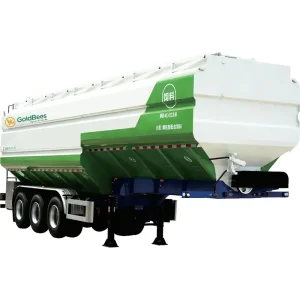
Explore our high-performance engineered units purpose-built for extreme biosecurity, thermodynamic balance, and pneumatic/auger discharge precision.






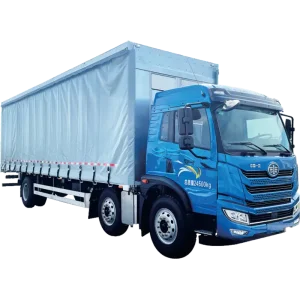
Modern intensive livestock production has transcended conventional transport boundaries. Today, specialized agricultural vehicles—spanning bulk feed delivery tankers, multi-tier climate-controlled livestock semi-trailers, day-old chick transporters, and cold chain distribution units—serve as vital bio-corridors. With the global compound feed industry surpassing 1.2 billion metric tonnes annually and commercial poultry and swine production expanding at a CAGR of 4.3%, the structural demand for Original Design Manufacturer (ODM) engineering capabilities has reached unprecedented heights.
Global animal protein integrators are abandoning fragmented fleet sourcing. Modern conglomerates require vertically integrated ODM partners capable of synchronizing chassis procurement, specialized superstructure engineering, telemetry integration, and biological isolation mechanisms.
Global regulatory bodies (WOAH, EFSA, USDA-APHIS) have mandated rigorous vehicle disinsection, chemical wash-down resilience, and air filtration. Vehicle architecture must actively resist corrosive detergents while eliminating cross-contamination harborage points.
Tare weight reduction, hydraulic transmission durability, low pellet breakage during pneumatic or auger discharge, and zero-emission (NEV) capabilities are now critical operational benchmarks dictating annual fleet profitability for operators.
A rigorous architectural comparison between standard market configurations and GoldBees' patented ODM engineering protocols.
| Subsystem Metric | Conventional Industry Standard | GoldBees ODM Engineering Benchmark | Operational Value Delivered |
|---|---|---|---|
| Chassis & Body Metallurgy | Standard Carbon Steel (Q235/Q345); Heavy tare weight. | High-Strength Aerospace Aluminium Alloy (6061-T6) & Domex 700. | -18% Tare Weight / +12% Legal Payload |
| Discharge Integrity (Feed) | Direct PTO auger; >2.5% pellet crushing / high fines rate. | Variable-frequency hydraulic screw & low-pressure pneumatic air. | <0.3% Pellet Degradation / 1.5t/min Rate |
| Microclimate Regulation | Passive louver vents; ambient temperature fluctuations. | Positive-pressure HVAC, continuous HEPA H14 + UV-C sterilizers. | Zero Pathogen Ingress / Stable ±0.5°C Control |
| Deck Sanitation & Hygiene | Manual ramps, porous weld seams; 4.5hr wash cycle. | Patented anti-slip monocoque floor, central high-pressure CIP jets. | -60% Water Consumption / 45-min Turnaround |
| Powertrain Options | Exclusively internal combustion diesel (Euro IV/V). | Modular diesel, hybrid PTO, and pure electric (NEV CATL LiFePO4). | Zero Site Tailpipe Emissions / -35% Fuel Cost |
Our bulk feed tankers integrate up to 8 independent hermetically sealed compartments. Pneumatic slide gates and individual aeration cones prevent cross-contamination across varied feed rations (starter, grower, lactating), eliminating nutritional deviations.
Every livestock and chick carrier utilizes an automotive-grade CAN-bus network coupled to IoT gateways. Drivers and fleet managers monitor cabin NH3, CO2, humidity, and airflow velocity in real-time, with automatic alert triggers preventing acute stress.
Our cold chain and livestock box panels are manufactured using automated vacuum high-pressure bonding with closed-cell extruded polystyrene (XPS) and food-grade glass fiber reinforced polymer (FRP), offering an ultra-low thermal conductivity rating (K-factor < 0.35 W/m²K).
From sub-zero Siberian transport to hyper-humid equatorial corridors, our ODM vehicle bodies are engineered to overcome specific geographical challenges.
Reinforced high-volume ventilation fans (>80,000 m³/h capacity), stainless steel evaporative cooling pad systems, and anti-fungal interior coatings capable of counteracting ambient temperatures up to 45°C and 95% RH without condensation buildup.
Auxiliary fuel-powered hydronic cabin heating, insulated pneumatic discharge piping, electrically traced auger gearboxes, and automated snow/ice shed roof geometries preventing structural weight overloading during winter distribution.
Dual-stage heavy-duty cyclonic air intake filters preventing sand ingestion into hydraulic circuits and animal enclosures, complemented by high-efficiency UV solar reflection top coatings keeping thermal absorption near zero.
Lightweight semi-trailers compliant with strict per-axle bridge weight formulas (such as Federal Bridge Gross Weight Formula B in the USA and European Directive 96/53/EC). Designed for maximum aerodynamic efficiency and lowest drag coefficients.
Leveraging deep industrial synergy within CP M&E (Charoen Pokphand Group electromechanical wing) to supply unified farming ecosystems.
Designing and constructing computer-controlled compound feed plants with outputs up to 120 t/h. Seamless integration with GoldBees bulk feed trucks via automated overhead loadout spouts and optical bin level sensors.
Turnkey poultry and swine barn housing engineered with automated climate control, negative-pressure ventilation, automated feeding augers, manure drying belts, and intelligent biosecurity disinsection barriers.
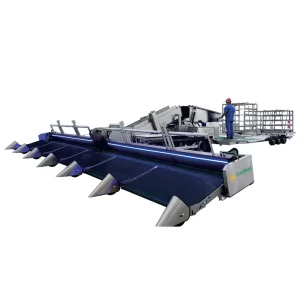
Deploying specialized crawler-mounted chicken harvesters that transfer birds gently into transport modules without human handling, cutting labor by 75% and reducing carcass hematomas by over 90%.
Unlike generic automotive bodybuilders, Xinbaiqin approaches vehicle construction from an epidemiological viewpoint. Vehicles are designed without dead angles where feces or organic dust can lodge. All auxiliary wire harnesses are IP69K waterproof-sealed to survive harsh automated disinfection drive-through tunnels (with sodium hypochlorite, glutaraldehyde, or peracetic acid) followed by 70°C thermal bake-out cycles. This closed-loop biosecurity safeguards millions of animals across global breeding hubs.
Charting the transition toward zero-carbon propulsion, edge-computing biometrics, and autonomous logistics corridors.
Decoupling feed discharge hydraulics and livestock ventilation from truck chassis engines. Introducing dedicated lithium iron phosphate battery packs to run full climate control silently during driver rest and farm unloading.
Integrating ceiling-mounted edge AI cameras inside livestock decks to calculate real-time animal posture, respiratory rates, and density distribution. Immediate driver cabin alerts if localized heat distress is detected.
Commercialization of 49-tonne GWW 8x4 electric heavy tractors and semi-trailers utilizing megawatt-level charging (MCS) and swappable battery architectures for dedicated feed mill-to-farm regional distribution hubs.
Autonomous point-to-point delivery between mega-hatcheries and grow-out complexes. Complete removal of human drivers from high-risk bio-zones, mitigating vector transfer through unmanned vehicle guidance systems.
Expert answers addressing structural customization, export certifications, payload optimization, and biosecurity protocols.
GoldBees bulk feed trucks are specifically engineered for processed compound feed and high-value pelleted rations, not raw unprocessed grain. Our tanks feature multi-compartment volumetric isolation, proprietary low-friction auger geometries or pneumatic fluidized beds that minimize pellet breakage to below 0.3%, and fully sealed discharge conduits preventing atmospheric moisture contamination and outdoor pathogen ingress.
Yes. We offer complete sub-frame engineering packages compatible with major global commercial chassis manufacturers, including Scania, Volvo, Mercedes-Benz, MAN, Isuzu, FAW, Foton, and Sinotruk. We deliver either fully assembled CBU (Completely Built Up) vehicles or CKD/SKD (Completely/Semi Knocked Down) kit sets with full sub-frame mounting brackets and hydraulic PTO interface schematics.
Newly hatched chicks cannot self-regulate body temperature. GoldBees automated day-old chick trucks utilize a closed-loop air distribution plenum that guarantees uniform air velocity across every chick box stack. The system maintains an optimal 30°C to 32°C microclimate with 65% RH regardless of ambient exterior spikes (-20°C to +42°C), continuous fresh air changeover, and onboard HEPA H14 bio-filtration.
All livestock and bulk body structures undergo multi-stage surface preparation, including automatic steel shot blasting (Sa 2.5 standard), followed by electrodeposition priming (e-coat) and marine-grade polyurethane topcoats. Chassis underbodies are treated with specialized elastomeric polyurea coatings to resist gravel abrasion, manure acids, and recurring chemical washdowns.
Yes. Built using high-density CATL LiFePO4 commercial battery packs, our NEV feed trucks offer operating ranges of 220 to 350 km per charge with high-speed DC dual-gun charging (20% to 80% in 45 minutes). With regenerative braking and lower maintenance cycles, total operating costs are reduced by 30% to 45% compared to conventional diesel tankers.
We furnish comprehensive export documentation conforming to national homologation guidelines across all major destination markets. This includes ISO 9001/14001, CE conformity, CCC, chassis-body matching calculations, axle weight distribution certificates, pneumatic brake schematics, electrical wiring diagrams, and international bill of lading / origin certifications.
Discover our electric-drive conveyors, cold chain semi-trailers, automated harvesters, and high-efficiency regional transporters.