

Factory-direct engineering configurations deployed across intensive livestock, poultry, and automated feed distribution networks.

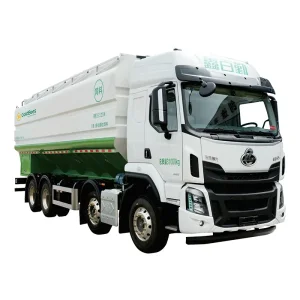


Shifting from manual bagging to hermetic, high-payload bulk wagon logistics: Managing biosecurity, energy expenditure, and mechanical pellet integrity.
In contemporary commercial swine farming, the feed transport wagon (commonly designated as bulk feed transport trucks, feed trailers, or auger/pneumatic feed tankers) represents the single most critical logistical lifeline linking compound feed mills to biosecure rearing facilities. With global pork production consolidating into multi-tier mega-farms, regional breeding centers, and intensive farrow-to-finish operations, the economics of feed distribution have shifted radically. Nutrition represents between 65% to 75% of total live pig production expenditure. Any systemic disruption—such as cross-contamination vectoring African Swine Fever (ASF) or Porcine Epidemic Diarrhea virus (PEDv), pellet physical degradation into fine dust, or uncalibrated discharge delivery—creates immediate, severe operational loss.
As an established pioneer under the CP M&E (Charoen Pokphand Group electromechanical wing) industrial umbrella, Xinbaiqin Special Vehicle Co., Ltd. (GoldBees) designs and manufactures specialized transport bodies specifically structured around the three governing operational constraints of contemporary animal husbandry: rigorous biosecurity defense, physical nutritional durability, and optimized cost per tonne-kilometer (TCO). Spanning an integrated 66,667 m² production campus in Cixi, Zhejiang, China, with an annual capacity exceeding 2,000 special vehicle units, our enterprise delivers customized ODM/OEM vehicle superstructures matched to heavy-duty chassis brands worldwide (including Scania, Volvo, Mercedes-Benz, MAN, Isuzu, FAW, Sinotruk, and Shacman).
Core Whitepaper Finding: Transitioning from 50kg bagged distribution to 30-tonne multi-compartment automated bulk wagon transport reduces logistics-associated labor costs by up to 88%, lowers packaging waste to absolute zero, and creates an unbroken biosecurity seal that shields sterile swine herds from human-vector pathogen contamination.
Procurement requirements for pig feed transportation wagons vary substantially by geographic region, road regulations, and epidemiological pressures:
Characterized by ultra-dense multi-story pig complexes requiring automated vertical discharge reaching heights up to 15 meters, integrated CIP disinfection, and multi-compartment segregation for distinct nutritional growth phases.
Prioritizes high legal gross vehicle weight ratings (GVWR) with tri-axle semi-trailer configurations, high-torque hydraulic auger discharge mechanisms, and durability across severe sub-zero winter temperatures.
Governed by strict environmental low-noise standards, pneumatic low-abrasion unloading systems that limit particulate air emissions, and lightweight aircraft-grade aluminum bodies reducing road carbon footprints.
Demands reinforced structural chassis dampening, high ground clearance, multi-layer anti-corrosion marine coatings, and hybrid dual-mode (electric grid + PTO) discharge autonomy for off-grid farm sites.
How automated precision fabrication, metallurgical innovation, and CP M&E supply chain integration empower global agribusinesses.
Employing aerospace-grade 5083/6061-T6 aluminum alloys and high-yield automotive steels (Q460NH). Our specialized extruded tank structures eliminate excess deadweight, reducing tare weight by 1,200kg to 2,400kg relative to conventional steel trailers, directly translating into maximum legal payload capacity per distribution cycle.
Feed pellet pulverization compromises digestive efficiency and feed conversion ratios (FCR) in swine. GoldBees incorporates variable-pitch, cold-rolled continuous auger flighting operating at low RPM (150–220 RPM) or low-pressure high-volume cyclonic air displacement, keeping pellet pulverization rate under <0.8%.
Post-ASF biosafety requires absolute compartmentalization. GoldBees tank shells feature automated pneumatic roof sealing hatches, smooth internal seamless continuous welds that eliminate residual mold growth pockets, and sealed electrical wiring rated to IP69K high-pressure thermal washdown standards.
| Performance Parameter | Electric/Hydraulic Auger Wagons | Intelligent Pneumatic Feed Wagons | NEV Pure Electric Smart Tankers |
|---|---|---|---|
| Discharge Delivery Method | Triple continuous mechanical auger screws (Horizontal, Vertical, Swiveling Overhead) | Fluidized-bed blowers with roots compressors & micro-porous aeration belts | High-efficiency permanent magnet motor auger or low-noise micro-blower |
| Unloading Rate Capacity | 60 – 90 tonnes/hour (continuous variable speed) | 45 – 70 tonnes/hour (depending on vertical pipe height) | 60 – 80 tonnes/hour (constant torque electric drive) |
| Pellet Durability Degradation | < 0.9% fine breakage rate | < 1.4% fine breakage rate (at 0.15 MPa pressure) | < 0.7% fine breakage rate (soft-start frequency drive) |
| Maximum Vertical Delivery Reach | Up to 11 – 13.5 meters (hydraulic 360° slew elevation) | Up to 25 – 35 meters (vertical pipe conduit coupling) | Up to 12.5 meters (remote servo-hydraulic positioning) |
| Power Consumption / Energy Source | Dual-system: Truck transmission PTO + External 380V Plug-in | Direct PTO-driven roots air compressor / diesel auxiliary | Integrated CATL high-density lithium LFP power bank (independent PTO) |
| Biosecurity Washdown Rating | IP69K Immersion Disinfection Ready | Hermetic CIP Dry-Air Washdown | Automated High-Thermal Disinfection |
Tailoring engineering parameters to farm architecture, epidemiological requirements, and climate boundaries.
Industrial swine enterprises utilize up to 6 specialized formulations across breeding, gilt development, gestation, lactation, nursery pre-starter, and finisher diets. GoldBees tanks feature 4 to 8 completely isolated compartments with double-wall bulkheads. Independent electro-pneumatic discharge gates eliminate cross-ration contamination, ensuring sensitive creep diets with high milk powder or micro-nutrient additives are never adulterated.
To prevent vehicles from penetrating clean perimeter production zones, GoldBees wagons utilize ultra-long overhead swinging augers extending up to 12 meters from vehicle centerline with 180°–360° slew articulation. Combined with handheld industrial wireless remote controllers, the operator positions discharge nozzles directly into exterior farm boundary transfer bins without the vehicle touching the inner biosecure farm perimeter.
Operating from sub-arctic conditions in Northern Asia to high-humidity tropical microclimates in Southeast Asia and Latin America: Our tanks can be optioned with integrated polyurethane insulation layers, internal condensation diverters, high-temp hydraulic oil chillers, and electric heating jackets for discharge sumps, completely eliminating silo bridging, feed mold formation, and hydraulic oil cavitation.
Autonomous integration, new energy vehicle (NEV) electrification, and artificial intelligence-driven nutrition tracing.
As carbon audits extend throughout the agro-food supply chain, commercial animal husbandry is actively replacing heavy diesel platforms with electric equivalents. GoldBees leads with purpose-built NEV Electric Bulk Feed Wagons featuring modular CATL lithium iron phosphate (LFP) traction batteries, regenerative braking, zero idle noise around livestock, and pure electric PTO auger operation that generates zero exhaust emissions on the farm site.
Modern transport wagons no longer function as passive dumb metal bodies. GoldBees incorporates integrated chassis weighing load cells (accuracy ±0.2%) linked to CAN-bus telematics. Real-time data streams through 4G/5G gateways directly into the feed mill's ERP, continuously transmitting exact delivered tonnage, silo inventory matching, discharge duration, and geofenced automated hatch authorization.
Manual entry into bulk feed tanks creates extreme occupational safety hazards and biosecurity violations. Advanced GoldBees ODM wagons integrate rotating 360° internal hydraulic disinfection nozzles connected to automated chemical dosing pumps and dry-air purgers. Tanks undergo rapid, complete chemical and thermal decontamination between different feed runs without human entry.
How engineering teams evaluate special vehicle manufacturers for bulk feed transport fleets.
Procurement executives and fleet engineering directors managing capital expenditure for corporate farming enterprises (such as CP Group, Smithfield, Tyson Foods, JBS, or New Hope Liuhe) assess ODM body manufacturers against five essential criteria:
Direct, transparent engineering answers addressing procurement, operational mechanics, biosecurity, and chassis compatibility.
Both systems offer distinctive operational strengths depending on farm infrastructure:
Hydraulic Auger Discharge: Employs continuous flight screws inside a swiveling boom. It offers superior energy efficiency (consuming 30–50% less fuel/power than pneumatic systems), higher volumetric unloading rates (up to 70–90 tonnes/hour), and significantly lower mechanical degradation of sensitive pelleted swine feed (fines increase is typically <0.8%). It is the premier choice where farm silos have standard top hatch openings within 12 meters of height.
Pneumatic Blower Unloading: Uses low-pressure high-volume compressed air (0.1–0.2 MPa) generated by roots blowers to fluidize and convey feed through rigid piping. It excels when delivering to ultra-tall silos (up to 30 meters), across complex obstacles, or where complete sealed pipe-to-pipe coupling is mandated for dust control and zero-odor regulations.
Biosecurity is embedded directly into our metallurgical and structural choices. Our vehicle bodies feature:
Yes. We regularly supply completely knocked down (CKD) or fully assembled mounted tank superstructures engineered to bolt directly onto client-supplied chassis. Our CAD/CAM engineering team customizes subframe mounting brackets, PTO coupling shafts, hydraulic pump interfaces, and electrical control wiring harnesses to integrate seamlessly with Scania, Mercedes-Benz Actros, Volvo FH/FM, MAN, Isuzu Giga, FAW J6P/J7, Sinotruk HOWO/SITRAK, Dongfeng, and Shacman chassis. We provide comprehensive mechanical integration drawings and dynamic axle weight distribution calculations for local road registration.
GoldBees offers tanks fabricated from structural carbon steel (Q235B/Q345R), marine-grade aluminum alloy (5083-H111 / 6061-T6), and food-grade 304 stainless steel. When utilizing our proprietary 5083 aluminum tank design, the superstructure tare weight is approximately 35% to 45% lighter than an equivalent-volume carbon steel tanker. For a typical 40m³ tri-axle semi-trailer, this weight reduction equates to approximately 1,800kg of additional legal feed payload per trip, substantially compounding freight cost savings over an 8-to-10-year vehicle operating lifespan.
All GoldBees electric/hydraulic auger trucks can be configured with an onboard high-efficiency electric motor (typically 30kW–45kW) alongside the conventional diesel PTO hydraulic pump. When arriving at farm sites or feed mills equipped with a 380V/440V 3-phase industrial power receptacle, the operator plugs in the vehicle power cable. Unloading is then driven 100% electrically. This eliminates truck engine idling, slashes diesel consumption to zero during unloading, dampens noise to protect easily stressed swine herds, and lowers carbon emissions across farm borders.
Our flagship hydraulic auger booms achieve an operational vertical lift angle of up to 65°, reaching silo inlet ports up to 11 to 13.5 meters in height (model dependent). The auger turret boom provides 180° to 360° continuous hydraulic slewing rotation driven by a worm gear drive. All hydraulic motions (lift, slew, boom extension, auger forward/reverse) are controlled proportionally via an industrial wireless radio remote control with a 100-meter operating radius.
Our multi-compartment tanks (ranging from 2 to 8 compartments) utilize laser-cut double-walled bulkhead dividers. Each individual compartment is equipped with its own independently actuated pneumatic slide gate, sealed hopper cone, and cleanout inspection ports. Furthermore, the bottom horizontal collection auger includes a reversible purge cycle that clears residual feed before switching compartments, ensuring sow gestation formulas and medication-sensitive nursery diets never mix.
Backed by the global industrial footprint of CP M&E and Xinbaiqin, overseas clients receive comprehensive lifecycle support. We provide digital 3D parts manuals, pre-packaged maintenance consumable kits (hydraulic filter elements, auger hanger bearings, hydraulic seals, solenoid coils), and express global air freight for emergency components. In addition, our field service engineers provide remote technical diagnostics via video telemetry or onsite commissioning support for fleet orders.
Our production campus operates under ISO 9001 (Quality Management), ISO 14001 (Environmental Management), and ISO 45001 (Occupational Health & Safety). Our vehicles comply with China Compulsory Certification (CCC) and are engineered to meet European ADR, Australian ADR, and North American DOT/FMVSS standards upon technical specification alignment during the ODM contract phase.
Standard lead times for customized ODM superstructures range between 25 to 40 working days from engineering drawing sign-off. Completely built trucks (chassis procurement + superstructure mounting + road testing) require approximately 45 to 65 days. Vehicles are shipped via Roll-on/Roll-off (Ro-Ro), dedicated flat rack containers, or breakbulk from Ningbo or Shanghai ports, accompanied by full export documentation, third-party inspection reports, and bill of lading certifications.
Explore our specialized livestock trailers, NEV electric bulk haulers, and biosecure cold-chain distribution platforms.


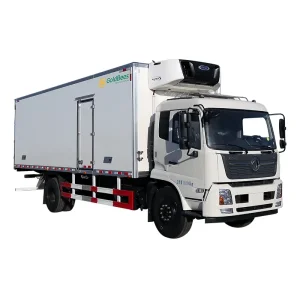
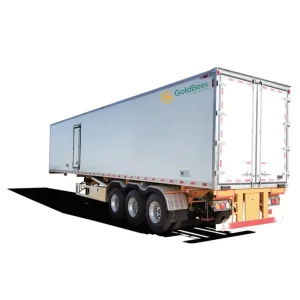
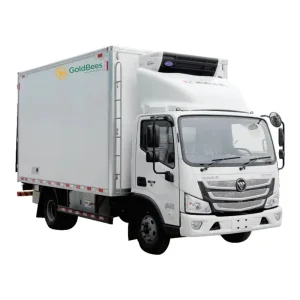
Whether configuring high-volume bulk feed semi-trailers, biosecure live pig transit bodies, or integrating electric augers with your domestic truck chassis, Xinbaiqin Special Vehicle (CP M&E GoldBees) delivers factory-direct engineering precision, complete documentation, and global export execution.