Explore our precision-engineered animal husbandry special vehicles and turnkey livestock equipment portfolio designed to ensure absolute biosecurity and optimal health from mill to farm.





In modern intensive swine production, water is neither an afterthought nor an inexhaustible commodity. It is the primary dietary constituent dictating metabolic digestion, nutrient absorption, thermal balance, and biological performance.
A growing or finishing pig requires an average water-to-feed intake ratio of 2.5:1 to 3:1 under thermoneutral barn ambient temperatures (18°C–22°C). However, during heat stress episodes or high-protein nursery diets, this demand escalates to 4:1. The mechanical delivery interface—specifically the Pig Nipple Drinker—stands as the sole barrier between optimal physiological hydration and catastrophic operating resource loss. When a drinking nipple exhibits erratic hydrodynamics, sub-optimal bite trigger sensitivity, or chemical seal wear, commercial operations experience twin failures: swine dehydration leading to an immediate drop in average daily gain (ADG), and massive excess spillage saturating pit lagoons, inflating waste handling and effluent hauling expenditures by tens of thousands of dollars annually.
As a global ODM & OEM swine equipment partner backing integrated conglomerates such as CP M&E and leading livestock enterprises worldwide, Xinbaiqin approaches pig drinker engineering not merely as plumbing hardware, but as a critical biometric fluid-delivery instrument. From precision CNC-turned AISI 304/316 austenitic stainless steel bodies to calibrated silicon-nitride sealing rings, every micro-component is designed to satisfy rigorous animal welfare standards and the severe chemical challenges of continuous waterline acidification and oral antibiotic administration.
Conventional drinker orifices induce high-velocity turbulent jets that bounce off the pig's tongue, resulting in up to 45% oral spillage. Our ODM hydraulic chamber geometry channels incoming line pressure into a stable, aerated laminar stream, allowing the animal to capture >92% of released water volume directly into the buccal cavity.
Modern intensive swine facilities routinely dose drinking water with organic acids (formic, propionic, citric) at pH levels as low as 3.6 to suppress pathogen propagation (Salmonella, E. coli). Our drinkers utilize solid forged stainless alloys that completely resist pitting, surface de-passivation, and stress fracture cracking.
Trigger activation force must mirror anatomical maturity: suckling piglets possess bite strengths below 1.2 N, while heavy gestation sows exert forces in excess of 15 N. Our internal progressive spring rates and dual-pivot stem designs are customized per lifecycle stage to avoid premature fatigue or bite refusal.
Corporate swine integrators managing thousands of breeding sows or multi-site grow-finish complexes measure hydration equipment on four non-negotiable vectors: biological FCR conversion, waste minimization, biofilm defense, and continuous maintenance longevity.
Across tier-1 swine producing hubs—ranging from North American confinement barns in Iowa and North Carolina to European high-welfare slatted systems in Denmark and Spain, as well as multi-story hyper-scale sow facilities throughout China—drinker failure ranks among the top five operational barn disruptions. When a single drinker valve sticks open, a pen of 25 finishing pigs can discharge 1,500 liters of potable water directly into under-floor slurry storage within 48 hours, causing manure pits to prematurely flood, diluting slurry nitrogen concentration, and spiking lagoon pumping costs.
Conversely, a clogged nipple drinker causes immediate physiological dehydration. Within 6 hours of water deprivation, pig voluntary feed intake drops by up to 35%. Within 24 hours, intestinal mucosal barrier integrity compromises, triggering pathogen translocation and sudden outbreaks of post-weaning diarrhea (PWD) or porcine reproductive and respiratory syndrome (PRRS) secondary complications. Hence, global enterprise procurement teams require ultra-precise engineering tolerances from their ODM partners.
| Life Stage & Application | Ideal Flow Rate (L/min) | Static Water Line Pressure | Recommended Body / Tip Material | Critical Biosecurity & Sealing Benchmark |
|---|---|---|---|---|
| Farrowing & Suckling Piglets (Day 1 – 21) | 0.30 – 0.50 L/min | 1.0 – 1.5 Bar (14.5 – 21.7 PSI) | AISI 304 Stainless, Micro-Bite Stem | Ultra-Soft Activation (<1.0 N Force) |
| Weaner & Nursery Pigs (6 kg – 25 kg) | 0.60 – 1.00 L/min | 1.5 – 2.0 Bar (21.7 – 29.0 PSI) | AISI 304 / 316 Stainless with Filter Screen | Anti-Biofilm Sediment Screen (50 Mesh) |
| Grower & Finisher Pigs (25 kg – 125 kg+) | 1.20 – 1.80 L/min | 2.0 – 2.5 Bar (29.0 – 36.2 PSI) | Heavy-Duty Forged 304 Hex Body, Bite-Ring | High-Impact Silicone Cushioning O-Ring |
| Gestating & Lactating Sows | 2.00 – 3.50 L/min | 2.5 – 3.0 Bar (36.2 – 43.5 PSI) | 1/2" or 3/4" Full Flow AISI 316 Stainless Steel | Extreme Bite Resistance (>25 N Force Rated) |
| Boars & AI Stud Stations | 2.50 – 4.00 L/min | 2.5 – 3.2 Bar (36.2 – 46.4 PSI) | Reinforced 316 Surgical Alloy with Armored Shroud | Vandal-Proof Slotted Stem Construction |
Operating from our massive 66,667 m² industrial campus in Cixi, Zhejiang—and backed by the comprehensive engineering resources of CP M&E—our intelligent production matrix solves the traditional trade-off between artisan precision and volume economics.
Historically, the global livestock equipment market relied on fragmented workshops prone to metallurgical variances, inconsistent machining tolerances, and spotty quality control. A single batch of inferior 201-series stainless steel masquerading as 304 will corrode under organic acid exposure within 90 days, causing widespread valve seizures. Xinbaiqin dismantles this vulnerability through fully digitized, vertically integrated Industry 4.0 manufacturing processes.
Our multi-axis Swiss-type automated turning centers craft internal valve stems and drink nozzles within ±0.01 mm repeatability. This surgical consistency eliminates micro-burrs that induce premature O-ring tear or erratic spray cones.
Every bar of raw stainless steel entering our Cixi foundry undergoes Optical Emission Spectrometry (OES) testing to certify Nickel (>8.0%) and Chromium (>18.0%) content, guaranteeing true austenitic grain structure impervious to rust.
Unlike competitors employing random spot inspections, 100% of Xinbaiqin drinkers pass through robotic dry-pneumatic seal testing followed by pressurized hydrostatic flow calibration before laser etching and automated packaging.
With an in-house tooling center and modular component architecture, we engineer custom nozzle thread standards (NPT, BSP, metric), proprietary laser branding, and bespoke flow restrictors within a 14-day rapid prototyping cycle.
Hydration efficiency is deeply situational. A drinker configuration engineered for an air-conditioned European nursery barn will fail catastrophically if deployed inside an open-curtain Southeast Asian tropical farm or a specialized livestock transport trailer.
Installed at precise 45-degree downward angles or built directly into wet-dry feeder troughs. The stem trigger must be sensitive enough to release mash feed smoothly while incorporating an anti-spray hood to keep nursing piglets dry and warm.
In hot, humid climates across Thailand, Vietnam, and Indonesia, pigs drink voraciously to manage internal heat. High-capacity 2.5 L/min drinkers with thermal dissipation bodies prevent waterline overheating and maintain continuous hydration throughput.
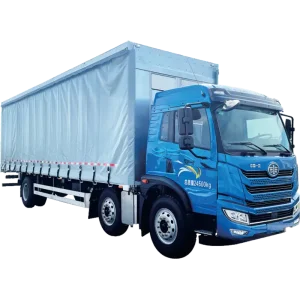
During transit in GoldBees climate-controlled multi-deck livestock semi-trailers, road vibration can cause standard drinkers to leak excessively. We engineer vibration-damped spring-loaded ball-and-pin drinkers that deliver hydration solely on direct snout manipulation.
Direct, engineering-backed answers covering metallurgy, hydrodynamic calibration, maintenance cycles, and custom ODM branding options.
While AISI 304 (18% Cr, 8% Ni) provides exceptional resistance against neutral water, mild barn ammonia vapors, and routine biological washing, AISI 316 contains an additional 2.0% to 3.0% Molybdenum (Mo). This molybdenum content significantly boosts resistance against chloride pitting and acidic corrosion. If your operations run continuous water sanitation via chlorine dioxide, peracetic acid, or intensive acidification (pH < 4.0), AISI 316 is strictly specified to prevent micro-pitting along internal valve seats that cause unpreventable weeping.
Biofilm formation is predominantly driven by fluid stagnation and internal surface roughness. Our internal fluid paths undergo electrolytic mirror polishing, reducing surface roughness to Ra < 0.4 µm. Furthermore, our internal chambers eliminate dead-flow zones where bacteria can colonize during medication pulses. Every actuation completely flushes the seal cavity, inhibiting bacterial adhesion and mineral scale encrustation.
Our internal return springs are precision-wound from premium Japanese SUS304-WPB high-fatigue spring wire, tested to withstand over 1,500,000 continuous trigger cycles without load relaxation. The sealing gaskets employ food-grade fluorosilicone (FVMQ) or EPDM elastomers engineered specifically for chemical and ozone resistance. In standard commercial finishing installations, our drinkers routinely achieve a maintenance-free operating lifespan of 5 to 7 years.
Yes. As a pure-play ODM and contract manufacturing partner, we deliver complete OEM brand customization. We machine 1/2" NPT (American), 1/2" BSP (British/European), or metric threading, provide adjustable 3-position flow restrictor orifices, engineer integrated stainless mesh filters from 30 to 80 mesh, and execute high-contrast fiber laser etching of your brand logo, batch number, and technical rating directly onto the hexagonal hex flats.
Hydration cannot end at the farm gate. Live animal transport is the most vulnerable link in the swine production chain. As an integral component of CP M&E and manufacturer of GoldBees intelligent livestock transport trucks, our specialized vehicle-grade drinking nipples integrate seamlessly into our multi-deck truck drinking manifolds. This ensures breeding sows and market pigs experience zero hydration disruption during transport, dramatically decreasing in-transit mortality, shrink loss, and transportation stress.
Continuing our comprehensive hardware catalogue: high-volume bulk feed semi-trailers, automated poultry harvesters, and turnkey industrial farming automation units.



Whether your project requires 50,000 units of custom-calibrated stainless pig nipple drinkers or complete turnkey farm feeding, watering, and GoldBees biosecure transportation vehicle fleets, our dedicated international engineering team is prepared to review your technical drawings and provide rapid DFM (Design for Manufacturability) analysis.
Company: Xinbaiqin Special Vehicle Co., Ltd. (CP M&E)
Address: No. F-1 Cixi Modern Agriculture Industrial Park, Xu-Jia-Pu-Wei-Ken District, Xinpu Town, Cixi City, Zhejiang Province, 315322, China
Direct Engineering Hotline: +86-0574-63587070 / +86-18268426644
Email: [email protected] | [email protected]
Submit ODM Request for Quotation (RFQ)