Engineered to mitigate in-transit thermal stress, guarantee pathogen segregation, and ensure lowest operating cost per ton-kilometer across global agribusiness operations.






Analyzing cross-border pathogen transmission vectors, thermal mortality dynamics, and the high-stakes economics of live bird and day-old chick mobility.
In modern high-density agribusiness, the transit vector represents the single most vulnerable link in the poultry trade value chain. Global animal protein integrators are confronting heightened volatility characterized by virulent Highly Pathogenic Avian Influenza (HPAI) strains, severe climatic oscillations, and soaring fuel expenditures. Conventional open-air or passively ventilated live-bird transport platforms systematically fail modern veterinary audits: they expose birds to ambient temperature shocks ranging from hypothermia to heat prostration, induce severe physiological shrinkage (up to 3.8% of live body mass lost per 100 kilometers), and function as unchecked airborne pathogen vectors between commercial bio-exclusion perimeters.
Xinbaiqin Special Vehicle Co., Ltd. (operating under the GoldBees brand and intrinsically aligned with the industrial electromechanical heritage of CP M&E / Charoen Pokphand Group) has completely re-engineered agricultural vehicle architecture. Rather than treating transit as mere road freight, our engineering philosophy conceptualizes the mobile superstructure as an hermetically isolated, telemetry-governed mobile cleanroom. Whether transporting 120,000 day-old chicks across scorching continental interiors or delivering 30 tons of pelletized biosecure feed into computerized farm silos without particle fracture, GoldBees vehicles enforce an unbroken biological and environmental continuum.
“Modern poultry logistics cannot afford biological ambiguity. An in-transit temperature shift of merely 2.5°C or an unregulated spike in cabin carbon dioxide above 2,500 ppm permanently degrades the seven-day flock livability of day-old chicks, undermining months of precision genetics and incubator investment.” — Chief Agricultural Systems Architect, Xinbaiqin CP M&E Division.
Modular chassis integration matching Scania, Volvo, Mercedes-Benz, FAW, Sinotruk, and Dongfeng platforms.
Microclimate-stabilized insulated cabins featuring dynamic HVAC airflow, real-time CO2 scrubbing, positive-pressure air curtains, and secondary backup generators ensuring uniform thermal environments within ±0.3°C variance regardless of exterior ambient extremes.
Multi-compartment pneumatic blow-tank and hydraulic auger transport vehicles crafted from aircraft-grade 6061-T6 aluminum and high-yield steel. Eliminates feed demixing, pulverization, and moisture ingress while enabling automated compartmental unloading.
Multi-tier modular swine and slaughter-broiler semi-trailers featuring hydraulic lifting floors, high-volume axial extraction fans, internal biocide atomizers, and integrated waste retention reservoirs that stop roadside environmental contamination.
| Vehicle Class / Technical Criterion | Conventional Industry Standard | GoldBees / Xinbaiqin ODM Engineering | Operational Value Advantage |
|---|---|---|---|
| Superstructure Tare Weight | Structural Carbon Steel (Heavy) | Aeronautical 6061-T6 Al-Mg Alloy + QSTE700TM | Reduces curb weight by up to 35%, yielding +3.2 tons net payload per run. |
| Day-Old Chick Thermal Drift | ±3.5°C to ±6.0°C across load stacks | ±0.3°C PID Inverter-controlled Microclimate | Eliminates core cold/hot spots, decreasing 7-day field mortality below 0.05%. |
| Pellet Degradation in Feed Haul | 3.5% to 7.0% fine particle fracture | <0.8% with Low-RPM Fluidized Discharge | Preserves feed nutritional index and prevents respiratory irritation in young flocks. |
| Washdown & Biosecurity Decon | Exposed cabling, moisture traps, rust spots | IP69K Hermetic Sealing, 304/316 Stainless Interiors | Resists caustic foam chemicals, 85°C high-pressure washing, and thermal ovens. |
Combining the capital discipline of CP M&E with modern Zhejiang specialized automotive manufacturing clusters.
Every structural girder, hydraulic cylinder manifold, microclimate duct, and electronic CAN bus module is engineered and fabricated within our 66,667 m² manufacturing facility in Cixi, Zhejiang. By circumventing fragmented third-party subcontractors, we achieve 100% metallurgical traceability and zero delivery lead-time jitter.
Unlike pure automotive coachbuilders who design in an operational vacuum, GoldBees systems are co-developed with Charoen Pokphand Group’s worldwide network of broiler hatcheries, swine breeding complexes, and mega-feed mills. Our vehicles undergo extreme real-world stress trials across tens of millions of commercial haul kilometers.
Our 30+ dedicated senior structural and thermal simulation engineers deliver customized vehicle designs within 14 business days. From adaptation to extreme road roughness indices (IRI) in emerging markets to specific left-hand/right-hand drive chassis homologation, our platform flexibility accelerates time-to-deployment.
Engineered to satisfy stringent animal welfare legislation and perform across disparate geographic conditions.
Equipped with dual oversized condenser banks, specialized micro-droplet evaporative cooling walls, and fine-mesh sandstorm air separators to maintain cabin temperatures under 26°C even when outside tarmac temperatures exceed 52°C in Saudi Arabia or UAE.
Engineered for high relative humidity (>85% RH) throughout Thailand, Vietnam, and Indonesia. Features high-velocity displacement extraction to remove bird body heat quickly, prevent ammonia gas accumulation, and prevent lethal respiratory choking in mature broilers.
Full statutory alignment with European Union live animal haulage guidelines: integrated automated drinking water nipples, continuous internal temperature data loggers with driver-cab warning alerts, and minimum headroom clearance architectures.
Hermetically isolated driver cabins, self-contained multi-stage wheel and undercarriage disinfectant spray rings, and quick-docking waste cleanout ports preventing farm gate contamination in US and Canadian poultry integration sectors.
How GoldBees is leading the transformation from traditional mechanical transport to data-driven autonomous agro-mobility.
Decoupling refrigeration and blower compressors from vehicle internal combustion engines. Utilizing 800V high-capacity LFP battery banks allows 8+ hours of continuous zero-emission microclimate cooling during prolonged farm gate bio-quarantine halts without fuel consumption or toxic diesel exhaust.
Moving beyond reactive thermostat triggers. Embedding hundreds of IoT temperature, humidity, and gas sensors running predictive neural network algorithms that continuously adjust variable-pitch fans based on weather telemetry, anticipated elevation shifts, and real-time animal metabolic heat signatures.
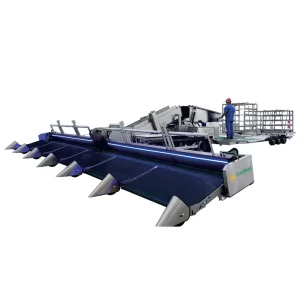
Seamlessly synchronizing our mobile vehicle decks with the GoldBees Intelligent Chicken Harvester. This fully closed-loop ecosystem mechanizes the gentle collection, crating, and hydraulic staging of broilers, eliminating manual handling injuries, leg fractures, and bird bruising.
Complete your agribusiness fleet architecture with specialized bulk feed distribution and precision poultry operations equipment.




In-depth engineering answers addressing payload optimization, biosecurity validation, and export delivery logistics.
GoldBees day-old chick transport cabins incorporate a pressurized plenum wall paired with continuous laminar ceiling extraction. Rather than relying on simple end-to-end fan blowing, conditioned air is delivered uniformly across every single crate stack via micro-apertures. This creates a vertical downward air curtain that rapidly sweeps away chick metabolic body heat and heavy carbon dioxide, keeping thermal variances within ±0.3°C across all tiers from front to rear.
Yes. Approximately 45% of our international export orders operate on a "Complete Knock-Down (CKD)" or "Skid-Mounted Superstructure" engineering model. Our engineering team customizes the sub-frame mounting brackets, PTO hydraulic flanges, and electrical harness harnesses to interface cleanly with European (Scania, Volvo, MAN, Mercedes-Benz) and American (Freightliner, Kenworth, Mack) chassis platforms according to OEM bodybuilder guidelines.
Our internal cargo bays utilize seamless food-grade 304 or 316 stainless steel interior linings or smooth antimicrobial composite sandwich walls. All electrical systems, junction enclosures, actuators, and sensor harnesses are IP69K sealed to withstand repeated caustic soda foaming, chlorhexidine fogging, high-pressure hot water washing (85°C at 150 bar), and automated Thermal Disinfection Unit (TDU) baking cycles without corrosion.
Standard vehicle lead time for batch sizes of 5 to 20 units is 35 to 45 business days from engineering sign-off. Vehicles undergo comprehensive pre-delivery inspections (PDI), including continuous 4-hour climatic chamber stress trials and water-tightness pressure tests. Export shipments are dispatched directly from Ningbo or Shanghai port via Ro-Ro (Roll-on/Roll-off) or flat-rack container platforms with complete marine corrosion protection wraps.
