High-integrity pneumatic and hydraulic auger transport engineering: Safeguarding pellet nutritional value, fortifying biosecurity perimeter defenses, and minimizing total life-cycle ranch logistical expenditures.
Engineered by Xinbaiqin Special Vehicle (CP M&E) with over 15 years of OEM/ODM leadership. Every transport platform incorporates biosecure compartmentalization, rapid washdown architecture, and low-tare structural integrity.





In the contemporary protein supply chain, feed represents between 65% and 75% of total live animal operational costs. Ranch bulk feed transporters have transitioned from simple carrier assets to mission-critical biosecurity and biochemical integrity nodes.
Global animal husbandry operations across the Americas, Australasia, and Eurasia are undergoing aggressive vertical consolidation. Vast feedlot complexes, multi-thousand-head dairy pastures, and mega-scale swine and poultry compounds require high-cadence bulk transport systems capable of delivering up to 40 metric tons of compound formulation per payload cycle with zero cross-contamination.
With catastrophic biological vectors such as African Swine Fever (ASF), Avian Influenza (HPAI), and Porcine Reproductive and Respiratory Syndrome (PRRS) challenging production quotas, transport fleets serve as either vital firewalls or devastating disease conduits. Modern bulk feed carriers must feature seamless washdown architecture, thermal chassis disinfection tolerances, and hermetically sealed pneumatic lines.
The mechanical integrity of pelleted and extruded feed directly impacts the Feed Conversion Ratio (FCR). Substandard discharge systems create frictional shear, crushing high-cost nutritional pellets into low-value powder fines. ODM engineering focuses on low-speed volumetric screw systems and decelerated fluidization pneumatic pipelines to maintain physical structural integrity.
Procurement directors must balance silo height requirements, physical pellet fragility, discharge speed, and anti-contamination boundaries when designing custom ODM fleet chassis.
Operates utilizing high-volume, low-pressure roots blowers generating 0.15 to 0.25 MPa air streams. Fluidizing bed valves introduce micro-aerated volume pockets, transporting sensitive feeds upward into vertical ranch silos exceeding 18 meters in height. The complete absence of internal moving augers eliminates biological harbor points, rendering pneumatic tankers the preeminent choice for high-health breeding ranches and SPF biosecurity zones.
Configured with variable-pitch horizontal collection augers, heavy-duty vertical lift screws, and 360-degree rotating hydraulic boom augers. GoldBees incorporates high-torque low-RPM electro-hydraulic drive units that move large-volume cattle and dairy rations—including high-fiber flaked corn and molassed mash—at delivery rates up to 1.8 metric tons per minute without heat degradation or pipe clogging.
| Evaluation Parameter | Pneumatic Fluidization Transport | Electro-Hydraulic Boom Auger | Hybrid Closed-Loop Conveyor |
|---|---|---|---|
| Discharge Delivery Reach | Vertical height up to 24m; distance > 35m | Elevated boom reach up to 9.5m - 12m | Flexible reach tailored up to 14m |
| Pellet Breakdown / Fine % | 0.6% - 1.2% (Low with deceleration cyclone) | 1.5% - 2.8% (Dependent on screw RPM) | 0.8% - 1.5% (Gentle belt transfer) |
| Unloading Discharge Velocity | 45 - 65 Metric Tons per Hour | 60 - 100+ Metric Tons per Hour | 50 - 75 Metric Tons per Hour |
| Biosecurity Cleanout Rating | Superior (Full internal pressurized purge) | High (Requires automated bottom-gate sweeps) | Moderate (Multiple belt surfaces) |
| Payload Tare Efficiency | High-Strength Aluminum Alloy (5454-H32) | Composite High-Tensile Q690 Structural Steel | Hybrid Alloy / Steel Reinforced Chassis |
Agro-climatic stresses, regulatory gross vehicle weight limits (GVWR), and topographical terrains demand targeted engineering modifications across global ranching centers.
Deployment: Texas Panhandle, Nebraska, Alberta high-density beef corridors.
Engineering Focus: Tri-axle and quad-axle high-capacity semi-trailers (up to 48m³). Built to withstand unpaved aggregate ranch access roads, high ambient summer heat, and dust-storm environments using sealed cyclonic air intakes and heavy-duty parabolic suspensions.
Deployment: Mato Grosso, Cerrado grazing belts, Colombian Llanos.
Engineering Focus: Severe humidity and torrential rains accelerate fungal microtoxin proliferation in transport bins. Transporters feature anti-condensation thermal insulation sandwiches, stainless steel (SUS304/SUS316L) auger flighting, and deep-seal pneumatic hatches.
Deployment: Netherlands, Denmark, Brittany, Northwest Germany.
Engineering Focus: Strict axle weight limits, low-noise decibel mandates (< 72 dB unloading), and stringent anti-pathogen bio-security standards. Standard builds incorporate fully electric PTO drive systems, steered tag axles for constricted rural barns, and automated CIP decontamination manifolds.
Deployment: Queensland, Northern Territory, Western Australia.
Engineering Focus: Extreme corrugated terrain and multi-trailer Road Train dynamics. Structural engineering employs high-cycle fatigue steel subframes, dual long-range auxiliary fuel cells, and reinforced pneumatic ducting resistant to extreme stone impingement and structural vibration.
The convergence of commercial vehicle electrification, industrial IoT, and real-time biochemical telemetry transforms the feed transport vehicle into an intelligent cyber-physical node.
Truck-to-Silo telemetry employing RFID and 5G communication protocols. Transporters automatically verify silo destination IDs, match formula specifications, align auger/pneumatic feeds, and prevent expensive nutritional mixing errors.
Decoupling vehicle powertrains from unloading mechanisms via high-density LFP battery packs. Enables zero-emission, silent discharge directly beside livestock houses, drastically mitigating herd stress and auxiliary engine fuel idling.
Autonomous high-pressure internal disinfection cycles operating between deliveries. Utilizes captive exhaust or dedicated heat exchange loops to elevate internal compartment temperatures to > 70°C for 30 minutes, inactivating viral RNA.
Geofenced level-4 autonomous cab-less feed transporters executing point-to-point transfers from regional mill depots to bunk lines, optimizing operational labor productivity across multi-thousand-hectare ranch compounds.
A transporter does not operate in isolation. Peak logistical performance is achieved through the harmonic integration of the entire animal protein production value chain.
Seamless synchronization between overhead batching bins and transporter multi-compartment hatches. Rapid pneumatic load-out balances weight distribution in real-time, enforcing legal axle loading thresholds while achieving load-cycle times under 12 minutes for a 30-ton trailer.
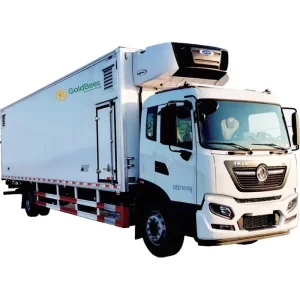
Biosecurity protocols extend beyond bulk feed trucks to dedicated live animal and cold-chain fleets. Xinbaiqin's engineering ecosystem guarantees unified structural design, identical subframe hygiene standards, and interchangeable telematics networks across all agro-husbandry fleet classes.
Continuous telemetry links real-time farm silo ultrasound sensors with dispatch fleet software. Transporters are routed predictively based on projected consumption rates, eliminating emergency stockouts, mitigating half-capacity hauls, and reducing net fuel consumption per ton delivered.
Direct technical explanations addressing core design, compliance, and operational criteria evaluated by commercial enterprise fleet managers.
We engineer dense-phase fluidization systems pairing low-RPM positive displacement blowers with precision venturi injectors. At the discharge terminal, custom cyclonic deceleration receivers reduce feed impact velocity from 25 m/s to under 8 m/s, suppressing frictional abrasion and restricting fine pellet fracturing below 1.2% by weight.
Yes. While we supply complete commercial vehicles mounted on premium domestic and international chassis (e.g., Sinotruk, FAW, Scania, Volvo, Mercedes-Benz, MAN), our Cixi manufacturing facility regularly exports fully fabricated superstructure modules and semi-trailer platforms pre-engineered for local mechanical matching and homologation.
Transporter bodies utilize 5454-H32 maritime-grade aluminum alloy or electro-coated high-tensile structural steel coated with two-component polyurethane primers. Wiring harnesses are encased in IP69K sealed conduits, protecting electronic controls against caustic cleaning detergents and high-temperature disinfection cycles.
Our tankers feature 4 to 8 completely isolated compartments separated by double-welded internal bulkheads. Each bin is equipped with independent sealing pneumatic slide gates and dedicated clean-out access hatches, guaranteeing zero cross-contamination when carrying medicated starter, grower, and finisher rations on a single route.
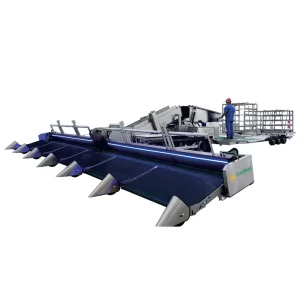
From temperature-monitored day-old chick transporters to automated poultry harvesting equipment—discover integrated solutions built to the rigorous engineering standards of CP M&E.