China China GoldBees Fully Enclosed Day-old Chick Transport Truck - Advanced Logistics from Trusted Suppliers & Factory Manufacturer, Factories
Explore Specifications
Engineered for high payload-to-tare ratio, sealed dust-free delivery, and verifiable biosecurity isolation between commercial mills and biosecure farming operations.






Industrializing agrarian logistics demands an uncompromising nexus between structural durability, operational ergonomics, and granular bio-containment.
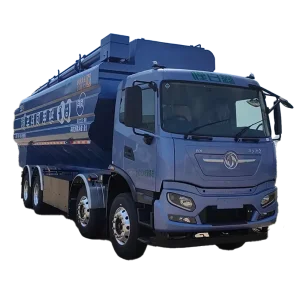
In modern animal husbandry, commercial feed logistics can no longer be viewed as simple freight movement. It functions as the direct mechanical link connecting central compound feed processing facilities to closed-circuit production units, hatcheries, and livestock farms. The modern bulk feed transport truck represents an advanced, mobile pneumatic or auger-driven mechanical system designed to protect physical pellet integrity, eliminate microbiological cross-contamination, and maximize payload compliance per ton-kilometer.
As integrated agricultural conglomerates operate across wider territorial footprints, logistical bottlenecks become operational risks. The breakdown of nutritional feed forms into dust or fine particles drastically diminishes Feed Conversion Ratios (FCR) across broiler houses and hog finishing facilities. Concurrently, transport vehicles represent the primary potential vector for catastrophic epizootic events—including African Swine Fever (ASF) and Avian Influenza (HPAI). Through comprehensive Original Design Manufacturer (ODM) and Original Equipment Manufacturer (OEM) frameworks, dedicated fabrication facilities configure bulk freight hardware designed specifically to survive continuous biocidal chemical washdowns, rigorous thermal baking decontamination cycles, and remote, unimproved road topographies.
Configured with longitudinal laser-welded high-tensile 5083/6061 aluminum alloy or stress-relieved high-strength carbon steel. Internal baffle partitions allow diversified macro-nutrient distribution per transport cycle without inter-batch cross contamination.
High-torque hydraulic planetary drives or direct-drive variable-frequency electric motors facilitate discharge rates exceeding 1.2 to 2.0 tons per minute, eliminating hydraulic fluid contamination risks above animal feeding silos.
Internally electropolished walls and seamless conical floor hoppers prevent moisture entrapment, mold accretion, and salmonella proliferation. External sub-frames utilize anti-corrosive electro-coating designed for corrosive disinfectant exposure.
Combining world-class steel fabrication ecosystems with precision automated robotic welding to maintain exact dimensional fidelity and rapid global turnaround times.
High-precision optical laser tracking and dual-wire robotic arm stations execute continuous weld beads across the vessel body, eradicating thermal deformation and micro-fractures during heavy torsional road stresses.
Incubated directly within the CP M&E engineering cluster under Charoen Pokphand Group, our design methodologies originate from 15+ years of live operational feedback in mega-scale poultry and swine facilities across Asia.
Complete domestic clustering ensures immediate access to certified hydraulic pumps, high-displacement blowers, vehicle CAN-bus modules, and structural alloys, mitigating global delivery disruptions.
A rigorous examination of operational safeguards required to defend capital investments in livestock herds against virulent pathogen transmissions.
Modern intensive livestock farming requires the isolation of production assets behind strict biosecurity perimeters (Danish entry protocols, wheel wash basins, thermal drying stations). Bulk feed vehicles operate as perpetual border-crossers, cycling between non-sterile commercial feed mills and high-health breeding centers daily. Xinbaiqin vehicles incorporate specific engineering decisions to minimize vector risks:
Inverted parabolic hopper construction eliminates exterior pockets where road mud, biological excrement, or contaminated runoff can lodge during transit.
Air-discharge compressors integrate active secondary exhaust filtration, stopping cross-aerosolization of biological spores into the farm silo during unloading cycles.
Wiring harnesses and actuator junctions are sealed to IP69K military tolerances, withstanding direct 100-bar high-pressure hot water spray and chemical disinfection routines.
Structural assemblies and sealing compounds are rated to endure 75°C dry heat exposure in farm boundary sanitation baking bays without gasket degradation or body fatigue.
Analyzing the long-term technical evolution of dedicated agricultural vehicles toward decarbonized drivetrains, smart dispensing telematics, and automated silos.
Integration of modular CATL lithium iron phosphate (LiFePO4) battery packs onto dedicated agricultural chassis. Eliminating tailpipe carbon emissions directly supports Scope 1 ESG emissions targets for multinational protein integrators while lowering local route operational costs.
Implementation of 3D visual guidance and millimeter-wave radar mapping enabling drivers to position discharge auger booms automatically over silo receiver ports, shortening turnaround time per farm drop from 45 minutes to under 18 minutes.
Real-time load-cell weighing modules coupled with cellular IoT telemetry log precise feed weight deliveries per compartment directly to enterprise cloud ERP platforms, eradicating physical paper records and verifying delivery hygiene records.
How ODM production lines adapt to regional chassis interfaces, road weight limits, and stringent vehicular safety certifications across continents.
Navigating cross-border acquisitions of specialized agricultural vehicles requires engineering adaptability. As an ODM partner, Xinbaiqin engineers specialized bulk transportation superstructure modules configured for seamless integration onto major global commercial vehicle chassis platforms, including Volvo, Scania, Mercedes-Benz Actros, MAN, Isuzu, FAW, and Sinotruk.
Customization to European Whole Vehicle Type-Approval (WVTA), ADR braking safety requirements in Australia, and FMVSS/DOT load configuration mandates in the Americas.
Complete Semi-Knocked-Down (SKD) and Completely-Knocked-Down (CKD) modular kit solutions to reduce shipping cube volume, optimize tariff classifications, and support domestic assembly facilities.
Rapid component supply partnerships, remote CAN-bus diagnostics, and dedicated engineering consultation for fleet mechanics to maintain high uptime.
Detailed technical, compliance, and warranty clarifications for agribusiness corporate procurement teams.
Hydraulic auger discharge relies on high-torque mechanical screw shafts positioned horizontally along the hopper base and articulated on a 360-degree rotating boom to mechanically elevate feed granules directly into silos. It operates at low RPM, generating minimal pellet degradation and virtually zero dust. Pneumatic discharge utilizes a high-volume positive displacement roots blower to aerodynamically convey feed through flexible or rigid hoses. Pneumatic systems excel at delivering feed to exceptionally tall silos (above 12–15 meters) or around obstructed yard layouts where mechanical booms cannot reach, though they require careful pressure tuning to avoid thermal pellet softening.
Feed segregation (the physical separation of high-density mineral premixes from lighter grain carriers) occurs primarily due to chassis vibration resonance and un-damped auger velocities. We utilize multi-compartment internal anti-surge baffle geometries paired with smooth internal hopper transitions. Furthermore, our electric and hydraulic drives feature variable-frequency and proportional flow control, enabling operators to maintain consistent mass-flow discharge rates that preserve homogenized formula nutritional balances.
Yes. Our engineering division works directly with technical drawings and chassis cab interfaces provided by overseas buyers. We fabricate the entire upper tank body, hydraulic power unit (or auxiliary electric powerpack), subframe mounting plates, and control consoles to match Scania, Volvo, Mercedes, Isuzu, Hino, or other commercial cab-chassis specifications. Subframes are pre-drilled to match OEM chassis hole patterns, eliminating on-site flame cutting or chassis modification that could compromise vehicle warranties.
We deploy two primary material configurations: marine-grade 5083/6061-T6 aluminum alloys or specialized high-tensile QSTE steel. For steel configurations, tanks undergo automated shot-blasting to SA 2.5 standard, followed by high-thickness zinc-rich epoxy priming and a specialized bi-component polyurethane topcoat designed to withstand aggressive quaternary ammonium compounds, glutaraldehyde, and peracetic acid washes without chalking, micro-cracking, or oxidative peeling.
Xinbaiqin supplies critical wear-and-tear spares (hydraulic seals, high-load auger flighting, blower rebuild kits, electronic control relays) directly with vehicle shipments under customized maintenance packages. Our engineering team provides real-time tele-diagnostics, detailed digital schematics, and video maintenance walkthroughs. In key regions across Asia and partner networks in Latin America, local service entities provide rapid-response technical troubleshooting.
Explore the specialized machinery, semi-trailers, and bulk logistics equipment manufactured by Xinbaiqin under the GoldBees & CP M&E brands.