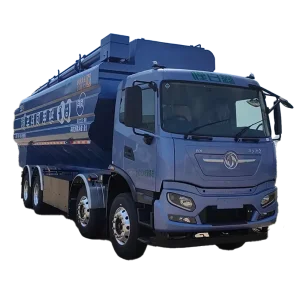
Precision-fabricated live bird, day-old chick, bulk feed, and integrated cold-chain platforms manufactured directly for enterprise integrators and industrial farms.

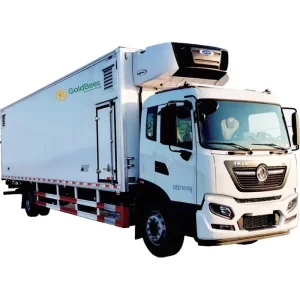





The paradigm shift from passive crate haulage to active climate control: mitigating live bird shrink, reducing Dead-on-Arrival (DOA) frequency, and fulfilling stringent international animal transport standards.
In modern industrial poultry farming, the transport phase from hatchery to grow-out house, and subsequently from broiler facility to processing plant, represents the single highest financial vulnerability in the supply chain. Historically, agricultural logistics relied on open-mesh or curtain-sided chicken trailers. Under fluctuating atmospheric conditions, these passive methods cause catastrophic stress cascades in live poultry: cold stress leading to ascites and hypothermia, or heat stress inducing extreme metabolic lactic acidosis, live-weight shrinkage ranging between 2.5% and 5.5%, and dead-on-arrival (DOA) rates exceeding 0.8% across extensive transit routes.
Stringent animal transport welfare frameworks—such as Council Regulation (EC) No 1/2005 across the European Union, the USDA-FSIS humane handling directives, and the international OIE terrestrial animal health standards—now mandate active environmental controls for live bird transit exceeding short distances. An enterprise-tier ventilated chicken hauling vehicle is no longer categorized as general cargo transport; it operates as an autonomous, road-going life-support ecosystem that balances oxygenation, thermal loads, relative humidity (RH), and ammonia (NH3) dispersion in real time.
Broilers at market weight generate between 10 to 15 Watts of metabolic sensible heat per bird. In a 6,000-to-8,000-bird vehicle body, internal heat rejection exceeds 80 kW. Our precision HVAC system delivers high-volume convective cooling to neutralize thermal pockets across every stacking tier.
Eliminates aerodynamic bypass. Employing dedicated longitudinal plenum channels along the body roof and lateral intake grills, internal velocity is maintained between 0.15 m/s and 0.45 m/s at crate level, ensuring uniform air exchange without chilling fragile stock.
Transmission of airborne pathogens such as Avian Influenza (H5N1) and Newcastle Disease demands fully sealed transit shells. Outfitted with high-efficiency intake filtration, automated air scrubbing, and fully isolatable chambers, inter-farm biological cross-contamination is eliminated.
Engineered for real-world environmental extremes: configuring specialized poultry logistics architectures across diverse geographic and regulatory landscapes.
External ambient temperatures regularly exceed 48°C with intensive solar radiational loads. Body shells feature polyurethane (PU) rigid core sandwich panels with high thermal resistance (k < 0.024 W/m·K) and auxiliary independent diesel-electric power generators (APU) ensuring relentless HVAC output even during prolonged vehicle staging or weighbridge queues.
High ambient relative humidity (>85% RH) inhibits the bird's natural panting thermoregulation mechanism. Our system deploys dual-circuit cooling and active dehumidification coils combined with high-velocity brushless extraction fans that expel saturated moisture, mitigating the risk of sudden flock asphyxiation.
Transporting day-old chicks at -25°C requires precise supplemental heating. The vehicle incorporates fuel-fired hydronic heating circuits or PTC ceramic electric heating matrices that generate over 45,000 kcal/h, preheating fresh ventilation air to exactly 32°C before circulating through baby chick crates.
Backed by Charoen Pokphand Group's CP M&E electromechanical legacy, our integrated Cixi industrial park sets the global benchmark for animal husbandry specialized vehicles.
Based in Cixi Modern Agriculture Industrial Park, Zhejiang, our enterprise operates end-to-end laser cutting, automated multi-axis bending, robotic welding stations, and specialized dust-free composite panel lamination facilities with an annual throughput exceeding 2,000 units.
We utilize proprietary 6061-T6 and 5083 high-strength aluminum extrusion chassis frames and aerodynamic fairings. This precision engineering reduces vehicle tare weight by up to 28% compared to standard steel transporters, allowing maximum live-bird payload densities without exceeding regional axle gross limits.
Every custom ODM body undergoes comprehensive finite element analysis (FEA), high-pressure spray leak-tightness validation, and simulated thermal chamber calibration. Our integration with the global CP M&E supply chain delivers institutional reliability and direct factory accountability.
Pioneering smart, sustainable livestock transportation through New Energy Vehicle (NEV) chassis, closed-loop sensor telemetry, and AI thermal load predictive models.
Advancing heavy-duty New Energy Vehicle architecture. By tapping directly into high-voltage lithium iron phosphate (LFP) power batteries, the auxiliary poultry HVAC operates with zero direct emissions, decoupling ventilation from diesel engine wear and significantly lowering fleet TCO.
Multi-sensor arrays monitor CO2 concentrations, static pressure differentials, and thermal gradients across 32 points per deck. Fleet managers monitor cargo vitality in real time via 4G/5G cloud links, with automatic alerts triggering before stress points harm flock health.
Integrated Clean-in-Place (CIP) high-pressure misting nozzles sanitize the entire cargo enclosure between deliveries. Controlled automated dosing cycles neutralize viruses and bacteria within 15 minutes, cutting turnaround times while reinforcing strict farm biosecurity standards.
Seamless superstructure mounting designed to integrate seamlessly onto international commercial chassis platforms and comply with cross-border vehicle standards.
A critical engineering differentiator of GoldBees specialized bodies is our Chassis-Agnostic Mounting Architecture. Whether our overseas buyers specify European prime movers (Scania, Volvo, Mercedes-Benz, MAN), Japanese platforms (Isuzu, Hino), or leading domestic brands (Sinotruk HOWO, FAW Jiefang, Foton, Dongfeng), our ODM design team utilizes standardized sub-frame tie-down interfaces engineered to absorb road torsional stress without transferring torsional deformation to the insulated cargo superstructure.
Our international engineering services group provides end-to-end homologation documentation, including complete sub-frame finite element calculations, axle-weight distribution certifications, European Whole Vehicle Type-Approval (WVTA) compliance datasets, Australian Design Rules (ADR) structural assessments, and North American FMVSS-aligned electrical harness blueprints.
Precision-drilled variable-pitch sub-frame connection beams accommodate varied chassis rail widths and suspension drops.
Dual-voltage 12V/24V electrical harnesses with IP69K sealed connectors withstand repeated high-pressure washdowns.
Seamless food-grade composite wall surfaces and non-porous welds prevent bacterial colonization and pass rigorous veterinary audits.
Standardized HVAC compressors, fan modules, and PLC controllers ensure local serviceability through leading global supply channels.
Technical answers for fleet directors, livestock logistics managers, and procurement specialists evaluating ODM ventilated vehicle solutions.
Open-air trailers subject birds to aerodynamic draft buffeting, exhaust fumes, temperature spikes, and cold rain. This causes severe thermal stress, lactic acidosis, and dehydration. Our enclosed ventilated body maintains a stable microclimate (22°C to 26°C for broilers; 30°C to 34°C for day-old chicks) with controlled positive air renewal and filtration, consistently keeping transit DOA rates below 0.12% even on long routes.
Our vehicles feature an autonomous Auxiliary Power Unit (APU) with an automatic transfer switch (ATS). If the truck prime mover experiences a mechanical fault, the APU starts within 4 seconds, maintaining full HVAC compressor and fan power. In addition, fail-safe spring-loaded pneumatic louvers automatically open if power drops, allowing natural emergency cross-ventilation.
Our airflow system delivers up to 60 air exchanges per hour. Clean fresh air enters through roof plenums, sweeps downward past the crates, and exhausts through lower perimeter vents, carrying away heat, moisture, and ammonia. Polyurethane insulation panels prevent internal condensation and eliminate cold bridging.
Yes. We engineer cargo bays to match your operational equipment, including containerized poultry drawers (such as Linco, Meyn, or Marel cassettes) or traditional stackable crates. We also offer internal pneumatic roller decks, hydraulic tailgate lifts, and guided floor tracks to streamline automated loading and unloading.
Our bodies are built with marine-grade 5083/6061 aluminum alloy and 304/316 stainless steel hardware. Internal walls feature seamless glass-fiber reinforced polymer (FRP) with antimicrobial gelcoats. Wiring is sealed to IP69K standards, allowing high-pressure hot water and chemical sanitization without corroding circuits.
After technical drawing sign-off and chassis interface confirmation, typical batch manufacturing takes 35 to 50 days. We also offer Completely Knocked Down (CKD) or Semi-Knocked Down (SKD) kits for international assembly to help lower shipping costs and import duties.
From automated chicken harvesters to high-efficiency fertilizer spreaders and refrigerated semi-trailers: reliable agricultural vehicles built for demanding field operations.