Engineered for high biosecurity, urban emission thresholds, and uncompromised livestock and bulk feed logistics.




In-depth structural breakdown of agro-industrial transit, peri-urban logistics corridors, and environmental compliance across Greater London.
The Greater London metropolitan area and its adjoining agricultural green belts represent one of the world's most intricate and tightly monitored transportation jurisdictions. Connecting bulk distribution points along the Thames Gateway, Tilbury, and London Gateway ports to the farming hubs across Kent, Essex, Surrey, and Hertfordshire requires heavy commercial vehicle configurations that excel in both payload efficiency and environmental compliance. Operators deploying bulk animal feed, fresh temperature-sensitive agricultural goods, and livestock transport face rigorous compliance checks governed by Transport for London (TfL), the Driver and Vehicle Standards Agency (DVSA), and DEFRA.
To operate profitably within the London market, transport factories and vehicle bodybuilders must align engineering schematics with three distinct regional standards:
Every commercial vehicle over 12 tonnes entering Greater London must achieve strict DVS star ratings or install complete Progressive Safe Systems (PSS), including blind-spot sensors, side-scan radars, and external audible warnings to ensure urban vulnerability protection.
London enforces strict Euro VI (NOx and PM) diesel emissions or requires alternative zero-emission powertrains. Heavy vehicle chassis must accommodate localized electrification or high-efficiency hybrid PTO (Power Take-Off) drives to eliminate particulate penalties.
DEFRA transport animal health regulations demand internal climate logging, real-time ammonia sensors, continuous forced-air ventilation, and automated pathogen mitigation barriers for high-density livestock movements across UK arterial routes.
Because London functions as a premier international transit consumption center rather than a production basin, logistics assets operating along the M25 ring road require rapid unloading capability. Whether pneumatically lifting granular feed 30 meters high into vertical silos or mechanically sorting fresh cold-chain produce at terminal markets like New Spitalfields or Western International Market, downtime equates to direct financial loss. Our manufacturing line integrates structural lightweighting using aviation-grade aluminum alloys (5083/6061) and Domex high-tensile steel, offering maximum operational payload without exceeding UK axle weight ceilings.
Cross-border engineering shifts toward intelligent automation, autonomous handling, and zero-carbon fleet architecture.
Globally, the agro-industrial transport manufacturing sector is transitioning through an unprecedented technological paradigm shift. Moving live organisms, processed animal protein, and temperature-sensitive biological goods demands levels of precision traditionally reserved for industrial pharmaceuticals. The modern fleet operator is no longer just purchasing a welded trailer body; they are acquiring an automated, mobile micro-environment integrated into an enterprise supply-chain network.
Three overarching drivers define the international market:
| Performance Parameter | Legacy Industry Standard | Next-Gen GoldBees / Xinbaiqin Standard | London Market Advantage |
|---|---|---|---|
| Discharge Cycle Time (Pneumatic) | 0.8 – 1.0 Tonnes / min | 1.4 – 1.8 Tonnes / min | Cuts terminal dock time by 42% on UK routes |
| Tare Weight Optimization | Standard Carbon Steel (Q235) | Al-Mg Alloy & High-Yield Structural Plate | Increases legal net payload by 1,200 – 1,800 kg |
| Biosecurity Decontamination | Manual high-pressure washing | Integrated clean-in-place (CIP) spray rings | Meets UK DEFRA biosecurity wash-down protocol |
| Thermal Core Insulation | Expanded Polystyrene (EPS) core | High-Density Vacuum-Bonded Polyurethane | K-Value < 0.30 W/m²K; ATP-compliant Class FRC |
A milestone-based pathway charting the deployment of commercial vehicle technologies from current production to carbon-neutral autonomy.
Replacing traditional diesel engine idling with independent lithium-iron-phosphate (LiFePO4) battery packs to drive augers and blowers. This eliminates noise pollution during London night deliveries and cuts site fuel consumption to zero.
Transitioning from basic extraction fans to machine-learning controlled multi-zone microclimates. Micro-sensors monitor volatile organic compounds (VOCs), relative humidity, and core temperature, modulating fresh-air intakes in real time.
Complete structural shift to 100% recyclable thermoplastic structural components, friction-stir-welded aluminum subframes, and modular bolt-on running gear to lower lifetime embodied carbon across UK transportation fleets.
Full suite of multi-deck livestock carriers, smart trailers, precision agrochemical spreaders, and handling equipment.


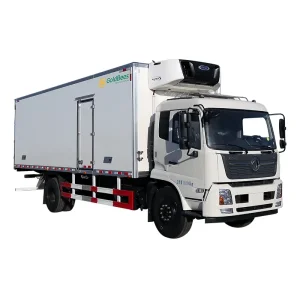




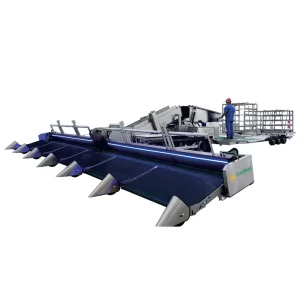
Key architectural and regulatory criteria for commercial fleet engineers and procurement executives ordering for UK & European markets.
Our engineering configurations interface seamlessly with European cab-chassis platforms (Scania, Volvo, DAF, Mercedes-Benz, and MAN). Bodies are pre-wired for TfL DVS Progressive Safe Systems (PSS), including blind-spot sensors, forward cameras, side alert systems, and left-turn audible alarms. Furthermore, auxiliary discharge systems (hydraulic augers and pneumatic compressors) are available with clean electric motor-generator options that allow operators to discharge inside London distribution yards without idling diesel engines, complying fully with local noise and emission covenants.
Yes. Xinbaiqin Special Vehicle engineers bodies according to UK Type Approval and Individual Vehicle Approval (IVA) standards. We supply full technical documentation packages including axle-load calculation models, side-underrun protective device (SUPD) stress certifications, rear underrun barrier compliance, and electromagnetic compatibility (EMC) reports for electrical control modules.
All structural sub-frames undergo continuous shot-blasting to Sa 2.5 profile standards, followed by multi-stage zinc-rich epoxy priming and polyurethane finishes. Highly exposed structural assemblies, tank discharge gates, and livestock pen decks utilize passivated 304 or 316 stainless steel and marine-grade aluminum alloy sheets, providing superior resistance against harsh salt-spray, dynamic road brine, and aggressive chemical disinfection agents.
Our pneumatic systems employ large-diameter, low-velocity aerodynamic discharge pipes combined with variable-frequency positive displacement Roots blowers. By regulating airflow volume and static line pressure dynamically via PLC control, we keep pellet impact velocity low, cutting fines and mechanical crumbling to below 1.2%, which is essential for poultry broilers, layers, and high-performance swine diets.
Export units are protected with industrial-grade anti-corrosive wax film coatings across all unpainted machined surfaces, with hydraulic cylinder rods retracted and wrapped in moisture-resistant vapor barriers. Units are shipped via Ro-Ro (Roll-on/Roll-off) or flat-rack intermodal shipping containers directly from major deepwater terminals to UK and European gateway ports, supported by factory-authorized shipping surveys.
Connect with our senior vehicle engineers to review custom axle configurations, payload calculations, and UK homologation blueprints.
