Custom-engineered configurations tailored to the high-throughput processing and biosecure transit corridors connecting the Greater Toronto Area (GTA) with regional livestock hubs.


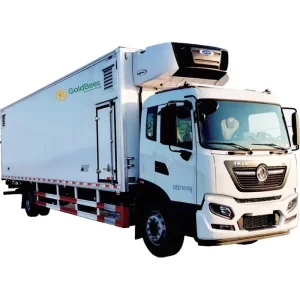

Navigating harsh sub-zero winter temperatures, rigorous Canadian Food Inspection Agency (CFIA) mandates, and heavy-density transit routes across the 400-Series highways.
While Toronto is Canada’s financial engine, the surrounding Southern Ontario greenbelt (including Waterloo, Oxford, Perth, and Wellington counties) represents one of North America's most densely concentrated livestock and poultry corridors. Millions of broilers, day-old chicks, and market pigs move along Highway 401 and the QEW every quarter to feed municipal processing facilities and consumer demand in the GTA. Fleet operators face strict seasonal swings—from humid +35°C summers to sub-zero -25°C winters laden with road salts and freezing crosswinds off Lake Ontario.
Transporting day-old chicks and live animals across Canadian borders or inter-provincially requires strict adherence to updated Part XII of the Health of Animals Regulations. Transport vehicles must feature microclimate telemetry, real-time temperature and humidity tracking, optimized ramp angles to prevent slips, and positive/negative pressure air filtration to prevent airborne pathogen transfer such as Highly Pathogenic Avian Influenza (HPAI) and Porcine Reproductive and Respiratory Syndrome (PRRS).
Bridging global agribusiness supply chains with intelligent robotics, lightweight alloy engineering, and end-to-end quality governance.
Across Europe, North America, and Latin America, outdated natural-ventilation slatted trailers are being phased out rapidly. Biosecurity hazards, public scrutiny over animal welfare, and carbon metrics are driving multinational poultry and swine integrators toward sealed, positive-pressure air-conditioned transports with automated data logging.
Operating from our integrated 66,667 m² Cixi manufacturing campus backed by CP M&E engineering synergies, Xinbaiqin utilizes robotic fiber-laser cutting, automated plasma beam welding, and electrophoretic dip coating to yield structural tolerances second to none at an optimized total acquisition cost.
North American carriers face exorbitant capital equipment costs. Our factory-direct OEM/ODM engineering reduces vehicle capital expenditure by 30-40% while delivering higher legal payloads through high-strength 6000-series structural aluminum and specialized multi-layer insulated composite sandwich panels.
| Engineering Vector | Traditional Slatted Livestock Trailer | GoldBees Intelligent Biosecure Carrier (Toronto Spec) |
|---|---|---|
| Thermal & Climate Management | Passive wind flaps, prone to frostbite or heat stress | Microprocessor HVAC, constant 28-32°C for chicks, automated ventilation |
| Air Filtration & Biosecurity | Open to road aerosol pathogens & virus vectors | Multi-stage MERV/HEPA bio-exclusion filtration with positive cabin pressure |
| Sanitation & Washout Time | Porous seams, rough welds; 3.5 - 5 hours per wash | Laser-welded flush aluminum flooring, internal CIP spray systems; <1.5 hours |
| Data Telematics & Compliance | Manual driver logs (prone to inspection disputes) | IoT cloud-connected logging: CO2, humidity, temperature, door access |
Precision-tailored mechanics addressing the specific logistics realities of day-old chicks and bulk protein transport.
Sub-zero conditions on Toronto radial routes can lead to severe mortality in day-old chicks due to underdeveloped thermoregulation. GoldBees incorporates diesel-electric auxiliary auxiliary heating arrays, thermal curtain zoning, and isolated wall cores to maintain a rock-solid internal cocoon.
Minimizing pig stress during loading and unloading is paramount to prevent PSE (pale, soft, exudative) meat defects. Our full-span hydraulic lifting decks allow animals to walk straight onto lower and upper decks without steep ramps, fully aligned with Canadian welfare benchmarks.
Corporate procurement teams require dependable delivery guarantees. From RORO shipping and containerized break-bulk assembly to seamless certification matching local chassis (Freightliner, Peterbilt, Kenworth, Volvo, or Sinotruk/Shacman platforms), our export management oversees the full chain.
Direct technical answers addressing engineering, compliance, logistics, and fleet operations.
Our Canadian and North American packages incorporate cold-weather arctic hydraulic fluids, insulated pneumatic valves, heated air dryer systems, and high-spec insulated composite walls (polyurethane foam core clad in corrosion-resistant fiberglass/aluminum). Decks and frames are finished with anti-corrosion treatments to resist calcium chloride and rock salts commonly used on Southern Ontario highways.
Chicks cannot regulate their own body temperature during the first 72 hours. GoldBees Day-old Chick Transporters utilize specialized fan arrays, roof-mounted climate-control air-handling units, auxiliary diesel heaters, and laminar airflow diffusers that deliver continuous fresh air, exhaust excessive metabolic heat and carbon dioxide, and maintain an even 30°C to 32°C across all trolley bays.
Yes. We offer fully mounted complete trucks or knockdown / superstructure body modules pre-engineered to mate with popular North American commercial chassis (such as Freightliner, International, Mack, or Kenworth). We provide custom subframe interface drawings, PTO interface specifications, and wire-harness schematics for straightforward local assembly.
Every internal joint is continuously welded and sealed to eliminate organic build-up crevices. Internal compartments feature integrated Clean-In-Place (CIP) high-pressure disinfection nozzles, sloped drainage channels with heavy-duty discharge valves, waterproof IP69K-rated electrical wiring harnesses, and smooth antimicrobial deck materials that withstand harsh alkaline washing and high-heat thermal decontamination.
Custom-engineered body fabrication typically takes 30 to 45 days at our factory. Ocean transit to Halifax or Montreal, followed by rail freight into Toronto or regional intermodal yards, normally requires 25 to 35 days. Full documentation, bill of lading, and export compliance packs are managed directly by our CP M&E international logistics division.
Explore our complete commercial range of bulk feed augers, refrigerated logistics trailers, poultry harvesters, and biosecure haulers.
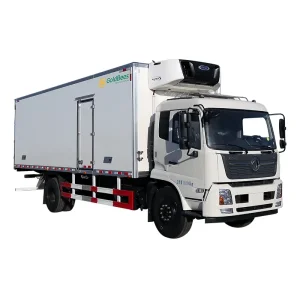



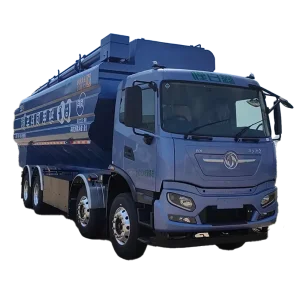
Partner with a world-leading manufacturer backed by CP M&E engineering expertise. Contact our international vehicle sales team today for customized specs, pricing, and project consultation.
Send Inquiry Now