Engineered to mitigate transportation mortality, overcome West African road turbulence, and safeguard flock genetics from coastal hatcheries to inland commercial farms.

Intelligent multi-tier climate regulation, automated drinking nipples, negative pressure exhaust, and biosecurity disinfection system.

High-payload aluminum deck structure, hydraulic tail-lift loading, heavy-duty tandem suspension, and cross-ventilation flaps.

Hermetic climate chamber, constant 32°C microclimate control, dual refrigeration-heating loop, and high-efficiency carbon air filtering.

Engineered crate clamping rails, aerodynamic air intakes, anti-heat stress canopy, and ultra-durable galvanized anti-corrosion chassis.
Analyzing the convergence of domestic protein demand, government revitalization policies, and the critical logistics infrastructure gap across West Africa.
Under the Ministry of Food and Agriculture (MoFA) initiative "Rearing for Food and Jobs" (RFJ), the Republic of Ghana has prioritized modernizing domestic livestock, swine, and poultry supply chains. Historically dependent on imported frozen poultry—which accounted for over 80% of national consumption—Ghanaian commercial farmers in the Ashanti, Bono (Dormaa Ahenkro), Central, and Greater Accra regions are scaling operations aggressively.
However, this rapid agro-industrial transition faces a catastrophic operational bottleneck: transportation-induced mortality and thermal stress. Conventional open-bed trucks expose day-old chicks (DOC) and livestock to scorching ambient temperatures ranging from 32°C to 39°C, accompanied by relative humidity spikes exceeding 85% in southern coastal stretches and harsh, dust-laden Harmattan winds across the northern transit corridors (Tamale to Bolgatanga). Without active microclimate regulation, mortality rates during transit routinely reach 8% to 15%, slashing operating margins before birds or livestock reach the rearing sheds.
Globally, livestock transport engineering is governed by strict welfare frameworks such as the European Union's Council Regulation (EC) No 1/2005 and North American USDA-APHIS guidelines, prioritizing carbon dioxide ppm limitations, thermal comfort zones (28°C–32°C for DOC), and mechanical ventilation air exchanges (at least 60 changes/hour per cubic meter).
Exporting these advanced vehicle concepts into Ghana requires profound engineering adaptation. European standard bodies rely heavily on temperate-zone intake air for passive ventilation, which fails catastrophically when ambient air reaches 36°C with 90% RH in equatorial West Africa. True industrial solutions for Ghana demand active closed-loop HVAC systems, high-amperage auxiliary diesel generators, reinforced double-wall polyurethane (PU) thermal sandwich bodies, heavy-duty parabolic leaf-spring or air suspension setups capable of enduring unpaved arterial roads, and aviation-grade anti-corrosive alloys.
Examining how high-spec specialized transporters neutralize mortality triggers through thermodynamic control, structural longevity, and microbiological defense.
Day-old chicks lack fully developed thermoregulation for the first 72 hours post-hatch. Our specialized body utilizes laminar ceiling air delivery ducting with micro-perforations. Air is drawn through G4/F7 filtration media, conditioned to exactly 31.5°C–33.5°C, and distributed uniformly across crate columns, eliminating lethal stagnation zones and suffocation hotspots.
Constructed with high-pressure injected polyurethane foam (density 45 kg/m³) enclosed by anti-ultraviolet fiber-reinforced polyester (FRP) and food-grade aluminum. With a low thermal transmittance (K-factor ≤ 0.35 W/m²K), the cargo body repels tropical solar radiation even during prolonged traffic stalls along the Accra-Kumasi Highway.
Livestock and pig transport units incorporate patented 3CR12 / 6061-T6 aluminum alloy multi-tier loading decks with hermetic seals. Integrated high-pressure nozzles deliver misting disinfectant cycles, while sloped liquid channels funnel waste into high-capacity underbody containment tanks, completely avoiding contamination on public highways.
| Performance Dimension | Conventional Open/Modified Trucks in Ghana | GoldBees Specialized Climate Transporter | Direct Economic & Biological Value |
|---|---|---|---|
| In-Transit Mortality (DOC) | 5.0% – 14.5% (Severe thermal dehydration) | < 0.2% – 0.5% (Controlled microclimate) | Saves 5,000–14,000 birds per 100k transport run; immediate ROI recoup. |
| Pig & Swine Shrinkage (Weight Loss) | 4.5% – 8.0% live weight loss over 250km | < 1.5% live weight loss (Sprinkler/drinking nipples) | Preserves 3kg–6kg carcass weight per animal on trips to slaughterhouses. |
| Air Quality & CO2 Regulation | Unmonitored; toxic NH3 and CO2 concentration spikes | Continuous CO2 sensors (< 2,500 ppm automatic purge) | Prevents pulmonary edema, ascitic heart failure, and batch culling. |
| Biosecurity & Disease Vectors | High risk; permeable timber/iron beds absorb pathogens | Non-porous aluminum, CIP wash-down ports, IP67 seals | Blocks transmission of Newcastle Disease, Gumboro (IBD), and ASF. |
| Road Suspension Resilience | Standard multi-leaf stiff suspension (severe jostling) | Optimized parabolic damping or pneumatic airbag suspension | Eliminates internal bruising, bone fractures, and egg yolk breakage. |
Our engineering division designs customized body lengths (from 4.2m rigid chassis to 13.6m full tri-axle semi-trailers) compatible with Sinotruk HOWO, Shacman, Isuzu, FAW, and Dongfeng commercial chassis deployed across Ghana.
Send Inquiry Now & Request Custom EngineeringBridging global manufacturing excellence with grassroots logistics realities across Greater Accra, Ashanti, Western, and Northern administrative regions.
Dormaa Ahenkro serves as the poultry heartland of Ghana. Supplying day-old layer pullets and broilers to smallholder and commercial farms in Kumasi, Koforidua, and Accra requires enduring an 8 to 14-hour transit over mixed-grade asphalt. GoldBees automated DOC transporters feature continuous 100% fresh-air exchanges and multi-zone heating/cooling, guaranteeing chicks arrive active, hydrated, and ready for immediate brooding.
Commercial pig farmers operating in Ejura, Kumasi, and rural Ashanti supply live porkers to urban centers. Traditional open trucks cause severe acute porcine stress syndrome (PSS), hyperthermia, and meat discoloration. GoldBees livestock units feature multi-level hydraulic lift decks, onboard water reservoirs with drinking nipples, and roof insulation that eliminate death-on-arrival (DOA) losses.
Vehicles strictly conform to the Ghana Standards Authority (GSA) commercial automotive standards, MoFA Veterinary Directorate quarantine and hygiene rules, and ECOWAS axle load protocols (preventing road tax penalties and structural fatigue). Complete homologation documentation is supplied directly with commercial invoices and export certifications.
How cutting-edge intelligent monitoring and alternative power architectures are redefining resilient fleet economics in developing markets.
GoldBees vehicles integrate 4G cloud-connected data loggers installed directly inside the livestock compartments. Farm managers and fleet dispatchers in Accra can view live thermal gradients, relative humidity %, carbon dioxide ppm concentrations, door hatch statuses, and vehicle GPS coordinates via a mobile dashboard. In-cab alarms instantly alert drivers if internal cabin parameters drift outside pre-calibrated biological safety boundaries.
Ghana experiences exceptional solar irradiance (4.5–6.0 kWh/m²/day). We offer optional ultra-light flexible mono-crystalline solar roof coatings paired with lithium-iron-phosphate (LiFePO4) battery banks. This enables the ventilation and climate control fans to operate autonomously during long ferry crossings, border delays, or engine idling without drawing fuel from the primary chassis engine or genset.
Clear, direct answers for agricultural directors, procurement executives, and farm owners evaluating special vehicles.
Complete ecosystem vehicles from port-to-feed-mill bulk discharge to high-capacity semi-trailers and organic precision spreaders.
Tri-axle, high-tensile lightweight aluminum, multi-deck internal lift, and specialized animal welfare ventilation.

Zero-emission electric powertrain, high-density LFP battery pack, whisper-quiet discharging near livestock barns.

Turnkey poultry layer housing, automated silo feeding lines, climate sensors, and comprehensive feed milling systems.

Fluidized-bed air pressure discharge, zero-residue pipeline conveyance, ideal for high silos and zero pellet breakage.
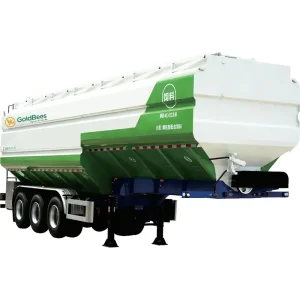
Massive cubic capacity for long-haul pellet transport from Tema harbor mills to inland Ashanti livestock zones.
Engineered with multi-bin compartmentalization for simultaneously hauling multiple commercial feed formulations.

High-pressure injection and uniform wide-swath distribution of livestock manure slurry for circular agro-farming.
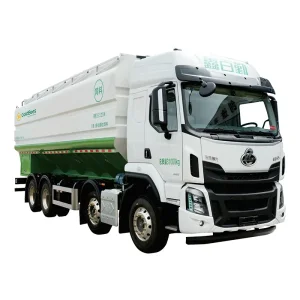
Agile medium-wheelbase maneuverability for tight rural farm gates, high-speed discharge auger tower, low power consumption.
Connect directly with our engineering and export team. We provide complete CIF Tema / CIF Takoradi shipping quotations, homologation support, and tailored multi-deck configuration recommendations.
Send Inquiry Now