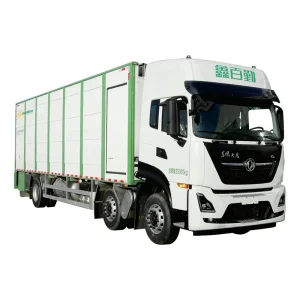
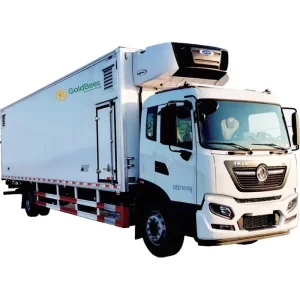
High-durability automated logistics platforms configured for alpine terrain, coastal thermal shifts, and stringent MPI animal welfare specifications.
New Zealand occupies a globally distinct position in livestock production and animal protein export. Driven by world-class pastoral farming systems across regions such as the Waikato, Canterbury Plains, Taranaki, and Southland, the movement of stock demands specialized vehicular architectures that reconcile rigorous animal welfare mandates with punishing geographic contours.
Operating under the stringent surveillance of the Ministry for Primary Industries (MPI) and the Animal Welfare (Care and Procedures) Regulations, transport operators are legally bound to mitigate live animal stress, thermal exhaustion, bruising, and dehydration. The transition between the subtropical north and the sub-alpine corridors of the Southern Alps presents extreme ambient variance—ranging from humid 28°C coastal climates to sub-zero mountain passes within single cross-island routes.
Furthermore, New Zealand's day-old chick (DOC) sector—anchoring foundational breeding stock for egg producers and broiler growers—operates under near-zero-tolerance limits for mortality. Day-old chicks cannot self-regulate their core body temperatures during their first 72 hours. Transporting chicks over long inter-island hauls, including ferry transits across the Cook Strait, demands continuous microclimatic stability, multi-stage HEPA filtration, and biosecurity containment that legacy curtain-siders or passively ventilated trucks cannot deliver.
On a macro scale, the global animal husbandry logistics sector is undergoing a structural transformation. Biosecurity threats—such as the international dissemination of African Swine Fever (ASF), Avian Influenza (HPAI), and Porcine Reproductive and Respiratory Syndrome (PRRS)—have definitively obsoleted open-air transport structures. Biosecurity must now be structural rather than procedural.
Xinbaiqin Special Vehicle Co., Ltd., backed by CP M&E (Charoen Pokphand Group), engineers GoldBees vehicles around systematic containment. Global livestock suppliers must address three fundamental operational bottlenecks:
GoldBees special vehicles integrate structural, mechanical, and sensory automations to ensure sustained biosecurity and lowest total cost of ownership (TCO).
Closed-cabin HVAC systems with multi-point ducting deliver stable temperature zones throughout multi-deck chambers. Real-time CO2, relative humidity, and temperature telematics inform in-cab control panels and remote telemetry dashboards.
Constructed with anti-corrosion, aviation-grade 6061 aluminum alloy and seamless robotic welding. Eliminates interior microbiological harborage points and withstands daily caustic hot-wash chemical sanitation cycles without degradation.
Smooth, vibration-dampened dual-cylinder hydraulic decks ensure multi-tier loading without steep internal inclines. Drastically minimizes animal stress, skeletal fractures, and bruising during pre-transit and post-transit transitions.
Equipped with freeze-protected automated nipple-line drinking systems, high-efficiency spray misting arrays for evaporative cooling, and constant positive-pressure ventilation fans backed by independent on-board generators.
Engineered to mount seamlessly on leading Japanese and European cab-chassis platforms (Scania, Volvo, Isuzu, Hino) favored by New Zealand transport fleets, configured to meet local axle-load limits and RUC cost boundaries.
Zero-discharge collection tanks equipped with pneumatic discharge valves, level sensors, and pressurized internal clean-out ports, guaranteeing full containment on rural highways and inter-island nautical passages.
Deploying specialized heavy equipment into New Zealand requires strict alignment with local structural and logistical codes. GoldBees vehicles supplied to New Zealand operators are tailored from baseline engineering to address:
As New Zealand advances toward its carbon neutrality mandates and agricultural emissions frameworks, fleet managers face escalating scrutiny over transport-related emissions. GoldBees is aggressively pioneering zero-tailpipe and hybrid solutions designed for commercial viability.
Our research and development program currently advances along three strategic pillars:
Comprehensive technical and procurement clarifications for New Zealand agricultural integrators, fleet managers, and commercial livestock haulers.
GoldBees day-old poultry vehicles engineered for the New Zealand market feature redundant dual auxiliary electrical systems and integrated ship-to-shore shore-power connectors. During the 3.5-hour Cook Strait crossing when main truck chassis engines must remain turned off, the internal environmental chamber automatically switches to battery or shipboard three-phase power. This maintains a continuous ambient range of 24°C to 26°C with 60% relative humidity, ensuring continuous air exchange and eliminating CO2 accumulation.
Yes. Our engineering department develops custom sub-frame mounting brackets and hydraulic interfaces compatible with European and Japanese chassis platforms widely utilized in New Zealand, including Scania, Volvo, MAN, DAF, Isuzu, and Hino. We verify all weight distribution profiles against NZTA Vehicle Dimension and Mass (VDAM) rules prior to fabrication.
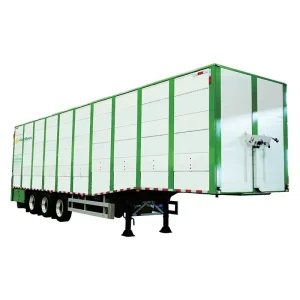
All livestock trailers and rigid bodies feature fully sealed, seamless welded side coamings with built-in inward lip deflectors. Liquid waste is directed through recessed drainage gullies into high-capacity stainless steel effluent containment tanks fitted with pneumatic fail-safe valves. Furthermore, the 100% smooth-wall aluminum and composite sandwich panel designs eliminate dead corners, allowing commercial washing and chemical disinfection to clear all organic residues rapidly.
We provide full-process export facilitation, supplying all essential mechanical compliance documentation, electrical schematics, and structural certifications needed for LVVTA and WoF/CoF verification. Critical maintenance components—such as valves, hydraulic pumps, ventilation fans, and environmental control boards—are built using internationally recognized industrial brands with established spare parts distribution networks across Auckland, Palmerston North, and Christchurch.
Typical fabrication lead time ranges between 45 to 65 days depending on hydraulic automation complexity, decking layers, and chassis specification. Sea freight transit from our deep-water port facilities in Ningbo/Shanghai to Auckland, Tauranga, or Lyttelton generally takes 18 to 25 days, supported by comprehensive export marine insurance and roll-on/roll-off (Ro-Ro) or containerized flat-rack shipping protocols.
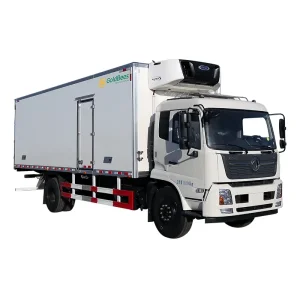
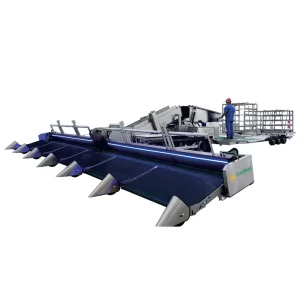
Full technical array of commercial livestock, broiler, day-old chick, cold-chain, and automated harvesting units manufactured under stringent CP M&E engineering standards.
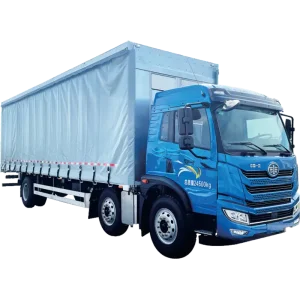
Connect with our direct technical engineering team to obtain custom CAD chassis blueprints, thermal airflow simulations, and factory-direct export proposals tailored to New Zealand highway rules.
Send Inquiry Now