Engineered specifically for hot, high-humidity tropical conditions across Nakhon Ratchasima, Chonburi, Ratchaburi, and Saraburi agro-industrial hubs.

Thailand commands a dominant position as the “Kitchen of the World” and stands as the foremost poultry exporter across the Association of Southeast Asian Nations (ASEAN). As conglomerate integrators such as Charoen Pokphand Foods (CPF), Betagro, GFPT, and Thaifoods Group scale their vertical integration, farm biosecurity and supply chain velocity have transitioned from peripheral operational factors into decisive determinants of commercial survival.
Historically, commercial logistics across Thai rural corridors relied heavily on open-bed six-wheelers and retrofitted wooden-slat flatbeds. However, tropical weather dynamics—characterized by persistent relative humidity exceeding 85% and ambient road temperatures surpassing 40°C during peak seasons—induce severe logistical bottlenecks. Traditional transport methods inflict heat prostration, high discard rates during poultry transit, stress-induced mortality among day-old chicks (DOC), and cross-contamination hazards during regional disease outbreaks such as African Swine Fever (ASF) and Highly Pathogenic Avian Influenza (HPAI).
The category designated as “Other Vehicles” under custom agricultural vehicle manufacturing transcends generic trailers. It embodies a technologically sophisticated class of mobile agro-industrial units: self-propelled intelligent poultry harvesting machines, hermetically sealed positive-pressure DOC carriers, multi-deck air-conditioned swine freighters, and high-efficiency pneumatic bulk feed transporters. Chinese manufacturing partners, powered by agile R&D and supply chain synergy with CP M&E, now offer Thai fleet managers exact custom-engineered vehicle bodywork that meets Thailand Department of Land Transport (DLT) bridge weight formulas and Department of Livestock Development (DLD) sterilization protocols.
How next-generation structural alloy metallurgy, IoT thermal telematics, and biosecurity containment outclass standard commercial vehicles.
Traversing secondary rural routes from Suphan Buri to Rayong exposes cargo to fierce radiant ground heat. Our vehicle bodies utilize 80mm high-density polyurethane (PU) sandwich panels laminated with antibacterial fiber-reinforced polymer (FRP). Multi-stage ventilation channels circulate 12,000 m³/hr of positive-pressure filtered air, removing CO₂, ammonia, and water vapor continuously while avoiding condensation pockets that breed fungal spores.
Rigorous DLD sanitary inspections mandate that vehicles passing perimeter truck dips and mist stations endure harsh alkaline and peracetic acid washes. GoldBees vehicle cabins feature seamless floor weldments fabricated from marine-grade 5083 aluminium alloy. Internal automated spray manifolds, high-temperature thermal bake cycles (70°C for 30 minutes), and hermetically sealed IP67/IP69K wiring harnesses prevent electrical failure and stop pathogen transfer dead.
Equipped with 4G/5G multi-carrier SIM modems tuned to Thai cellular networks (AIS, True, DTAC), onboard microcontrollers transmit multi-point thermal profiles, oxygen concentrations, chassis vibration, and auger discharge speed directly to central enterprise ERP systems. Drivers receive real-time cab warnings if zone temperatures deviate by ±0.5°C, ensuring zero dead-on-arrival (DOA) rates.
Why sourcing specialized agricultural chassis superstructures from Tier-1 Chinese manufacturers outperforms domestic European imports or local small-scale bodybuilders.
Procuring specialized vehicles for demanding farming operations requires rapid custom engineering, precision robotics, and cost control. European imports frequently carry exorbitant price tags and lengthy 9-to-12-month delivery schedules, with replacement components taking weeks to arrive via air freight. Meanwhile, domestic Thai bodybuilders often lack robotic fiber-laser cutting, automated longitudinal submerged-arc welding machines, and dedicated biosecurity testing rigs.
Our industrial plant in Cixi, Zhejiang—operating directly in partnership with CP M&E—bridges this strategic gap through five fundamental pillars:
| Design Parameter | Standard Truck / Trailer | GoldBees Specialized Vehicle |
|---|---|---|
| Body Material | Carbon Steel / Wood slats | 5083 Marine Al-Alloy + FRP PU Composite |
| Microclimate Regulation | Passive natural draft | Positive Pressure Forced Air + Inverter Heat Pump |
| Pathogen Washdown Resilience | Corrodes under caustic washes | IP69K Sealed, Thermal CIP Sanitation (70°C) |
| Payload Tare Efficiency | Heavy curb weight; limits load | Up to 35% lighter tare; maximizes legal road limits |
| Unloading Cycle Time | Manual tipping: 60-90 min | Auger/Pneumatic: 15-25 min automated |
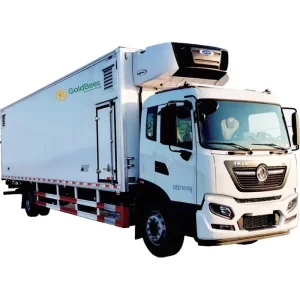
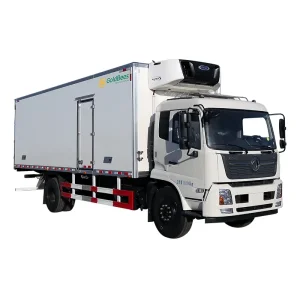
From self-contained live animal transit units to refrigerated cold chain and intelligent field harvesters—field-proven across high-intensity commercial production ecosystems.




Deploying specialized superstructures on Thai expressways and rural arterial highways requires strict adherence to Department of Land Transport (DLT) regulations governing maximum permissible gross vehicle weight (GVW), axle loading, overhang ratios, and safety equipment:
Purchasing direct from our Cixi manufacturing facility backed by CP M&E provides comprehensive after-sales protection:
Everything procurement directors, agricultural engineers, and fleet managers need to know about procuring custom bodies from China for Thailand operations.
Our superstructures are designed to bolt directly onto popular Thai commercial truck chassis including Isuzu FVR/GXZ, Hino 500 Victor, Foton Auman EST, and UD Quester. Subframe mounting brackets match factory bolt holes, requiring zero chassis cutting or welding to preserve the OEM chassis warranty.
Under the China-ASEAN Free Trade Agreement (ACFTA) and RCEP, special agricultural superstructure assemblies shipped with a Certificate of Origin (Form E) enter Thailand at 0% to 5% preferential tariff rates, substantially reducing import costs compared to Western-built alternatives.
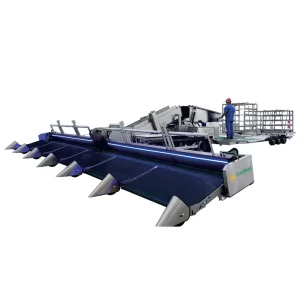
The GoldBees Intelligent Chicken Harvester features all-terrain rubber crawler tracks and variable-speed, food-grade gentle collection fingers. It operates reliably in open-sided ventilated poultry barns as well as closed evaporative cooling houses without bogging down in wet litter, handling up to 8,000 birds per hour.
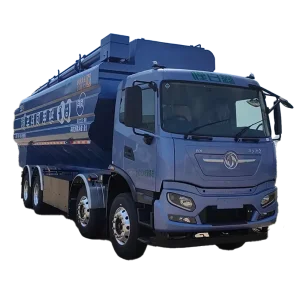
Our NEV feed transporters feature standard dual-gun CCS2 / GB/T DC fast charging systems, compatible with provincial PEA Volt charging networks and on-farm industrial three-phase connections (380V/50Hz). Auxiliary PTO discharge augers can also run on battery power or connect directly to farm power grids during offloading.
Standard production cycles range between 30 and 45 business days depending on customization requirements. Direct sea freight from Ningbo Port to Laem Chabang Port takes approximately 7 to 10 days, followed by 3 days for customs clearance and delivery to your local facility.
Yes. We engineer dual- and triple-temperature compartmentalized bodies with independent evaporator cooling circuits, ideal for simultaneous transport of chilled poultry (0°C to 2°C) and tropical fruits like durian and mangosteen (12°C to 15°C) across regional distribution networks.
