Configured specifically to navigate Tokyo metropolitan logistics interfaces, coastal milling terminals, and regional farm silos across Kanto prefecture.
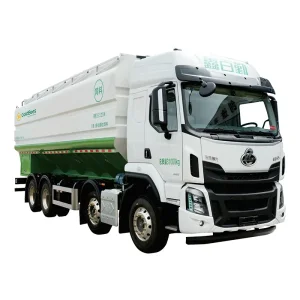

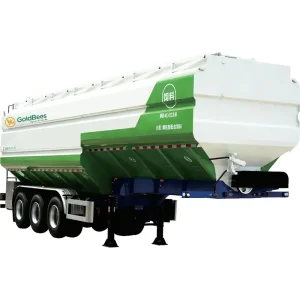

A comprehensive examination of terminal operations, inter-prefectural supply chains, and evolving environmental regulations impacting Tokyo agricultural logistics.
Tokyo serves not only as the capital but as the primary transit command node for raw grains imported via Tokyo Bay and surrounding ports (Yokohama, Chiba, Kashima). Feed processing conglomerates based in the Tokyo port zone supply substantial livestock clusters in Gunma, Tochigi, Ibaraki, and Chiba.
The Tokyo Metropolitan Government’s (TMG) Green Building and Low-Carbon Mobility guidelines place strict expectations on commercial transport fleets. Commercial vehicles entering city lines face tighter NOx, PM emission restrictions and upcoming EV logistics incentives.
Preventing cross-regional transmission of Porcine Epidemic Diarrhea (PED) and High Pathogenicity Avian Influenza (HPAI) is of existential importance to Japanese livestock operations. Fleet sanitation infrastructure is inspected meticulously at every farm gate.
How international agribusiness integrators are revamping capital expenditure toward high-yield pneumatic systems, weight optimization, and digital telematics.
Global feed markets are balancing two distinct engineering approaches: high-speed low-breakage augers and high-elevation pneumatic discharge. In dense agrarian zones with tall vertical silos, pneumatic air-injection systems allow feed offloading from distances exceeding 30 meters, bypassing physical obstacles without compromising pellet integrity through fluidized-bed design.
Meanwhile, electric-hydraulic auger trucks maintain dominance for high-volume pellet delivery due to lower power consumption per ton, minimal dust generation, and operational quietness favored in suburban farming zones.
Top-tier livestock conglomerates evaluate vehicle procurement not merely on capital expenditure (CAPEX) but on Lifecycle Total Cost of Ownership (TCO). Critical procurement drivers include:
Our engineering division customizes wheelbase configurations, steering geometries, and hydraulic pumps to align with Hino, Isuzu, Fuso, and UD Trucks chassis.
Combining world-class CNC tank rolling, automated robotic welding, and CP M&E agricultural engineering pedigree to deliver unparalleled vehicle durability.
By pairing robotic longitudinal seam plasma welding with 5000-series alloy plates, our tanks achieve superior structural stiffness while reducing deadweight by up to 28% compared to standard carbon steel alternatives, allowing Japanese clients to gain maximum compliance payloads.
Every single bulk feed tank undergoes non-destructive X-ray flaw detection across all pressure-bearing welds, hydraulic line stress testing under 1.5x operating pressure, and 360-degree high-pressure hydrostatic rain chamber tests to guarantee absolute sealing against wet climate damage.
Key hydraulic controls, wireless proportional remote systems, PTO units, and pneumatic blowers are sourced from globally recognized suppliers, ensuring instant spare part availability, field compatibility, and seamless maintenance across Japanese workshops.
Specific structural configurations engineered to resolve local logistics friction points.
Designed for daily routes operating out of port terminals in Chiba and Kanagawa into the interior hills of Gunma and Saitama. Features multi-compartment pneumatic blow-off tanks enabling rapid discharge of diverse formula feeds (crumble, pellet, mash) without cross-contamination.
Tailored for deliveries to research stations, universities, breeding hubs, and specialty producers within urban boundaries. Features pure battery-electric NEV drivelines with whisper-quiet electric auger systems operating below 65 dB(A).
Heavy tri-axle bulk feed semi-trailers configured for extended expressway linehauls across Eastern Japan. Equipped with high-reach rotatable auger booms capable of topping out 12-meter silos with hydraulic precision directly from remote controls.
From high-volume auger bulk semi-trailers to automated poultry handlers, temperature-controlled trailers, and organic liquid spreaders.
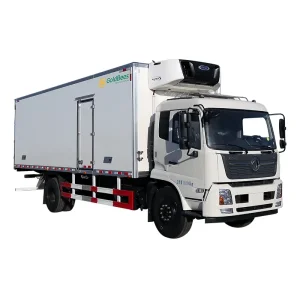


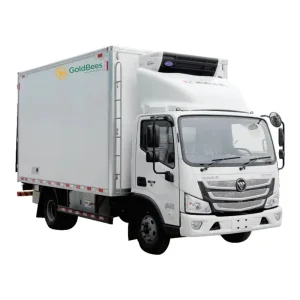

Essential guidance on chassis compatibility, export compliance, biosecurity measures, and Japanese road standard alignments.
Yes. Our engineering division routinely receives cab-chassis specifications or CAD drawings from overseas clients. We design bespoke sub-frames, PTO drive couplings, electrical harnesses, and hydraulic mounting plates conforming precisely to Japanese vehicle layout standards, axle load distributions, and Ministry of Land, Infrastructure, Transport and Tourism (MLIT) guidelines.
Our electric/hydraulic auger systems feature variable pitch flights and polished ultra-smooth flighting edges driven by proportional hydraulic motors, keeping pellet pulverization rates under 0.3%. For pneumatic models, we employ low-pressure high-volume blowers integrated with gradual cyclonic decelerators at the tank outlet, preventing high-velocity impact against silo walls and virtually eliminating fines generation.
All tanks feature internal self-draining contours without interior blind corners. Wiring harnesses are sealed to IP69K standards to withstand automated thermal disinfectant archways and steam cleanouts. Optional high-pressure automated tank washing heads and onboard chemical dosing systems allow drivers to complete complete sanitization cycles before departing farm quarantine gates.
We supply a comprehensive 12-to-24-month structural warranty on our tanks and subframes, backed by global component warranties on hydraulic motors (e.g., Danfoss, Rexroth) and electrical components (e.g., Schneider). We maintain a rapid-dispatch replacement part inventory with airfreight availability to Tokyo Narita and Haneda within 48 to 72 hours.
Absolutely. We manufacture bulk feed tankers with 2 to 6 independent sealed compartments. Each compartment is controlled via automated pneumatic or hydraulic slide gates, allowing multi-product delivery (broiler starter, grower, layer crumble) within a single logistics routing without risk of cross-contamination.
Speak directly with our senior application engineers to review technical drawings, hydraulic performance curves, and international delivery schedules.
