

Precision-fabricated feed transfer systems engineered for Nordic compound feed mills, high-capacity poultry integrators, and SPF-certified swine farming operations.

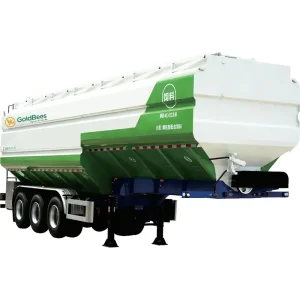

A rigorous examination of Denmark's agro-industrial feed requirements, SPF health programs, and decarbonization pressures reshaping livestock transport architecture.
Denmark maintains one of the most technologically advanced and consolidated livestock production complexes in the world. Producing upwards of 30 million pigs annually alongside high-yield dairy herds in central and northern Jutland (Jylland) and advanced commercial poultry units across Zealand (Sjælland) and Funen (Fyn), the Danish agricultural cluster operates under rigorous sanitary standards. Central to this framework is Denmark's legendary SPF-SuS (Specific Pathogen Free) health certification scheme, which mandates uncompromising bio-containment across all logistical touchpoints. Bulk feed transport vehicles do not merely serve as haulage units; they represent primary biological barriers between industrial feed compounding plants (e.g., DLG, Danish Agro) and isolated, high-health breeding centers.
In traditional distribution scenarios, bulk feed trucks present an elevated vector risk for cross-contamination of viral and bacterial pathogens, including Salmonella enterica, PRRS (Porcine Reproductive and Respiratory Syndrome), and Mycoplasma hyopneumoniae. Consequently, Danish agribusiness conglomerates and independent haulers demand transport superstructures constructed with hermetically isolated, multi-compartment internal silos, robotic seal welding that eliminates microscopic particulate traps, and automated high-pressure CIP (Clean-in-Place) washdown capabilities. Each compartmental discharge system must prevent residual cross-mixture between medicated prescription formulations, mineral prestarter crumbles, and high-protein gestation pellets.
Concurrently, Denmark's pioneering national regulatory climate—highlighted by the historic 2024 political consensus on an agricultural CO2 emission tax framework—places intense pressure on fleet operators to reduce tare weight, boost payload efficiency per kilometer, and embrace non-fossil auxiliary operations. The integration of high-tensile 6061-T6 aluminum alloy superstructures, automated electric power take-off (e-PTO) discharging mechanisms, and pure NEV (New Energy Vehicle) platforms directly aligns with Denmark's binding commitment to cut carbon emissions across its agrifood chain by 70% before 2030.
Seamless automated weld lines, mirror-smooth electropolished internal discharge chutes, and airtight rubber gate seals prevent feed accumulation, bacterial nesting, and cross-batch contamination.
Carefully calibrated weight distribution compliant with Danish Road Safety Agency (Færdselsstyrelsen) axle limits, optimizing high bulk-density loads across Nordic highway and rural routes.
Engineered for sub-zero Scandinavian operational conditions with heated pneumatic air dryers, anti-condensation tank coatings, and hydraulic fluids rated for continuous operation at -30°C.
How the shift from mechanical conveyors to intelligent dense-phase pneumatics and electrified discharge systems is lowering total cost of ownership across major agricultural markets.
Worldwide, bulk feed transport engineering has bifurcated into two primary mechanical delivery paradigms: low-abrasion mechanical auger conveyors and intelligent pneumatic blowing systems. In the Danish and broader European contexts, feed millers formulate high-nutrient extruded pellets containing sensitive enzymes, fats, and organic acids. Excessive physical velocity or mechanical shearing during bin discharge shatters these structural pellets into fine dust ("fines"). Fines cause significant nutritional segregation inside farm silos, promote bridging and rat-holing, elevate respiratory irritation among livestock, and reduce feed intake.
State-of-the-art bulk feed transport units engineered by Xinbaiqin GoldBees counter this through micro-regulated dense-phase pneumatic conveyance. Utilizing integrated, quiet roots blowers paired with air-cooling heat exchangers, our pneumatic feed tankers maintain operational air temperatures below 45°C during continuous multi-ton discharges, safeguarding thermosensitive dietary vitamins and lipids. For operations preferring auger unloading, our variable-pitch, hardened wear-resistant spiral augers run at lower rotational RPMs while maintaining high volumetric throughput (up to 90 tons per hour), suppressing pellet degradation below 0.8%.
| Performance Dimension | Intelligent Pneumatic Discharge | Electric/Hydraulic Screw Auger | GoldBees Hybrid Technological Edge |
|---|---|---|---|
| Discharge Vertical Reach | Up to 35 meters (Direct vertical pipe) | Up to 12 meters (Articulated crane boom) | Universal coupling for tower silos & low barns |
| Pellet Degradation / Fines | <1.2% (Dense-phase velocity control) | <0.8% (Low-RPM variable pitch) | Precision variable speed inverter drives |
| Zero-Cross-Contamination | Optimal Continuous air blowback purge | Superior Patented quick-drop bottom trough | Self-cleaning pneumatic air jets inside flutes |
| Noise Emission at Delivery Site | 65–72 dB(A) (Encapsulated silencer) | 58–64 dB(A) (Ultra-quiet hydraulic e-PTO) | Complies with Danish urban-adjacent farm noise codes |
| Unloading Speed Throughput | 60 – 80 Tons / Hour | 70 – 95 Tons / Hour | Synchronized multi-chamber extraction logic |
Modern feed logistics management is migrating toward end-to-end digital observability. GoldBees vehicles feature integrated CAN-bus industrial IoT controllers linked to GPS geofencing and on-board dynamic load-cell weighing modules. When delivering to biosecure farms across Jutland or Zealand, the tanker's pneumatic or auger discharge mechanism can be configured to unlock only when satellite coordinates confirm placement at the authorized farm silo. Discharge weight, chamber designation, discharge pressure, and cleanout confirmation logs are automatically transmitted via cloud APIs directly to enterprise ERP systems (such as SAP or Microsoft Dynamics 365), creating an indisputable audit trail for quality assurance, feed safety tracking, and carbon accounting.
Key technical criteria evaluated by procurement directors, fleet engineers, and agricultural cooperative executives when selecting industrial-grade bulk feed transport tankers.
Initial vehicle procurement represents merely 18–22% of total 10-year operating expenditure. Superior alloy fabrication, aerodynamic profile optimization, and low-parasitic-drag drivelines return dividends through reduced fuel and electric consumption over millions of cumulative route kilometers.
Fleet operators demand modular subframe mountings capable of universal integration with premier European chassis marques (Scania, Volvo, MAN, Mercedes-Benz, DAF) or completely integrated Chinese NEV power units with full EU whole-vehicle type approval (WVTA).
Bulk feed trailers endure continuous dynamic stress: off-road farm tracks, uneven silo approaches, and rapid pneumatic pressurization cycles. High-frequency robotic welded tanks undergo finite element analysis (FEA) to ensure 1,500,000+ kilometer fatigue life without stress cracks.
How the integration of Fortune Global 500 agribusiness genetics with intelligent Chinese manufacturing infrastructure delivers unmatched reliability, rapid customization, and economic value.
Xinbaiqin Special Vehicle operates as an essential mechanical engineering pillar within the industrial arm of Charoen Pokphand Group (CP M&E)—one of the world's most expansive integrated agribusiness, feed milling, and food processing conglomerates. Unlike generic truck bodybuilders who construct tanks based purely on conceptual blueprinted measurements, GoldBees special vehicles are engineered directly from empirical feedback generated across CP Group's millions of animal housings, proprietary feed mills, and cross-continental distribution lanes.
Our manufacturing headquarters, occupying a dedicated 66,667 square meter intelligent industrial campus in Cixi, Zhejiang, boasts an annual capacity exceeding 2,000 specialized agricultural transport units. By concentrating computerized plasma cutting, six-axis robotic weld cells, automated shot-blasting, multi-stage electrophoretic coating, and high-precision hydrostatic pressure calibration under a unified Quality Management System (ISO 9001, ISO 14001, and CE certified), Xinbaiqin delivers extreme dimensional accuracy and airtight weld purity that eliminates human inconsistency.
From initial high-tensile steel laser profiling to custom hydraulic pump valving and in-house digital harness looms, 92% of critical components are produced internally, shielding global buyers from external supply bottlenecks.
Our European export division configures tank volumes (20m³ to 65m³), partition partitions (2 to 8 segregated bins), and discharge drive systems in modular formats that integrate smoothly onto customer chassis specifications.
Utilizing high-speed roll-on/roll-off (RoRo) and specialized flat-rack container shipping channels direct from Ningbo-Zhoushan and Shanghai deepwater ports, we ensure guaranteed production cycles and reliable ocean freight delivery schedules.
Engineered to overcome geographical, infrastructural, and weather challenges in real Danish operating conditions.
Operating between commercial feed compounding facilities in Horsens or Randers and high-biosecurity sow multiplier units in Viborg. Vehicles feature automated air-blast manifold flushes, ensuring that prestarter micro-diets containing specific organic acids never blend into subsequent standard grower rations.
Delivering high-bulk, coarse mineral meal, beet pulp concentrates, and cattle feed pellets directly to elevated outdoor barn silos. GoldBees long-reach hydraulic cranes rotate 360 degrees, allowing drivers to bridge broad manure-collection channels and discharge smoothly without complex truck maneuvering.
Serving high-density broiler and egg-layer houses where bio-aerosol containment is critical. Completely enclosed dust-free pneumatic connection hoses prevent feed dust expulsion, safeguarding sensitive avian respiratory tracts against pathogen spores and environmental fungal blooms.
Detailed engineering, homologation, and logistics answers addressing procurement, regulatory compliance, and equipment customization in Denmark and the wider EU.
Danish road regulations impose strict gross vehicle weight (GVW) limits (up to 56 tonnes on authorized 7-axle combinations) and stringent individual axle load limits to safeguard bridge infrastructure and rural pavement. GoldBees tanks and trailers are engineered through parametric 3D Finite Element Analysis (FEA) to distribute feed mass evenly across every axle regardless of which internal silo chamber is unloaded first. By utilizing aerospace-grade high-tensile aluminum alloys (5083-H111 and 6061-T6) alongside Domex high-yield chassis steel, we achieve ultra-low tare weights, maximizing legal revenue payload per delivery run while maintaining complete conformity with EU Directive 96/53/EC.
Cross-contamination prevention is engineered into the geometric profile of our tanks. We employ conical 65-degree hopper valley walls with robotic seamless mirror welds that leave zero ledges or crevice corners for residue retention. In our auger models, we install a patented quick-release bottom trough hinged on pneumatically actuated quick-clamps; this permits immediate visual inspection and complete washdown in minutes. Furthermore, an integrated secondary pneumatic purge system injects high-pressure air bursts along the entire bottom conveyor auger channel between discharges, expelling remaining feed dust to ensure a cross-carryover rate of under 0.02%.
Yes. Over 60% of our export configurations are delivered as fully engineered, modular superstructures ready for chassis marriage at destination, or integrated directly at our factory via OEM direct chassis supply channels. We build to exact bodybuilder guidelines (VBI/BEP) provided by Scania, Volvo Trucks, MAN, and Mercedes-Benz, incorporating standardized subframe mounting brackets, pre-wired CAN-bus electro-hydraulic interfaces, and universal transmission PTO output adapters.
Our NEV pure-electric feed trucks and hybrid e-PTO systems feature contemporary Lithium Iron Phosphate (LFP) or high-density NMC battery packs equipped with liquid thermal management systems (TMS). In sub-zero Nordic winters, the TMS actively maintains cell core temperatures between 18°C and 25°C during both vehicle transit and stationary silo discharge, preventing winter voltage sagging and cycle degradation. Discharging 25 tons of feed via our electric high-efficiency e-PTO uses less than 9% of total battery capacity, allowing complete regional daily delivery rounds without mid-shift charging.
All GoldBees bulk feed superstructures come protected by a comprehensive 36-month structural chassis and tank warranty, alongside a 12-month complete system warranty covering hydraulics, pneumatic blowers, valves, and electrical control units. We maintain international spare parts supply channels that deliver critical replacement wear parts (such as bearings, auger flighting, pneumatic butterfly valves, and rotary airlocks) into Copenhagen and Billund within 48 to 72 hours. Moreover, our telemetry systems enable our Cixi engineering base to perform remote CAN-bus diagnostics in real time to assist local maintenance workshops.
Our senior mechanical engineering and agricultural logistics team will review your road routing, silo heights, and payload targets to build a tailored proposal.
Send Inquiry NowComprehensive turnkey engineering solutions supporting the whole feed-to-food cold chain, biosecure animal transit, and automated modern farming.




