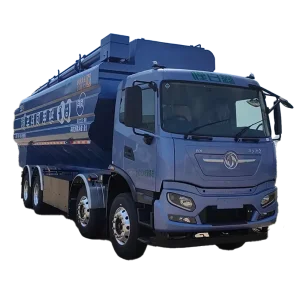
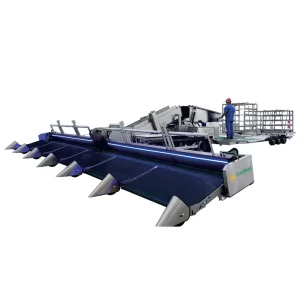
Bulk Feed Transport Vehicles Manufacturers & Manufacturer Serving Turkey

Precision Pneumatic & Electric/Hydraulic Conveying Logistics Engineered for Turkish Agro-Industrial Giants and Global Feed Operations

Send Inquiry Now
Market Insights & Operational Dynamics

Agro-Industrial Dynamics of Bulk Feed Transport in Turkey

Turkey represents one of the world's most sophisticated and fast-growing compound animal feed and poultry integration hubs, producing over 27 million metric tons of commercial feed annually. Meeting the logistical challenges of Anatolian terrain requires cutting-edge fleet architecture.

Intensive Poultry Integration

The Aegean and Marmara regions house massive vertically integrated broiler and egg producers. Continuous feeding operations demand zero-downtime, biosecure transport solutions that prevent horizontal disease transmission between feed mills and automated silo complexes.

Severe Topographical Stresses

Navigating from coastal processing plants to high-altitude inland farms (such as Central and Eastern Anatolia) subjects commercial vehicle chassis, suspensions, and drive systems to intense mechanical loads, severe elevation changes, and sharp ambient temperature swings.

Strict Pellet Quality Protocols

Turkey's high poultry export standards (halal-certified fresh poultry to MENA and CIS markets) require minimizing feed powdering. Pneumatic and mechanical auger systems must maintain particle integrity to prevent feed conversion ratio (FCR) degradation.

27M+
Annual Metric Tons of Feed Produced Across Turkey
< 1.2%
Pellet Breakage Index via GoldBees Low-Friction Augers
100%
Hermetic Biosecurity Isolation Between Compartments
45 m³
Maximum High-Payload Semi-Trailer Volume Capacity
Comprehensive Fleet Engineering

Engineered to Surpass Global Procurement Criteria

Multinational agribusiness groups and institutional livestock integrators face escalating diesel costs, volatile raw material prices, and stringent international animal health mandates. Fleet engineering can no longer rely on standardized, off-the-shelf cargo trucks.

  • Al-Mg Alloy & High-Yield Strenx® Construction: Reduces chassis deadweight up to 25%, drastically maximizing compliant legal payload per trip across European and Turkish axle-weight limits.
  • Multi-Bin Fluidized Bed & Dual Auger Technology: Enables segregation of distinct nutritional formulas (e.g., broiler starter, grower, finisher) inside a single transit route without cross-contamination.
  • PLC Intelligent Remote Unloading: Integrated wireless radio remote control interfaces with farm telemetry, elevating operator safety while eliminating blind-spot discharge errors at silo towers.

Procurement Direct Link

Our specialized engineering unit configures bulk feed tankers, livestock movers, and hatchery logistics solutions customized to local Turkish tractor heads (Mercedes-Benz Actros, Ford F-MAX, MAN, and Scania).

Factory Direct Dispatch & Technical Compliance

ECE R111 rollover stability certified, ADR-ready tank integrity, and customized hydraulics compatible with EU/TR tractor PTOs.

Consult an Integration Engineer
Next-Generation Architecture

Technological Roadmap & Future Horizons

Agribusiness is entering an era defined by decarbonization, automated logistics, and complete digital traceability. Our R&D pipeline sets the pace for the global livestock logistics sector.

Phase 1: Pure NEV & Hybrid Drivetrains

Rolling out dedicated battery-electric commercial vehicle (BEV) feed distribution trucks for short-radius inter-farm transfers. High-torque electric power take-offs (e-PTO) drive discharge augers quietly and with zero exhaust fumes directly next to livestock housing.

Phase 2: IoT Silo-Truck Telematics

Cloud-synchronized load cell integration connects the bulk feed transport vehicle with farm silo inventory systems. The discharge cycle autonomously validates formula matching, weight dispensed, and tank hygiene records to eliminate feed drop errors.

Phase 3: Automated Biological Decontamination

Incorporating robotic, high-temperature CIP (Clean-In-Place) misting sanitizers inside feed bins and chassis underbodies to automatically neutralize avian influenza and pathogens during truck wash cycles before entering high-security farm zones.

Local Deployment & Regulatory Guarantee

Turkish Standards Compliance & Aftermarket Longevity

Operating commercial special vehicles in Turkey requires adherence to the Ministry of Transport and Infrastructure (Ulaştırma ve Altyapı Bakanlığı) regulations, Karayolları Trafik Yönetmeliği gross vehicle weight limits, and stringent TSE (Türk Standardları Enstitüsü) inspections. Xinbaiqin (CP M&E) ensures each unit is tailored to seamless type approval and operational longevity.

Chassis Compatibility

Bodies engineered to mount directly on Ford Otosan, Mercedes-Benz Türk, MAN Turkey, and Scania chassis with certified mounting subframes.

Customs & Free Trade Integration

Facilitated customs documentation under Turkey-China commercial agreements, streamlined bill of lading (B/L), CE certification, and EUR.1 compliance paperwork.

Rapid Spare Parts Availability

Core wear components including hydraulic motors, auger flighting spirals, pneumatic butterfly valves, and sealings are universally interchangeable with standard industrial metric components.

Procurement Knowledge Base

Frequently Asked Questions for Buyers & Fleet Directors

In-depth answers addressing logistical, technical, and operational questions regarding bulk feed transport vehicle acquisition.

How does an electric/hydraulic auger discharge system compare to a pneumatic blower system for Turkey's feed operations?
Electric or hydraulic auger discharge systems mechanical convey pellets via rotating screws, making them ideal for high-speed delivery with virtually zero dust generation and significantly reduced energy consumption. They preserve pelleted feed structure extremely well (<1.2% fines). On the other hand, pneumatic systems utilize pressurized air blowers, allowing them to discharge feed through flexible hoses into elevated or hard-to-reach silo pipes located up to 25–30 meters high. In Turkey, auger systems dominate poultry complexes with accessible silos, while pneumatic units are preferred for multi-level dairy farms or sites with terrain obstacles.
Can GoldBees bulk feed bodies be mounted onto locally sourced Turkish chassis like Ford F-MAX or Mercedes Actros?
Yes. We regularly build completely customized superstructure bodies ready for CKD (Complete Knock Down) or SKD (Semi Knock Down) export, tailored to the exact wheelbases, chassis hole patterns, and axle weight configurations of Mercedes-Benz Türk, Ford Trucks (F-MAX/Cargo), MAN, Scania, and Volvo. We provide pre-engineered mounting subframes, standardized PTO hydraulic pump interfaces, and pre-wired CAN-bus control boxes for rapid local installation.
How does the multi-compartment design prevent cross-contamination between medicated and non-medicated feeds?
Our bulk feed transport vehicles feature laser-cut, fully seal-welded internal bulkhead partitions. Each bin is hermetically separated and equipped with independent slide gates and clean-out discharge access ports. When moving between specialized feeds (such as medicated starter feed and withdrawal finisher rations), bottom clean-out traps and pressurized purge ports ensure residual grain in the discharge trough is thoroughly flushed out, preventing feed compliance infractions.
What biosecurity features protect livestock farms from cross-farm pathogen transfers?
Backed by Charoen Pokphand Group (CP M&E) farm-tested standards, GoldBees special vehicles feature completely enclosed, IP67/IP69K-rated electrical wiring harnesses that endure continuous aggressive alkaline washing, thermal disinfection, and chemical wheel-bath sprays. Tank exteriors feature smooth, continuous exterior welds to prevent particulate and manure accumulation during farm entry and exit.
What is the delivery timeline and maritime shipping route to Turkish ports?
Standard vehicle bodies or completed semi-trailers typically complete manufacturing in 30 to 45 business days depending on customization complexity. Shipments depart directly from Ningbo or Shanghai Port to major Turkish deepwater ports such as Mersin, Ambarlı (Istanbul), or Nemrut/Aliağa (İzmir) via Ro-Ro (Roll-on/Roll-off) vessels or 40ft HQ flat-rack container arrangements, with transit times averaging 28 to 35 days.

Scale Your Feed Transport Operations with GoldBees

Contact our international engineering sales team for tailored CAD chassis layouts, technical specification dossiers, and customized CIF/FOB pricing for Turkey and international delivery ports.

Send Inquiry Now Download Full Technical Catalog