Direct manufacturer solutions balancing maximum legal axle loads across national routes (RN 9, RN 34) with zero contamination discharge technology.



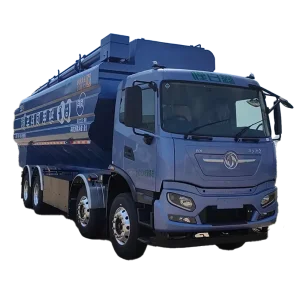
A rigorous examination of feed milling capacity, multi-compartment optimization, and infrastructure realities across Buenos Aires, Córdoba, Santa Fe, and Entre Ríos.
The Argentine Republic stands as one of the world's preeminent agricultural powerhouses, contributing substantially to global soybean meal, corn, and grain derivatives. However, the domestic livestock landscape—specifically the intensive poultry sector in Entre Ríos and northern Buenos Aires, alongside the hyper-consolidated swine facilities of Santa Fe and Córdoba—has transitioned through an operational paradigm shift. The conventional methodology of handling bagging feed lines has almost entirely collapsed in favor of specialized, high-capacity, multi-compartment bulk feed transport vehicles (Camiones Tolva para Transporte de Alimento Balanceado a Granel).
In Argentina's humid pampa basin, commercial feed mills (tales como plantas de balanceado de integración avícola y porcina) demand rapid transport cycles from milling plants directly to farm silos. This distribution network contends with severe logistic friction: expansive road routes requiring transit over national highways (Ruta Nacional 9, RN 11, RN 19) connected to unpaved, caldén-fringed rural dirt corridors (caminos rurales consolidados y de tierra) that become impassable during convective storm seasons. Consequently, specialized bulk feed trucks serving Argentina must possess an engineered structural equilibrium: immense structural torsional resistance to withstand off-road flex without welds cracking, integrated with lightweight superstructures (high-tensile Swedish steels and aircraft-grade aluminum alloys) that honor national gross combined vehicle weight limits (Ley de Tránsito y Escalabilidad 32.5t - 52.5t).
Preventative cross-contamination architecture. Hermetically sealed tanks with zero-residual mechanical screw augers ensure pathogen exclusion (Salmonella spp., PRRSv, Avian Influenza) across multi-farm delivery routes.
Equipped with dual discharge modes: chassis power take-off (PTO) driven variable displacement hydraulic motors, combined with auxiliary 380V industrial electric drives for ultra-quiet, zero-emission silo discharge on farms.
Precision multi-bin configurations (4 to 8 distinct compartments). Allows simultaneous delivery of nursery micro-pellets, grower rations, and finisher feeds in a single route without cross-formula blending.
Why Tier-1 agribusiness groups in South America and beyond are partnering with advanced Chinese specialized bodybuilders for bulk feed transport fleets.
Across the global animal husbandry theater—spanning North America, Brazil's Cerrado, and the European Union—the demand for precision bulk material handling has rendered antiquated tipping-dump bodies obsolete. Pelleted nutritional feed for broilers, layers, and nursery pigs represents the single highest operational overhead for integrators (typically 68% to 74% of total production cost). Unloading via improper gravitational or abrasive screw mechanisms leads to feed fracture (fines percentage exceeding 12%), causing direct nutritional loss, uneven feeding behavior, and gastrointestinal issues in commercial flocks.
Xinbaiqin Special Vehicle (CP M&E / GoldBees) bridges this engineering bottleneck by leveraging China's ultra-dense industrial supply chain and advanced robotics. Our Cixi production campus incorporates automated robotic longitudinal seam welding, CNC high-definition laser cutting, and electro-hydraulic precision testing. This operational efficiency enables us to produce specialized bulk feed bodies and tri-axle semi-trailers with precision tolerances that rival European custom builders—at a total capital investment (CapEx) that delivers measurable return-on-investment within the first 14 months of fleet deployment in Argentina.
| Engineering Vector | Conventional Market Standard | GoldBees / Xinbaiqin Argentina Specification |
|---|---|---|
| Tank Material & Treatment | Standard Q235 carbon steel, manual anti-rust primer | High-strength anti-corrosive lightweight steel / 5083 Aluminum alloy |
| Auger Conveying Geometry | Constant pitch, friction-induced heat & pellet fracture | Progressive pitch flighting, ultra-low shear clearance (<1.8% fines) |
| Discharge Velocity | 0.6 - 0.9 tonnes / minute | 1.2 - 1.8 tonnes / minute (Continuous variable speed control) |
| Chassis Adaptability | Single brand pre-fit, rigid mounting | Universal subframe mounting for Scania, Iveco, Mercedes-Benz, VW Argentina |
| Washdown & Biosecurity | Exposed wiring harnesses, vulnerable solenoids | IP69K sealed connectors, fully enclosed wash-resistant valve blocks |
Tailoring discharge methodologies, turning radii, and tare weight to the demands of Argentine regional producers.
Entre Ríos represents more than 50% of Argentina's broiler and table egg production. Poultry farms throughout this province utilize tall galvanised grain and feed silos positioned closely between poultry sheds (galpones). Our hydraulic auger trucks feature a 360-degree continuous slewing discharge boom capable of elevating up to 9.5 meters with radio remote control. This allows the driver to align the discharge chute safely over silo access caps without repositioning the heavy chassis near fragile shed foundations or overhead high-voltage mist netting.
Modern Argentine swine facilities run on automated multi-phase feeding programs where feed texture varies from finely rolled crumbles to extruded high-oil pellets. Our multi-compartment pneumatic systems (sopladoras inteligentes) utilize dense-phase, low-velocity pneumatic discharge powered by rotary screw compressors. By fluidizing feed pellets within a positive pressure envelope, oil coatings are preserved and friction heat is minimized, preventing feed bridging (apelmazamiento) inside farm hoppers during high-humidity summers.
For independent logistics providers hauling balanceados across inter-provincial routes, payload efficiency is the defining financial metric under Argentina's "Escalabilidad" regulations (Decree 32/2018). Our lightweight semi-trailers (semirremolques tolva) engineered with optimized center of gravity and low-tare monocoque tanks permit legal loads up to 52.5 tonnes gross weight on approved corridors, significantly driving down the logistics cost per ton-kilometer (costo por tonelada transportada).
Complete product range supporting livestock transit, cold-chain distribution, and precision field application.




Specific answers addressing axle weights, chassis compatibility, SENASA biosecurity standards, and spare parts management.
Whether you manage an integrated agro-enterprise in Entre Ríos or an independent transport fleet in Santa Fe, our specialized vehicle engineers will deliver an engineered configuration aligned with your operational routes and chassis standards.
Send Inquiry Now