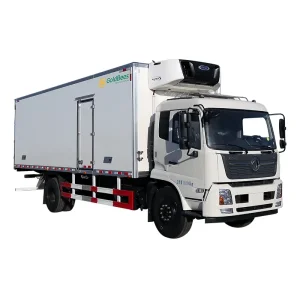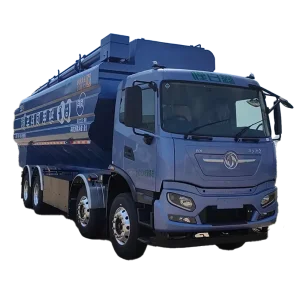
Commercial Status: Bulk Feed Logistics Landscape in Greece & Mediterranean Corridors
The Hellenic livestock feed industry has entered an era of profound structural transformation. Centered in agricultural hubs such as Central Macedonia, Thessaly, and Western Greece, commercial pig breeding, poultry complexes, and intensive dairy sheep/goat operations face escalating operational expenditures driven by fuel spikes and stringent biosecurity mandates. Historically dependent on bagged feed handling—which induces significant physical labor, bag damage, and particulate loss—Greek feed millers and integrated processors (such as those providing compound diets for sheep and goats yielding Feta PDO dairy) are migrating rapidly toward closed-loop, high-tonnage pneumatic and mechanical bulk feed transport systems.
Deploying bulk feed logistics in Greece requires addressing unique geographical challenges: navigating narrow mountain roads in Epirus and the Peloponnese, overcoming ferry weight thresholds across the Aegean Archipelago, and managing prolonged heat waves exceeding 40°C in summer. These conditions necessitate high payload capacity through lightweight aerospace-grade 5083 aluminium alloys, superior thermal insulation to prevent nutrient degradation inside the hoppers, and low-center-of-gravity engineering to safeguard rollover thresholds on tortuous regional transit corridors.
Strategic Market Outlook: With the implementation of the EU Green Deal's Farm to Fork initiative, the Hellenic Ministry of Rural Development and Food enforces strict standards on contamination controls and emission levels. Bulk feed vehicles equipped with electric augers (allowing plug-in quiet discharge at farm terminals without idling truck diesel engines) provide Greek integrators with immediate compliance advantages and measurable reductions in lifecycle operational expenditures (OPEX).
Global Industrial Shifts: Automation, Biosecurity, and Decarbonization
Globally, the animal nutrition distribution market is shifting rapidly from pure logistics to an integrated data-driven cold-chain and dry-bulk delivery ecosystem. Key vectors reshaping the market include:
- Zero Cross-Contamination Paradigms: Stringent global biosecurity policies against African Swine Fever (ASF) and Avian Influenza have forced transport fleets to integrate internal pressurized dry-wash chambers, self-sanitizing auger basins, and HEPA-filtered pneumatic exhaust valves.
- Telematics and Payload Optimization: Fleet operators demand real-time telemetry, automated axle-load monitoring, and pneumatic flow sensors that dynamically verify density changes and track delivery batch integrity via cloud-based ERP links.
- Electric Power Take-Off (e-PTO) Standardizations: Decoupling the bulk discharge system (augers, hydraulic lifts, screw conveyors, and Roots blowers) from the vehicle combustion engine dramatically slashes fuel waste and lowers decibel footprints during night-time deliveries in rural settlements.