Engineered to comply with stringent veterinary biosecurity standards while withstanding the severe continental climate of the Moscow Region, Bryansk, Belgorod, and Voronezh production belts.

Heavy-duty automated climate-controlled poultry housing, feeding automation, and turnkey compound feed production lines built for Russian grain-to-meat agribusiness clusters.
View Technical Specs
Multi-tier insulated body with Webasto auxiliary heating, air filtration, and non-slip aluminum floor profiles engineered to prevent cold stress and pathogen intrusion.
View Technical Specs
Industrial conditioning, pelleting, and cooling machinery designed to process Russian feed grains (wheat, barley, sunflower meal) into premium animal nutrition at minimal energy cost.
View Technical Specs
Integrated sorting decks and multi-zone refrigeration, maintaining unbroken thermal integrity from agricultural greenhouses to major Moscow distribution hubs like Food City.
View Technical SpecsAn executive assessment of the structural transition within Russian livestock complexes, feed milling facilities, and bio-secure transportation fleets across the Central and Volga Federal Districts.
The Moscow metropolitan area, home to more than 20 million consumers across the city and surrounding Moscow Oblast, represents Europe's densest consumer market for poultry, pork, dairy, and eggs. To sustain this demand, agricultural enterprises in neighboring regions—including Belgorod, Voronezh, Lipetsk, Kursk, and Tambov—have transitioned into massive integrated agribusiness groups known locally as agroholdings (such as Miratorg, Cherkizovo, Rusagro, and GAP Resource). These enterprises operate unified value chains covering crop cultivation, feed production, genetic breeding, intensive grow-out complexes, slaughtering, processing, and cold-chain logistics.
Over the past decade, Russia achieved complete self-sufficiency in commercial poultry and pork production. However, geopolitical supply realignments have restricted traditional European supply channels for specialized animal husbandry hardware, computerized ventilation controllers, feed pelleting dies, and automated biosecure transport chassis. This disruption exposed significant vulnerability in legacy operations relying on Western suppliers. Forward-thinking Russian procurement teams have shifted to Tier-1 Chinese direct manufacturers, which offer not only immediate supply availability but also engineering parity and superior integration with local Russian chassis platforms.
Strict biosecurity protocols demand specialized smooth-welded, corrosion-resistant transport bodies capable of surviving aggressive thermal disinfection cycles (termo-sanatsiya) and chemical washdowns exceeding 85°C.
Winter operations from December to March routinely experience temperatures below -30°C. Standard European or Asian equipment suffers hydraulic line freeze, pneumatic feed valve lockups, and severe animal mortality without specialized winterization.
Equipment deployed across the Eurasian Economic Union must hold valid EAC declarations under TR CU 010/2011 (Machinery Safety), TR CU 020/2011 (EMC), and TR CU 018/2011 for wheeled transport vehicles.
Operating livestock and feed infrastructure in Russia requires specialized adaptations beyond basic factory setups. Standard off-the-shelf equipment frequently fails under the mechanical stress of icy winter roads, heavy snow loads on silo structures, and condensation-induced mold growth in feed storage tanks. GoldBees (Xinbaiqin Special Vehicle Co., Ltd.), in strategic engineering synergy with CP M&E, implements comprehensive cold-climate packages designed specifically for the Russian market:
A. Advanced Multi-Layer Composite Body Insulation: For live chick, broiler, and pig transporters operating between Moscow hatcheries and breeding facilities, the cargo envelope features high-density polyurethane foam (45 kg/m³) vacuum-laminated between high-strength anti-corrosive FRP or aerospace-grade aluminum alloy sheets. This structure completely eliminates thermal bridges, maintaining an internal cabin temperature of +24°C to +28°C even when ambient Siberian winds dip to -40°C.
B. Auxiliary Winter Heating & Negative Pressure Ventilation: Integrated dual-fuel Webasto/Eberspächer heating units ensure hot air distribution across each animal deck. Automated air intake louvers utilize internal recirculation mixing chambers to prevent freezing air blasts from directly striking day-old chicks or finishing pigs, eliminating hypothermia-induced transport loss and reducing live-weight shrinkage to under 0.8%.
C. Heavy Snow-Load Silo Engineering (SNiP & SP Compliant): Feed mill storage bins and farm silos designed for Moscow installations comply with Russian building code SP 20.13330 (Snow Load Zone III & IV). Silo roof cones and support columns are structurally reinforced with 350 MPa high-yield structural steel, preventing roof buckling under wet snow build-up up to 240 kg/m².
D. Low-Temperature Pneumatic & Auger Feed Handling: Bulk feed trucks utilize heated screw auger bearings, freeze-resistant synthetic gear lubricants, and desiccant air dryers within pneumatic discharge systems. This engineering eliminates condensation buildup inside feed delivery pipes, preventing mash agglomeration and feed line clogging during sub-zero farm discharging.
| Engineering Parameter | Standard Temperate Spec | GoldBees Moscow Winterized Spec | Operational Impact for Russian Agroholdings |
|---|---|---|---|
| Insulation Thickness (Wall/Roof) | 40mm Polyurethane (PU) | 80mm–100mm High-Density Vacuum Composite | Eliminates Cold Bridges Maintains +26°C chick transit at -40°C outside. |
| Hydraulic Fluid Grade | ISO VG 46 / 68 Mineral Oil | Synthetic Low-Temp Aviation-Grade (Viscosity @ -40°C: <1500 cSt) | Instant Startup No hydraulic pump cavitation or seal blowout in winter. |
| Chassis Integration Flexibility | European Fixed Chassis Only | Universal Sub-frame for KAMAZ, MAZ, Sitrak, Shacman, FAW | Local Maintenance Rapid chassis servicing at any regional Russian repair depot. |
| Feed Auger & Discharge Drive | Direct PTO Mechanical Linkage | Dual Mode: Electro-Hydraulic + Auxiliary Generator Backup | Zero Idle Run Clean electric discharge directly connected to farm mains. |
| Disinfection Resistance | Standard Epoxy Paint | Electropolished 304 Stainless / Marine-Grade Aluminum Decking | ASF Defense Resists caustic hot-chemical foam washdowns without degradation. |
How our integrated Chinese manufacturing base delivers high-precision turnkey livestock systems to the Moscow region faster, more cost-effectively, and with complete component transparency.
As part of the CP M&E and Xinbaiqin manufacturing system, our equipment designs are refined across millions of head of commercial livestock. This practical operating feedback ensures that every valve, auger flight, and control panel performs reliably in real-world agricultural operations.
By routing specialized trailers, chassis superstructures, and milling machinery via the China-Europe Railway Express (through Zabaikalsk and Manzhouli directly to Vorsino or Bely Rast freight hubs in Moscow), transit time is reduced by up to 60% compared to traditional ocean routes.
We facilitate transparent bilateral trade settlements in national currencies via direct cross-border interbank channels (CIPS). This completely shields projects from third-party exchange risks, transaction freezes, and delays in project financing.
The modern agro-industrial complex in Russia is rapidly shifting from manually supervised animal husbandry to centralized digital farming ecosystems. Our R&D division has established a dedicated technological roadmap focused on telemetry, automation, and predictive micro-climate controls:
• IoT-Integrated Cabin Biosecurity & Telematics: All modern GoldBees livestock transporters can be equipped with real-time CAN-bus telematics. Fleet dispatchers in Moscow track real-time cabin CO2 levels, relative humidity, deck temperatures, water line pressures, and door-opening logs from central command consoles. Any biological distress parameter triggers automated climate corrections.
• Low-Damage Precision Feeding Systems: Our advanced pneumatic feed discharge trucks utilize precision air-to-solid ratio regulation. By maintaining controlled particle velocity under 16 m/s, pellet breakage (fines creation) during delivery into 20-meter high farm silos is kept below 1.2%, significantly outperforming conventional auger systems and preserving feed nutritional value.
• Energy-Efficient Milling Automation: Within feed mills, our advanced hammer mills and double-shaft paddle mixers feature variable-frequency drive (VFD) technology. Integrated with automated batching software, these systems reduce power consumption to less than 11.5 kWh per ton of compound feed, delivering substantial operational savings across high-volume feed plants.
Explore our specialized animal husbandry semi-trailers, pneumatic bulk feed delivery trucks, and high-efficiency harvesting machinery tailored for the Russian agricultural market.

Heavy-duty tri-axle semi-trailer engineered with hydraulic lifting decks, internal thermal insulation, and advanced biological filtration for inter-regional cattle and hog transfer.
View Technical Specs
Equipped with specialized sorting conveyors and multi-zone refrigeration to eliminate field heat rapidly and deliver unblemished fresh produce to supermarket fulfillment centers.
View Technical Specs
Centralized multi-tier battery cage management, automatic climate regulation, and manure drying systems designed for high-density broiler and commercial egg facilities.
View Technical Specs
Closed-circuit pressurized air discharge system preserving pellet integrity and eliminating feed contamination during fast delivery into high-capacity outdoor farm silos.
View Technical Specs
Engineered for large-scale broiler movements between grow-out houses and processing plants, featuring uniform cross-ventilation to significantly cut transport mortality.
View Technical Specs
Constructed from high-tensile anti-corrosive alloys with remote hydraulic gate controls, onboard watering, and winter heating designed for long-haul routes across the Russian Federation.
View Technical Specs
Built to stringent European and Eurasian vehicle standards, equipped with integrated electronic stability systems, GPS microclimate telematics, and heavy-duty axle assemblies.
View Technical Specs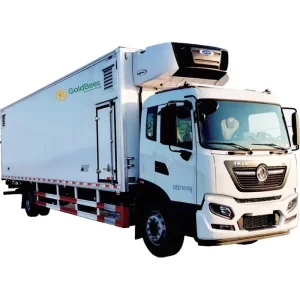
Maintains exact internal temperature (25°C ± 0.5°C) and fresh filtered airflow across thousands of chicks during long winter transfers from central hatcheries to regional farms.
View Technical SpecsEssential technical, compliance, and logistics clarifications for engineering directors and procurement managers across Moscow Oblast and the EAEU.
Connect directly with our senior agricultural equipment engineers. We will analyze your route conditions, herd capacity, feed mill throughput, and Russian regulatory requirements to deliver a comprehensive technical proposal within 24 hours.
Send Inquiry Now