Engineered for high-volume regional distribution corridors, strict temperature zoning, and seamless integration with American freight specifications.
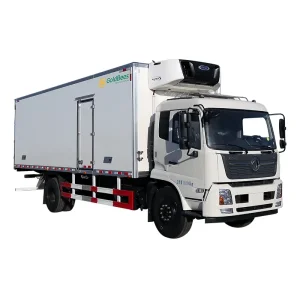
High-Quality Goldbees Refrigerated Cold-chain Transport Truck---Intelligent Multi-Functional Transportation Suppliers, Companies
View Specifications
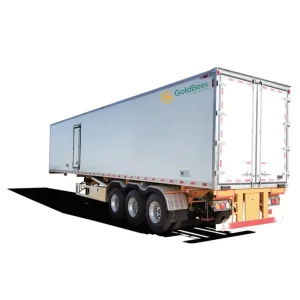
Best Goldbees Refrigerated Cold-chain Transport Semi-trailer---Intelligent Multi-Functional Transportation Manufacturers, Companies
View Specifications
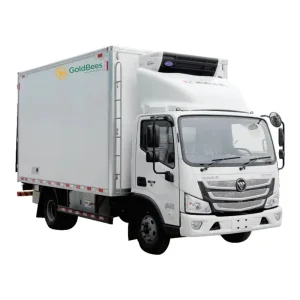
Custom Goldbees Fresh Produce Sorting & Transport Vehicle---Freshness, Capacity, Efficiency Manufacturer, Product
View Specifications
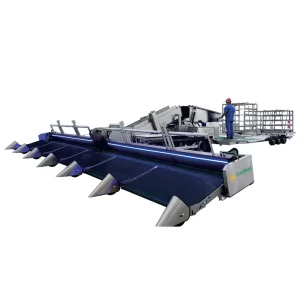
China Goldbees Intelligent Chicken Harvester Machine---Maximizing Productivity Factories, Products
View SpecificationsThe cold chain transport vehicle sector across North America is experiencing an unprecedented structural transformation driven by legislative frameworks, evolving consumer demands, and energy transition mandates.
In the United States, commercial cold chain transport vehicles represent the vital nervous system connecting intensive agricultural basins—such as California's Central Valley, the Midwest grain-and-protein belt, and the Southeastern poultry corridor—with mega-distribution hubs and consumer dense metropolitan nodes. Under the regulatory stringency of the FDA's Food Safety Modernization Act (FSMA) Sanitary Transportation Rule, temperature data logging is no longer a peripheral operational luxury; it is a legally enforceable criterion. Fleet operators face catastrophic liability if continuous chain-of-custody data falls outside prescribed thermal tolerances.
Simultaneously, the industrial landscape is governed by aggressive regional decarbonization initiatives. In states like California, the California Air Resources Board (CARB) has enacted stringent standards requiring Transport Refrigeration Units (TRUs) to transition progressively toward zero-emission technologies. Fleets operating Class 7 and Class 8 refrigerated trucks and semi-trailers must rapidly accommodate hybrid power architectures, roof-integrated solar arrays, and high-efficiency electric standby operations without sacrificing internal payload volumes or unladen tare-weight thresholds.
This regulatory convergence is compounded by extreme macroeconomic pressures within domestic freight operations. The escalating cost of clean diesel, fluctuating electricity tariffs at terminal plug-ins, and severe regional shortages of certified commercial vehicle technicians have forced U.S. logistics giants, grocery chains, and pharmaceutical third-party logistics (3PL) providers to re-evaluate their entire capital asset procurement lifecycle. Total Cost of Ownership (TCO) calculations now heavily weigh thermal insulation retention over a 10-year horizon, aerodynamic drag resistance, corrosion vulnerability during winter chemical de-icing cycles, and automated diagnostic accessibility.
Seamless internal wall panel bonding eliminates bacterial micro-harborages, standing washdown water, and thermal bridges, satisfying strict federal hygiene oversight.
Autonomous sensor architectures broadcast core refrigeration engine metrics, compartment moisture, and differential internal pressures to fleet headquarters.
Lightweight sandwich composite bodies reduce refrigeration energy loads by up to 28%, significantly accelerating battery-electric chassis route compatibility.
Bridging tier-one structural engineering with hyper-optimized manufacturing capacity to provide American and international fleets with reliable, high-yield logistical equipment.
Global cold chain operators are increasingly looking beyond localized manufacturing capacity to fulfill major fleet renewal cycles. Modern vehicle procurement demands a standard of precision that conventional, labor-heavy assembly shops can no longer sustain at scale. At our advanced 66,667 m² specialized manufacturing campus in Cixi, Zhejiang—engineered in close alignment with CP M&E of Charoen Pokphand Group—Industry 4.0 automation sets a benchmark for cold chain durability, tare-weight control, and microbiological cleanability.
The production line utilizes automated CNC laser blanking, multi-axis robotic seam welding, and computerized high-pressure polyurethane foaming presses. In refrigerated body engineering, the integrity of the thermal envelope is governed entirely by foam density uniformity and core panel bonding. Our continuous vacuum lamination processes eliminate internal voids and delamination risks, creating rigid sandwich panels composed of fiber-reinforced polymers (FRP) and closed-cell extruded polystyrene cores. This structural architecture produces an exceptionally low thermal conductivity value (K-value ≤ 0.32 W/m²·K), directly mitigating refrigeration unit cycling frequency, reducing fuel burn, and preventing premature degradation of expensive mechanical chillers.
For American agricultural enterprises, protein producers, and food-service consolidators, sourcing specialized cold chain chassis and semi-trailers from advanced Chinese smart factories resolves fundamental supply chain bottlenecks. Extended lead times common in domestic trailer yards are offset by standardized modular production, robust raw material reserves, and turnkey integration capabilities. From sub-frame anti-corrosion treatments utilizing automated electrophoresis and high-build polyurethane coatings to bespoke multi-deck interior shelving, global procurement directors receive fully customized, project-specific equipment engineered to withstand decades of intensive heavy-haul usage.
Connect directly with our senior application engineering team to evaluate bespoke multi-temperature zone layouts, specialized axle configurations, and factory-direct export programs.
Tailored structural configurations designed to excel across specific North American climate regimes, operational terrains, and payload profiles.
Rapid field-to-distribution cooling logistics demanding high-airflow flooring channels, gentle pneumatic suspension, and multi-evaporator systems to transport soft fruits without bruising or thermal shock.
Heavy-duty deep-freeze transport (-20°F) built with heavy-gauge extruded aluminum T-flooring, reinforced rear frame doorways, and multi-compartment movable bulkheads for mixed meat distribution.
Maneuverable Class 5 and Class 6 rigid refrigerated chassis designed for dense cities like New York and Chicago, featuring rapid air-curtain containment and quiet electric standby compressors.
From biosecure live animal logistics to high-capacity bulk auger trailers, explore our complete series engineered for global and North American agricultural operators.

Best China GoldBees Livestock Transport Truck - Smart Guardian for Pig Life Safety by Leading Suppliers and Factory Suppliers, Supplier
View Specifications

Famous GoldBees NEV Electric Bulk Feed Transport Truck---Redefining Sustainable Agriculture Logistics Suppliers, Manufacturers
View Specifications

ODM China GoldBees Livestock Transport Semi-Trailer - Smart Guardian by Leading Suppliers and Factory Manufacturers, Companies
View Specifications
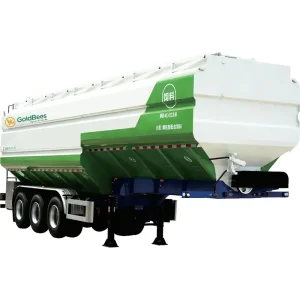
China GoldBees Electric/Hydraulic Auger Conveyor Bulk Feed Transport Semi-Trailer ---Advanced Efficiency & Durability Suppliers, Factories
View Specifications
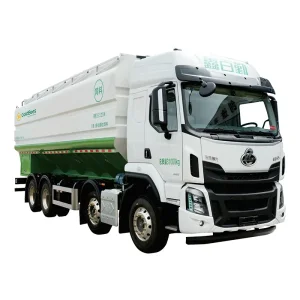
China China Suppliers Factory GoldBees Electric Hydraulic Auger Bulk Feed Transport Truck with Wireless Remote Control Factories, Products
View Specifications
Famous GoldBees Livestock (Pig) Transport Truck---Smart Guardian of Livestock Life Safety Suppliers, Factories
View Specifications
Famous China's Leading Suppliers of Electric/Hydraulic Auger Bulk Feed Transport Truck - Innovative Factory Technology Suppliers, Factories
View Specifications

Famous China Broiler Transport Truck - Top Suppliers for Safety, Comfort, and Durability from Leading Factory Supplier, Factories
View SpecificationsTechnical, regulatory, and logistics clarifications addressed by our international vehicle engineering department.
