Engineered for rigorous maritime-to-intermodal transit routes across Puget Sound, Washington, and international corridors.
Strategic intermodal nodes connecting the Port of Seattle, King County aerotropolis logistics, and agricultural export arteries.
The Northwest Seaport Alliance (NWSA) constitutes a critical international gateway for perishables. Refrigerated transport equipment operating between Seattle marine terminals and hinterland consolidation depots requires ruggedized, corrosion-resistant chassis and shore-power integration to maintain uncompromised thermal consistency during drayage shifts.
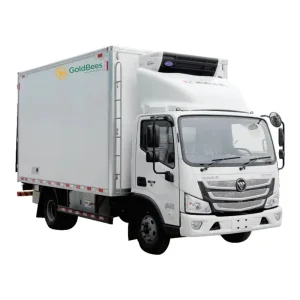
Rapid urbanization in Seattle, Bellevue, and Tacoma has created complex last-mile fulfillment requirements. Urban delivery demands zero-tailpipe-emission multi-temperature vans equipped with silent electric refrigeration, allowing quiet early-morning distribution across zero-emission delivery pilot zones without cross-contaminating dairy, fresh seafood, and ambient dry cargo.
Connecting Eastern Washington's fertile Columbia Basin (apples, cherries, hops, and potatoes) to Seattle export packing facilities requires high-end thermal insulation. Fleets traversing Snoqualmie Pass encounter extreme ambient gradients, requiring rigorous thermal envelope integrity, multi-zone microclimates, and dynamic telematics monitoring.
Addressing the complex demands of the international cold chain through sustainable vehicle engineering, precision refrigeration, and smart telematics.
Traditional refrigerated truck bodies suffer from thermal bridging and water ingress over time, increasing tare weight and operational fuel burns. Xinbaiqin vehicles incorporate high-pressure polyurethane and vacuum insulation panels (VIP) sealed with seamless fiberglass reinforced plastics (FRP), creating an impervious thermal boundary certified under ATP standards.
Modern cold chain integrity requires real-time algorithmic oversight. Cloud-connected multi-point wireless thermistors transmit real-time data back to dispatch hubs. Predictive machine-learning software detects abnormal compressor load anomalies or micro-leakages hours before temperature breaches occur, protecting multimillion-dollar biological and agricultural cargoes.
Global decarbonization mandates are driving a shift away from auxiliary diesel generators. High-voltage battery integration and axle-mounted kinetic energy recovery systems (KERS) now power all-electric cooling units. This architecture minimizes particulate emissions during transit while offering complete zero-emission operation at loading docks.
Real-world integration of Goldbees vehicles addressing specific climatic and operational parameters across the Pacific Rim.
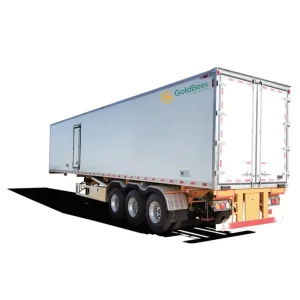
Seafood arriving via container vessels at Terminal 18 in Seattle requires ultra-low deep-freeze transport (-28°C to -35°C). Goldbees refrigerated semi-trailers with multi-stage hermetic scroll compressors and reinforced ribbed floors deliver rapid pulldown capabilities and uniform airflow distribution to avoid defrost-cycle surface thawing.
Transporting temperature-critical vaccines, biological reagents, and clinical trials along the I-5 freeway between Seattle and research institutes requires precision climate control (2°C to 8°C or deep cryogenic cold). Goldbees platforms leverage redundant multi-sensor data recorders, automated alerts, and dual-circuit backup cooling units.
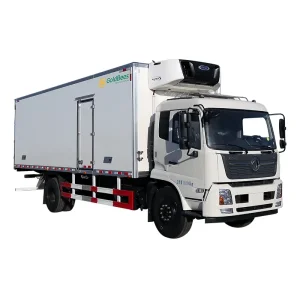
Dense urban retail environments require multi-door curb-loading configurations. Featuring pneumatic side skirts, low-noise tail-lifts, and movable insulated bulkheads, our straight trucks allow simultaneous multi-temperature operations—maintaining frozen, chilled, and ambient sections during frequent door openings.
Consult with our lead logistics engineers for ATP/DOT certified multi-temperature vehicle specifications.
Structured development milestones guiding Xinbaiqin's commercial vehicle innovations through 2030 and beyond.
Integration of dedicated 400V/800V high-capacity LFP chassis battery systems driving all-electric transport refrigeration units (e-TRU), eliminating auxiliary diesel reliance.
Implementation of closed-loop predictive cooling algorithms adjusting evaporator cycles based on real-time ambient forecasts, topographic inclines, and traffic congestion data.
Commercial deployment of recyclable, bio-derived composite insulation structures designed to achieve a 15% reduction in body tare weight while improving structural thermal retention.
Vehicle-to-Infrastructure (V2I) connected refrigerated units capable of autonomous docking, automated pre-cooling schedules, and real-time cold chain verification without human input.
Detailed technical, compliance, and international manufacturing answers for commercial fleet managers and procurement teams.
Our bodies utilize high-grade, marine-spec stainless steel sub-frames and anodized aluminum profiles treated with anti-corrosion barrier coatings. The structural sandwich panels use closed-cell polyurethane hydrophobic foam, preventing water absorption even in humid coastal areas like Seattle, Tacoma, and Vancouver.
Yes. Xinbaiqin vehicles comply with FMVSS, DOT, and EPA regulatory frameworks. We supply specialized superstructures mounted to recognized Class 6, 7, and 8 chassis cabs (including Freightliner, Kenworth, Peterbilt, and International) or provide complete semi-trailer units featuring North American-standard air brake systems, lighting, and SAE-compliant wiring harnesses.
Our multi-temperature bodies use movable, heavy-duty insulated composite bulkheads equipped with dual-lip flexible silicone perimeter seals. Combined with independent dual evaporators, operators can maintain -20°C in the forward compartment and +4°C in the rear compartment with zero thermal leakage.
Standard fabrication lead times range from 30 to 45 business days depending on customization, chassis preparation, and refrigeration configuration. Direct trans-Pacific ocean shipping from our modern manufacturing base in Cixi to the Port of Seattle or Tacoma typically takes 16 to 22 transit days.
Explore our complete export series, engineered for high productivity, bio-safety, and dependable cold chain integrity.