Engineered to deliver consistent ATP-compliant temperatures down to -25°C across vast inter-regional transit lanes from Moscow to Vladivostok.
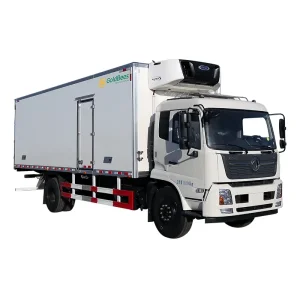



Analyzing structural shifts, regulatory frameworks (EAEU TR TS), and supply route reconfigurations shaping Eurasian food security.
Following changes in international trade routes, Russian distribution networks heavily favor east-west domestic corridors (North-South corridor via Caspian and Far East ports). Transporting perishables over 7 to 10 days requires zero thermal bridging and hyper-insulated sandwich panels.
Commercial operations within the Eurasian Customs Union (EAEU) demand compliance with TR CU 018/2011 on vehicle safety and SanPiN cold sanitation guidelines. Equipment must strictly prevent biological condensation while handling high chemical washes without seal degradation.
Modern fleet deployment combines multi-evaporator systems, aerodynamic composite skins, and variable-frequency DC inverter refrigeration. GoldBees incorporates high-grade polyurethane core foam with continuous fiber-reinforced plastics (FRP) ensuring zero water absorption.
A breakdown of the materials, heating systems, and dual-redundancy architectures guaranteeing cargo viability.
Our sandwich panel construction features closed-cell polyurethane foam with density exceeding 45kg/m³, achieving an overall thermal conductivity coefficient K ≤ 0.28 W/(m²·K). This minimizes cooling system runtime and fuel consumption on prolonged journeys across Ural mountain routes.
Unlike standard temperate-zone reefers, units bound for northern regions integrate high-output diesel independent heaters alongside primary compression loops. This maintains positive chamber temperatures (+4°C to +12°C) for pharmaceuticals or fresh produce even when ambient levels plunge to -40°C.
Equipped with low-temperature resilient rubber bushings, arctic-rated hydraulic lubricants, and reinforced structural steel subframes tested against severe impact loads from frozen ruts and ice-covered highways common in regional logistics.
Consult with our lead engineers to receive tailored ATP configurations, dual-temperature zoning layouts, and full ERA-GLONASS telemetry compliance documents.
Send Inquiry NowFrom inter-regional federal distribution centers to remote permafrost settlements, our designs match operating parameters.
Designed for major protein producers in regions like Belgorod, Kursk, and Voronezh. Features multi-deck hanging rails, biological sealing barriers, and high-pressure steam cleanable composite floorings preventing microbial cross-contamination.
Engineered for high-humidity and sub-zero maritime transfers around Vladivostok and Khabarovsk. Bodies withstand aggressive marine air, continuous rough-track vibration, and multi-modal handling between rail spurs and highway tractors.
For high-density logistics in Moscow, St. Petersburg, and Kazan. Multi-temperature compartmentalized bodies feature quick-cycling side access doors and quiet hydraulic tail lifts, optimizing urban last-mile delivery while preserving sub-zero chain continuity.
Integrating bulk cargo, bio-secure poultry handling, and automated farm logistics to serve broad industrial supply networks.
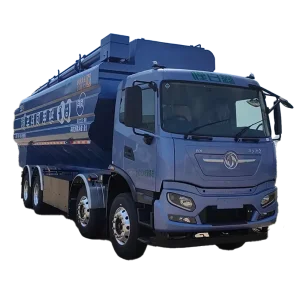




Strategic advancements advancing cold-chain transport efficiency across high-latitude Eurasia.
Direct integration with GLONASS satellites feeds continuous telemetry into onboard microprocessors. Real-time algorithms detect refrigeration coil efficiency loss, compressor wear, and insulation degradation before chamber failure risks perishable loads.
For municipal zones establishing green logistics protocols, our plug-in hybrid eutectic plate technology provides up to 10 hours of noiseless, emission-free refrigeration during urban offloading, unaffected by vehicle engine idle state.
Implementing aerospace-grade aluminum alloy cross-members and composite carbon structural skins lowers tare weight by up to 1,200 kg per semi-trailer, allowing higher payload capacity per haul under federal axle weight regulations.
Addressing essential questions surrounding standards compliance, cold performance, and long-term asset availability.
Our insulated boxes use a frameless panel lamination process with high-density polyurethane and glass-fiber reinforced plastic sheets. All perimeter joints incorporate structural broken-bridge thermal insulation blocks and specialized multi-lip EPDM silicone door gaskets that remain flexible and airtight down to -50°C, eliminating thermal bridge conduction and condensation formation.
Vehicles customized for the Russian Federation feature cold-resistant structural steel frames, heavy-duty parabolic or air suspensions calibrated for uneven road surfaces, heated diesel pre-heaters, heated fuel lines, and chassis components treated with anti-corrosion polyurea coatings to resist aggressive de-icing chemicals used on Russian federal highways.
Yes. Our refrigerated bodies and complete semi-trailers comply with ATP regulations (Class FRC for deep freeze and Class FNA for chilled transport). They satisfy Technical Regulations of the Customs Union TR CU 018/2011 ("On Safety of Wheeled Vehicles") and can be factory-equipped with ERA-GLONASS tracking terminals and OTTC registration support.
Yes. We engineer transverse and longitudinal insulated movable bulkheads with independent secondary evaporators. This enables simultaneous operation of separate zones—such as -20°C for frozen meat, +4°C for dairy, and +15°C to +25°C for sensitive medical products—each monitored by dual-sensor microprocessors.
We work with regional service partners across major logistics nodes, maintaining key inventories of refrigeration components, structural door seals, electrical controllers, and hydraulic lift mechanisms. Routine preventative maintenance schedules and digital manuals in Russian are supplied with every export batch.
