High-payload, thermally insulated, and automated climate-controlled commercial vehicles tailored to the Mesopotamian plain and northern highland farming clusters.


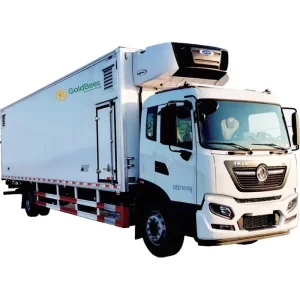

Iraq’s agricultural and poultry sectors are undergoing a systemic recapitalization. Supported by initiatives from the Iraqi Ministry of Agriculture and private agribusiness consortiums in Baghdad, Erbil, Sulaymaniyah, and Basra, the transition from decentralized open-air livestock handling to industrial biosecure integration is accelerating. However, commercial operators face an unforgiving operating environment characterized by high thermal spikes, dust storms (Shamal), long transit corridors, and severe biological transmission risks.
Day-Old Chicks (DOC) and commercial broilers represent the single largest livestock logistics investment in modern Iraq. Large hatchery operations concentrated in the Kurdistan Region (Erbil and Duhok) must transport millions of parent and broiler chicks south across federal checkpoints to grow-out farms in Diyala, Wasit, Babylon, and Al-Qadisiyyah. In open or inadequately ventilated vehicles, chick mortality rates during Iraqi summers (where road-surface temperatures often exceed 60°C) can exceed 18% to 25% due to acute hyperthermia, dehydration, and carbon dioxide toxicity. Solving this logistics bottleneck requires moving away from improvised canvas trucks toward hermetically sealed, positive-pressure automated climate-controlled vehicles.
The journey from northern breeding farms to southern consumer hubs spans over 900 kilometers through intense thermal zones and frequent unpaved detour links. Specialized vehicles engineered for Iraq must feature dual-circuit independent HVAC backup units, multi-stage desert sand air filtration, and heavy-duty chassis suspension dampening to prevent biological and traumatic stress.
European welfare frameworks (such as EC 1/2005) mandate specific floor space and maximum heat tolerances, but operating in Iraq requires advanced thermodynamic engineering far beyond baseline standards.
Preventing dead thermal zones inside 4-tier semi-trailers is critical. In Iraqi summer logistics, laminar airflow guarantees uniform temperature (+30°C to +32°C for DOC, +18°C to +22°C for broilers and livestock) across all pallet locations.
Fine quartz dust during Iraqi dust storms rapidly clogs conventional radiators and fan blowers. Our trucks utilize cyclone pre-filters combined with electrostatically charged washable pre-screens and primary G4/F7 air filtration.
Preventing cross-contamination of Newcastle Disease, Avian Influenza, and viral ruminant pathogens requires smooth interior polyurethane walls with zero exposed rivets, automated internal spray nozzles, and isolated drainage sumps.
For Iraqi agribusiness firms, livestock trading companies, and procurement managers, acquiring transport equipment involves weighing capital expenditure (CAPEX), operational durability, and parts availability. Traditional European-built livestock trailers command steep price premiums and extended lead times (often 9 to 14 months), yet frequently struggle when exposed to low-grade sulfur diesel and prolonged desert heat without specialized regional modifications.
Chinese special vehicle manufacturing delivers decisive structural and technological advantages for the Middle East market:
Get comprehensive technical datasheets, chassis dimensional drawings, and landed C&F Umm Qasr price quotations tailored to your exact herd size and logistics routes.
Send Inquiry Now / Request Engineering ConsultationFrom northern breeder hubs to southern meat processing facilities, transport setups are engineered around specific logistics pathways and biological requirements.
Cargo: 60,000 to 110,000 Day-Old Chicks per run.
Challenge: Maintaining strict 32°C interior environment with high metabolic heat release while traversing exterior desert temperatures above 50°C.
Solution: Modulating twin rooftop chillers, proportional electric heating coils, real-time CO2 scrubbing, and positive pressure airflow.
Cargo: Market-weight broilers (1.8kg - 2.4kg).
Challenge: High radiant heat load leading to mass suffocation and dehydration in slow-moving traffic around Baghdad perimeter checkpoints.
Solution: High-volume cross-flow ventilation louvers, high-pressure evaporative water misting lines, and hydraulic deck lifters for rapid crate loading.
Cargo: Awassi sheep, goats, and feedlot cattle.
Challenge: Long hauls across western desert routes (Anbar to Najaf/Karbala) with risk of leg fractures, slips, and heat prostration.
Solution: Patented non-slip serrated aluminum floor slats, hydraulic loading tailgates, automated ball-valve watering nipples, and movable partition gates.
The livestock logistics industry is evolving from basic structural haulage to intelligent, data-driven biosecure environments. Iraqi poultry and livestock enterprises that integrate IoT-enabled vehicles gain measurable competitive advantages in feed-conversion ratio (FCR), final slaughter yield, and zero-mortality guarantees.
Key technological advances built into modern GoldBees and specialized vehicle architectures include:
Factory-direct specialized transport bodies, harvesting systems, and agricultural spreading units serving Iraqi commercial farming operations.


Procuring specialized livestock equipment in Iraq requires rigorous engineering reviews to ensure durability over a 10-to-15-year lifecycle. Whether purchasing through commercial contracts or international agricultural development grants (FAO, WFP, World Bank), ensure your technical tender includes these critical metrics:
Answers to the most common engineering, shipping, and maintenance questions from Iraqi fleet managers and agricultural enterprises.
Our Day-Old Chick transport bodies utilize dual-refrigeration cooling circuits paired with integrated diesel auxiliary power units (APUs). These systems pull ambient desert air through dust-cyclone pre-filters, condition the air via high-capacity chillers, and circulate it along ceiling-mounted laminar ducts to deliver constant 30°C to 32°C air without blowing cold drafts directly onto fragile chicks.
Yes. We engineer customized sub-frames compatible with Sinotruk HOWO, Shacman, FAW J6, Mercedes-Benz Actros, Scania, and Volvo chassis. Clients can either supply complete chassis directly to our manufacturing plant for turnkey mounting or receive knocked-down (CKD/SKD) body kits with comprehensive assembly and integration documentation.
Bodies are engineered with fully sealed, high-pressure-washdown interiors, watertight wiring harnesses, and zero biological trap pockets. Every vehicle includes an integrated Clean-in-Place (CIP) chemical wash system, isolated wastewater storage sumps, and internal UV-C germicidal air duct irradiation to neutralize viral and bacterial pathogens before and after transit.
Standard manufacturing turnaround spans 35 to 55 days depending on customization. Shipments are dispatched via direct ocean Ro-Ro or 40ft High-Cube container routes into Umm Qasr Port in southern Iraq, or landed via Mersin Port (Turkey) and Aqaba Port (Jordan) for overland transit directly into northern or western Iraq.
We provide comprehensive export spares packages (including replacement blowers, digital temperature sensors, PLC controllers, and hydraulic lift cylinders) shipped alongside every order. Furthermore, standard electrical and hydraulic sub-assemblies utilize globally interchangeable industrial components (Schneider, Danfoss, Stamford) that are readily sourced across major Iraqi industrial hubs.
Our multi-tier livestock semi-trailers can be configured in 2-deck, 3-deck, or 4-deck layouts with hydraulic lifting platforms. Each tier incorporates automated drinking nipples, ventilation slats, internal dividing gates to separate animal groups, and an anti-slip floor profile designed to protect hoof integrity across long transit routes.
Connect with our dedicated Middle East commercial vehicle engineering team. We deliver specialized specifications, payload calculations, and direct factory pricing.
