Designed for rapid deployment along the I-87, I-90, and I-81 transport networks, minimizing transit mortalities and maintaining absolute bio-containment.

Multi-tier climate-monitored chassis with automatic drinking systems, negative pressure filtration, and wash-down friendly anti-corrosion alloy builds.

Engineered for large-scale swine and cattle relocation across Western NY and Pennsylvania, featuring hydraulic lift decks and winter insulation layers.
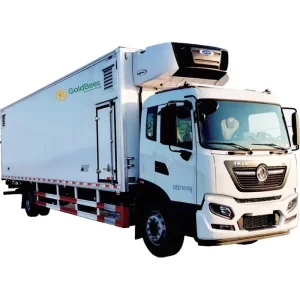
Precision multi-zone HVAC holding 32°C–35°C hatchery air stability, high CFM ventilation, and pathogen HEPA barrier systems for day-old chick logistics.

Optimized crate locking mechanics, active cross-flow forced air circulation, and light tare construction to maximize legal bird payloads per run.
New York State maintains one of the most critical agricultural ecosystems in the Northeast, generating over $8 billion in agricultural receipts with animal husbandry representing the vast majority. From large-scale layer operations in the Finger Lakes to dairy beef integration in the St. Lawrence River Valley, moving live animals through the Empire State requires specialized engineering capable of managing extreme climatic volatility.
Fleet operators running through Interstate 81 and Interstate 90 regularly encounter sub-zero Canadian air masses and heavy lake-effect snow in winter, followed by 90°F+ (32°C+) humid heatwaves in summer. Uninsulated or conventionally ventilated open-slat trucks lead to hypothermic livestock losses, severe transportation shrink (often exceeding 4-6%), and spike mortality among fragile day-old chicks.
Furthermore, the intensification of biosecurity mandates by the New York State Department of Agriculture and Markets (NYS AGM) and USDA-APHIS in response to Highly Pathogenic Avian Influenza (HPAI) demands transport compartments capable of complete hermetic sealing, medical-grade air scrubbing, and continuous chemical wash-down resistance without structural degradation.
Every GoldBees vehicle is built at the intersection of animal physiology and mechanical endurance, satisfying international standards and local United States DOT/USDA regulations.
Designed for day-old chick delivery and breeder stock. Delivers 6,500 to 18,000 CFM fresh, conditioned airflow with continuous laminar air currents that eliminate stagnant dead zones, preventing chick suffocation and heat stress even in full standstill traffic on the George Washington Bridge.
Equipped with primary pre-filters, MERV 16 particle traps, and optional H14 HEPA/UV germicidal arrays. Isolates stock from wild avian vectors, airborne viral plumes from neighboring commercial houses, and aerosolized roadside contaminants across interstate transit corridors.
Integrated multi-sensor telemetry tracks real-time cabin temperatures, CO₂ parts-per-million levels, static pressure differentials, and relative humidity. Data is continuously relayed to fleet headquarters while logging locally for seamless USDA-APHIS audits upon arrival at feedlots and packing hubs.
Independent multi-tier hydraulic floor elevation allows fast, stress-free animal ingress and egress. Animals walk on even planes without steep internal ramp climbs, directly lowering heart failure rates, bruising, and pre-slaughter cortisol spikes that degrade meat quality.
Constructed using laser-welded 5083/6061-T6 aluminum alloys combined with electro-coated steel substructures. Engineered specifically to endure 15+ winters of high-density road brine and hundreds of cycles of high-pressure caustic alkaline disinfection chemicals without leaking or pitting.
High-volume subterranean slurry holding tanks with pneumatic discharge valves prevent any liquid fecal leakage onto public roads—fulfilling NYS Department of Transportation environmental protection requirements and avoiding costly cross-contamination penalties.
By bypassing multiple dealership markups and working directly with our 66,667 m² manufacturing campus, fleet operators secure enterprise-grade engineering at unmatched capital efficiency.
Xinbaiqin Special Vehicle operates under the mechanical arm of CP M&E, the engineering subsidiary of CP Group—one of the world's largest livestock, swine, and poultry producers. Our specialized transport bodies are not conceptual prototypes created in an isolated automotive studio; they are iteratively stress-tested across billions of bird and animal kilometers in our own operational farms worldwide.
This deep domain knowledge allows us to deliver North American operators custom chassis adaptations (compatible with Freightliner, Peterbilt, Kenworth, Mack, or direct semi-trailer coupling) built with identical tier-one American/European components: Carrier/Thermo King refrigeration units, Danfoss hydraulics, and Schneider/Siemens electronic controls.
Our direct factory model delivers full configuration agility, short lead times, and comprehensive spare-parts support directly to East Coast shipping terminals (Port of New York and New Jersey) with turn-key export documentation.
Commercial livestock transport is an equation of biomass preservation. Below is an engineering comparison of operating 100,000 birds or 2,500 swine per week over typical New York haulage routes.
| Performance Metric | Traditional Open-Slat / Curtain Trailing | GoldBees Intelligent Closed-Cabin Series | Operational Advantage for NY Fleets |
|---|---|---|---|
| Transit Shrinkage Rate | 3.8% – 5.5% (Severe live weight drop) | < 1.2% (Controlled hydration & climate) | Preserves up to 4.3 lbs per market hog; significant carcass yield gain |
| Extreme Winter Mortality | 1.5% – 3.2% in blizzards / frost conditions | < 0.15% (Active thermal heating & circulation) | Eliminates catastrophic stock freezing on northern I-87 routes |
| Turnaround Wash & Dry Time | 180 – 240 mins (Complex dirt traps) | 45 – 60 mins (Self-draining smooth alloys) | Doubles fleet trip frequency; slashes manual washing labor costs |
| Biosecurity Isolation Rating | Passive / Open (High pathogen risk) | Hermetic cabin with MERV/HEPA + Negative Draft | Protects against catastrophic multi-million dollar flock depopulation |
| Initial CapEx vs Performance | High North American distributor margins | Direct-factory supply with high-tier components | 30% – 42% lower initial capital expenditure per operational deck |
Engineered to solve specialized logistical friction points from rural breeding facilities to high-density metropolitan distribution hubs.
Moving up to 100,000 day-old chicks per trip across Seneca, Cayuga, and Wayne counties. The precision microclimate keeps core temperatures steadily at 33°C regardless of zero-degree wind chills off the Great Lakes, delivering vigor and unbroken uniformity to grower facilities.
Supplying high-health breeding gilts and boars from Midwest and Canadian genetic multipliers into New York breeding centers. Multi-deck aluminum semi-trailers maintain negative-pressure bio-filtration, preventing PRRS and mycoplasma introduction.
High-density transport of market-weight broilers with variable airflow ducting that counteracts center-load thermal buildup. Birds arrive with intact feathering, minimal bruising, and optimal hydration prior to USDA inspection lines.
Complete your supply chain with specialized automated loading equipment, bulk biosecure feed transporters, and cold-chain refrigerated logistics vehicles.
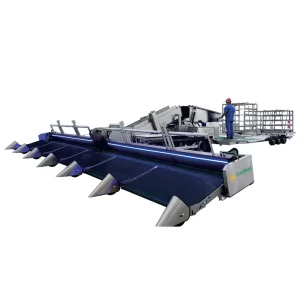
Gentle mechanical gathering that slashes human labor requirements, prevents wing fractures, and accelerates broiler loading speeds into transport modules.
Multi-compartment, high-tensile alloy architecture with pneumatic lifting decks and heavy-duty winter thermal insulation blankets.

High-pressure pneumatic feed discharge designed for tall mill silos, preventing cross-contamination and eliminating physical pellet degradation.

Extended reach discharge auger system allowing fast feed offloading at remote farm silos across steep Western NY rural roads.

Field-to-market rapid sorting and chilled distribution designed for Hudson Valley horticulture, specialty greens, and orchard harvests.

Multi-zone temperature zoning capable of simultaneously transporting deep-frozen poultry carcasses and chilled fresh dairy products down to NYC metro markets.
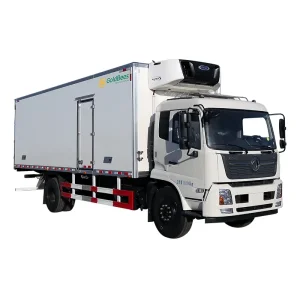
Rigid medium-duty chassis with high-density polyurethane insulated panels and ultra-quiet electric standby units for urban deliveries.
Full digital PLC environmental orchestration with automated fan speed modulating, redundant auxiliary generators, and real-time remote cabin diagnostics.
Everything procurement heads, logistics managers, and farm biosecurity supervisors need to know about custom specifications, shipping, and regulatory alignment.
Yes. We regularly supply our transport bodies as engineered upper kits (CBU or CKD) calibrated specifically for American cab-chassis platforms such as Freightliner M2/Cascadia, Peterbilt 567/579, Kenworth T880, and Mack Granite. We adapt chassis rail dimensions, subframe mounting gussets, PTO drive splines, and 12V/24V electrical interfaces to meet US SAE standards before the vehicle leaves our factory.
Our day-old chick transport cabins incorporate 50mm–80mm vacuum-bonded polyurethane thermal sandwich panels with low thermal conductivity (K-factor ≤ 0.024 W/m²·K). Paired with secondary auxiliary fuel-fired hydronic heating circuits and variable-speed recirculation fans, the cabin maintains an exact internal envelope of 32°C to 35°C even when exterior ambient temperatures drop to -30°C along northern New York routes.
Vehicles feature fully enclosed hermetic compartments with positive/negative pressure air filtering systems. Incoming intake air passes through particulate pre-filters and high-efficiency MERV 16 or HEPA filters to trap airborne virus droplets. Sidewalls feature smooth, continuous seamless welding and food-grade antimicrobial sealing that withstands direct 1,500 PSI hot water and chlorine dioxide disinfectant washing.
Vehicles and semi-trailers are typically shipped via Roll-on/Roll-off (Ro-Ro) or flat-rack / 40HQ container ocean freight directly to the Port of New York and New Jersey (PNYNJ). Ocean transit from Ningbo/Shanghai port takes approximately 28 to 35 days. Our international sales and logistics team prepares the complete commercial documentation, including bill of lading, commercial invoices, packing lists, EPA declarations, and factory certificates of origin.
Our trailers adhere to USDA Humane Handling Guidelines and the Federal 28-Hour Law. Decks feature anti-slip stamped aluminum flooring, automated fresh-water nipple drinking systems on each level with insulated water reserves, multi-nozzle cooling misting sprays for summer runs, and hydraulic floor lifts that allow animals to step onto decks without traversing steep, high-stress loading ramps.
We deliberately integrate globally standardized tier-one mechanical and electrical components. Critical hydraulic pumps and valves are supplied by Danfoss or Rexroth; refrigeration units are Carrier or Thermo King; electrical relays and PLCs utilize Schneider or Siemens hardware with universal field interchangeability. In addition, our factory supplies fast-wear maintenance packages and rapid DHL air-express dispatch for proprietary body components.
No. We employ 5083-H111 and 6061-T6 structural aluminum alloys, which are universally standard in marine naval construction. These alloys feature natural passivating oxide layers that make them virtually immune to corrosion from calcium chloride and road salt spray. Structural gussets and crossmembers are engineered with high section modulus parameters to resist chassis flex under torsion without cracking.
Yes. Our smart electrical control panels are equipped with open 4G/GPS telematics transceivers and standard CAN-bus (J1939) data outputs. Real-time temperature curves, door sensor triggers, battery status, and ventilation speeds can be ingested directly into standard commercial fleet telematics platforms or monitored via our cloud dashboard on mobile and desktop.
Consult with our senior agricultural transport engineers to review customized deck layouts, thermal insulation packages, and factory-direct export schedules tailored to your business operations.
Send Inquiry Now