

Engineered to bridge hatcheries in Casablanca-Settat and modern feedlots across Fès-Meknès and Marrakech. Combining active ventilation, pathogen-resistant alloy bodies, and low-stress multi-tier loading decks.

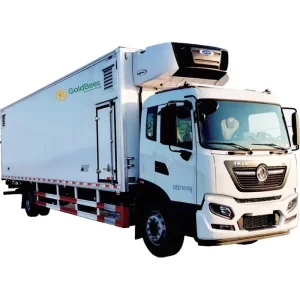

Morocco's livestock and poultry sectors represent over 13% of national agricultural GDP and employ more than 1.4 million rural workers. As industrial integrators scale operations across the kingdom, live cargo transport has transformed from simple transit into an exact science of biosecurity and metabolic survival.
From the coastal humidity of the Kenitra corridor to the extreme Saharan thermal gradients of the Souss-Massa interior (exceeding 46°C during the Chergui winds), traditional transport methods result in devastating DOV (Dead-on-Arrival) rates. GoldBees vehicles feature aerodynamically regulated, actively chilled air corridors to stabilize biological payloads.
The Office National de Sécurité Sanitaire des Produits Alimentaires (ONSSA) requires strict sanitary isolation to prevent pathogenic cross-contamination (such as Avian Influenza and Foot-and-Mouth Disease). Our transport bodies are engineered with surgical-grade 5083 anti-corrosive aluminium alloy and seamless hygienic seals, tolerating aggressive pressurized sanitization.
Moroccan poultry integrators (e.g., Zalar Holding, Koutoubia, Alf Sahel) require continuous logistics systems linking grand-parent hatcheries with regional broiler farms. GoldBees vehicles reduce biological mass depletion, prevent hypothermia/hyperthermia, and secure lower operational cost per transported kilogram.
Integrating telemetric AI sensors, independent high-efficiency auxiliary power, and multi-stage HEPA filtration to maintain life safety through Morocco's most demanding transit routes.
Dedicated auxiliary generator sets ensure continuous climate regulation even during engine downtime or cross-Atlas transit breaks, neutralizing Chergui wind peaks.
Multi-stage active ventilation systems maintain controlled positive internal pressure, expelling toxic CO² and ammonia while blocking airborne desert particulate entry.
Real-time cabin temperature, humidity, and airflow velocity telemetry streamed via 4G/GPS alerts drivers and fleet managers instantly to any microclimate deviations.
Hydraulically actuated internal decks with built-in automated drinking, misting cooling lines, and isolated wastewater sumps ensuring zero road-side contamination.
Built by Xinbaiqin Special Vehicle in Cixi, Zhejiang, backed by the agricultural engineering legacy of CP M&E (Charoen Pokphand Group), our manufacturing campus unites cutting-edge robotic automation with high-volume scale.
High-precision fiber laser cutting and automated MIG/TIG aluminium welding guarantee leak-proof thermal isolation chambers, preventing thermal bridges that plague standard assembled cargo bodies.
GoldBees superstructure modules are engineered for seamless mounting onto prominent commercial truck chassis prevalent in Morocco, including Renault Trucks, Mercedes-Benz Actros, MAN, Scania, and Shacman.
Our dedicated international trade arm executes end-to-end roll-on/roll-off (Ro-Ro) or flat-rack container shipments directly into the Port of Tanger Med or Casablanca, backed by complete EUR.1 and Moroccan conformity certification support.
Explore our complete range of specialized bulk feed trailers, agricultural sorting systems, organic fertilizer equipment, and automated harvesting technologies built for modern industrial farming.
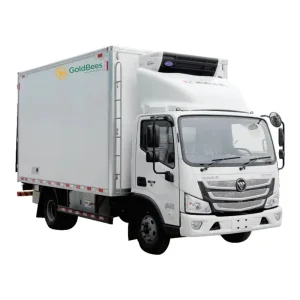




Procuring life-safety livestock and poultry transport vehicles requires strict adherence to international mechanical metrics and localized operating parameters.
Cabin walls feature high-density extruded polyurethane foam sandwich panels bonded with reinforced fiberglass or aviation-grade aluminium sheeting, insulating young chicks against harsh solar irradiation along the R203/N1 corridors.
Inflow air passes through cyclonic pre-filters to remove desert dust, followed by G4 and optional F7 antibacterial air barrier filters that drastically reduce horizontal pathogen transmission from passing roadside farms.
Configurable 2-tier to 4-tier anti-slip lifting decks allow multi-species flexibility (swine, sheep, breeding calves, or crate-loaded poultry), maximizing revenue return per transport mission.
Our day-old chick transports integrate high-capacity independent diesel refrigeration/heating units coupled with multi-duct positive pressure airflow. Even when ambient exterior temperatures reach 48°C in Marrakech or Tadla, internal box temperatures remain locked at 24°C - 27°C with continuous fresh air circulation, preventing both dehydration and respiratory stress.
Yes. Our subframes are designed to universally interface with chassis homologated in Morocco, including Renault K/C series, Mercedes-Benz Arocs/Actros, Scania G/P series, and MAN TGM. We provide complete 3D subframe interface engineering drawings and installation jigs for either factory mounting or semi-knocked-down (SKD) local assembly.
Our vehicle superstructures avoid internal dead angles, exposed wiring harnesses, or raw wood components. Decks are welded with aircraft-grade anti-corrosive magnesium-aluminium alloy, equipped with automatic clean-in-place (CIP) spray bars, and drain effluent into enclosed sanitary containment tanks, satisfying ONSSA veterinary sanitary transport protocols.
Custom engineering and fabrication typically span 30 to 45 working days depending on complexity and hydraulic deck configurations. Maritime transit via direct Ro-Ro or container carrier from Ningbo/Shanghai to Tanger Med takes approximately 28 to 35 days, with full customs clearance dossier support provided by our export department.
Consult with our lead agri-vehicle engineers to configure custom microclimate bodies, chassis integrations, and payload configurations optimized for the North African territory.