

Configured specifically to navigate Ireland's national road network, cross-channel roll-on/roll-off (Ro-Ro) maritime routes, and high-stringency DAFM welfare certifications.



A rigorous examination of Ireland's export-oriented animal husbandry sector, maritime dependencies, and evolving regulatory pressures.
Irish pastoral farming operates under the Department of Agriculture, Food and the Marine (DAFM) and Bord Bia’s Sustainable Egg and Poultry Assurance Scheme (SEPAS) and Sustainable Beef and Lamb Assurance Scheme (SBLAS). Fleets must guarantee tamper-proof temperature telemetry, zero cross-contamination pathways, and physical compliance with Council Regulation (EC) 1/2005 on animal protection during long-duration transit.
As an island economy, Ireland relies heavily on maritime Roll-on/Roll-off (Ro-Ro) ferry routes connecting Rosslare Europort and Dublin Port with Cherbourg, Roscoff, and mainland Europe. Live transit across dynamic sea conditions requires specialized continuous auxiliary power units (APU), independent battery banks, and high-static ventilation to prevent lethal thermal spikes when vehicle engines are switched off on car decks.
With ongoing wild bird migration patterns across the Atlantic seaboard posing continuous Highly Pathogenic Avian Influenza (HPAI) risks, Irish poultry hatcheries in Monaghan, Cavan, and Cork demand fully enclosed, bio-secure day-old chick (DOC) vehicles. Chassis and superstructures must withstand intense caustic wheel-wash and misting gantry protocols without electrical short-circuits or frame degradation.
Addressing the complex engineering challenges of transporting highly fragile biological payloads through Ireland's wet, maritime temperature gradients.
Day-old chicks are poikilothermic organisms incapable of self-regulating internal temperature during their initial 72 hours of life. When transitioning through Ireland's coastal humidity and brisk ambient temperatures (ranging from 2°C in winter to 22°C in summer), vehicle cabins must sustain an exact microclimate envelope between 24°C and 28°C at crate level, with relative humidity regulated between 55% and 65%.
For swine, weaners, and breeding stock moving between Irish production hubs and slaughtering facilities or European breeding programs, physical ergonomics directly govern meat quality and livestock morbidity. Cold stress, physical bruising, and ammonia buildup cause Pale, Soft, Exudative (PSE) meat conditions and significant economic loss.
Architecting next-generation transport machinery designed around carbon reduction mandates, smart IoT auditing, and automated biosafety.
By 2026, manual logbooks are being systematically replaced across the EU by encrypted cloud-connected telemetry. GoldBees vehicle superstructures integrate tamper-proof CAN-bus data-loggers that transmit continuous real-time compartment temperature, humidity, door-opening timestamps, and GPS velocity to fleet managers and veterinary inspectors via secure API endpoints.
With Irish transport fleets facing aggressive emission reduction targets under Ireland's Climate Action Plan, the future belongs to electrified auxiliary systems. Our engineering roadmap implements high-density lithium iron phosphate (LiFePO4) battery packs paired with ultra-thin rooftop photovoltaic cells, driving HVAC compressors independently during 18-hour maritime crossings without diesel emissions or noise stress.
Gross Vehicle Weight (GVW) limits enforced by the Road Safety Authority (RSA) in Ireland mandate maximum structural efficiency. Our vehicle structures utilize advanced 6000-series structural aluminum extrusions and structural composite panels with zero thermal bridging. This lowers tare weight by up to 22%, yielding higher payload volume per trip and slashing lifetime fuel consumption.
Backing Irish agricultural operators with over 15 years of OEM/ODM engineering excellence, precision robotics, and massive capacity scale.
Operating from our expansive 66,667 m² advanced manufacturing facility in Cixi, Zhejiang, Xinbaiqin Special Vehicle Co., Ltd. (in strategic technical association with CP M&E of Charoen Pokphand Group) produces in excess of 2,000 specialized vehicle units annually. Our production models are not theoretical experiments; they are refined through real-world deployment across massive agricultural integrators.
Sourcing specialized agricultural vehicles from localized boutique bodybuilders in Western Europe frequently entails 12-to-18-month lead times and exorbitant custom-engineering surcharges. Our Factory 4.0 integration delivers unmatched economic value while adhering strictly to European mechanical and safety directives.
Navigating the precise legal, road safety, and electrical guidelines required for seamless commercial deployment in Ireland.
Every GoldBees vehicle body, semi-trailer, and mounting bracket is drafted in accordance with European Whole Vehicle Type Approval frameworks and Ireland's Road Safety Authority (RSA) requirements. We furnish complete CAD structural analyses, axle weight distribution calculations, and braking homologation reports for effortless vehicle registration.
To eliminate maintenance vulnerability in regional Irish operations, our vehicles integrate tier-one globally accessible sub-systems. Hydraulic proportional valves, Carrier/Thermo King refrigeration modules, WABCO/Knorr-Bremse EBS braking systems, and Schneider/Omron automation controllers ensure that local commercial workshops in Kilkenny, Cavan, or Tipperary can service components without delay.
Operating on Ireland's narrow regional 'R' roads demands specific driver ergonomics and sightlines. Our vehicle bodies are configured with RHD-matched access doors, curbside biosecurity discharge sampling ports, and pneumatic operator consoles situated safely on the left (pavement) side for road-shoulder safety during agricultural stops.
A systematic framework for fleet directors evaluating commercial vehicle acquisitions across capital expenditure, operational efficiency, and biosafety assurance.
In high-turnaround poultry and swine operations, vehicle turnaround downtime represents lost revenue. When selecting a fleet partner, procurement teams must evaluate:
The upfront vehicle purchase price accounts for only 28% of total five-year fleet operating expenditures. Key operational efficiency metrics include:
Direct technical answers addressing the primary regulatory, shipping, and engineering inquiries posed by fleet managers and procurement directors.
Our long-haul livestock vehicles are fully equipped with independent forced mechanical ventilation capable of maintaining airflow rates of at least 60 m³/h per 100 kg live animal mass, autonomous temperature telemetry loggers with cab warning systems, continuous automated drinking nipple circuits, and certified movable partitioning barriers.
Yes. We offer both solutions: complete turn-key units mounted and tested on Scania, Volvo, MAN, or Mercedes-Benz chassis at our facility and shipped via RORO, or Completely Knocked Down (CKD) / Semi-Knocked Down (SKD) kits delivered in maritime containers for local assembly by your preferred coachbuilder in Ireland.
Our transport bodies are fitted with heavy-duty auxiliary power generators or high-capacity lithium battery power units that automatically engage when the prime mover is disengaged on ship car decks. Dual heating and cooling circuits maintain steady chamber temperatures regardless of shipboard conditions.
Capacity varies by chassis configuration. Rigid two-axle chassis bodies typically accommodate 40,000 to 60,000 chicks, three-axle heavy rigids transport 80,000 to 110,000 chicks, and full-length multi-axle semi-trailers move up to 160,000 day-old chicks per transit while sustaining precise uniform air circulation.
We deploy high-efficiency air filtration systems on intake ducts, including coarse mesh pre-filters for heavy dust, optional electrostatic antimicrobial media, and high-intensity ultraviolet (UV-C) air sterilization ducts that neutralize viral and bacterial pathogens before ventilation air touches the crates.
We provide a comprehensive 24-month structural warranty on all aluminum superstructures and chassis weldments. Wear-and-tear components (sensors, hydraulic seals, fan motors) utilize globally standard OEM parts available next-day across Ireland, backed by our international spare parts priority dispatch desk.
Explore our full manufacturing spectrum, including bulk feed delivery, refrigerated cold chain transport, and turnkey husbandry machinery.
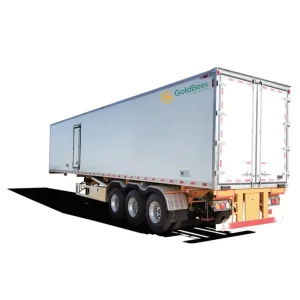
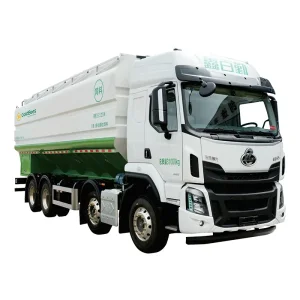



Consult with our lead engineering team to draft custom axle configurations, thermodynamic modeling, and formal commercial quotations tailored for Irish road registration.
Send Inquiry Now