Specialized high-capacity logistics units and processing equipment customized to align with Polish transport regulations, thermal winter thresholds, and rigorous veterinary sanitation protocols.
Poland represents the largest poultry meat producer in the European Union and serves as a primary agro-processing powerhouse for Central and Eastern Europe (CEE). Modernizing its production ecosystem demands cutting-edge feed processing efficiency and biosecure logistics.
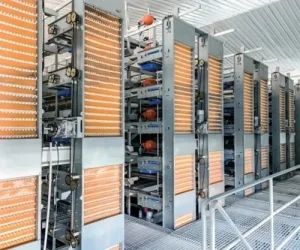
With an annual poultry harvest exceeding 3 million metric tons, Poland exports more than 50% of its total output to Germany, the Netherlands, and France. To maintain competitive advantage against rising grain, labor, and energy tariffs, Polish poultry complexes in Wielkopolskie and Mazowieckie require fully automated, closed-loop climate barns, gentle bird-handling systems, and automated feed distribution lines with reduced operational downtime.
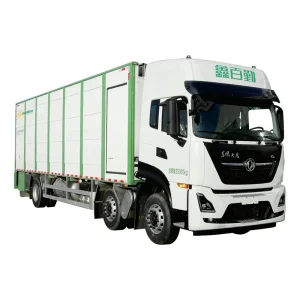
The Polish swine sector is undergoing significant consolidation toward integrated mega-farms. Mitigating African Swine Fever (ASF) and complying with stringent EU transport welfare mandates requires sealed vehicle structures, multi-level hydraulically balanced decks, internal drinking systems, and air-filtration suites capable of enduring frequent, aggressive thermal and chemical decontamination washouts.
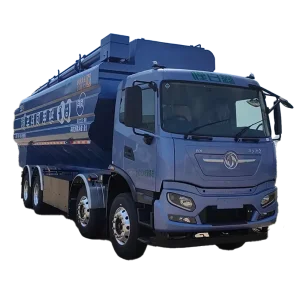
Feed millers in Poland process over 11 million tons of compound feed each year. Rising electricity rates emphasize the shift toward high-efficiency dual-rotor hammer mills, intelligent conditioning systems with real-time moisture retention, and electric auger transport trucks that draw farm utility power instead of consuming diesel during farm unloading, slashing operational costs.
From mill processing lines to biosecure transit fleets, our systems are engineered to withstand European winter climates, eliminate cross-contamination, and maximize the return per kilogram of feed and meat produced.
Polish winters routinely challenge machinery with sub-zero freezing and salt exposure. GoldBees vehicles feature cold-weather preheating for hydraulic lines, synthetic low-pour-point oils, insulated body walls, and anti-corrosive electrophoretic chassis priming to guarantee uninterrupted operations from November through March.
Real-time cabin and compartment sensors track carbon dioxide, ammonia, internal temperature, and humidity during transit. Data logs connect directly to Polish integrator ERPs, providing veterinary authorities with verified proof of adherence to Council Regulation (EC) No 1/2005 animal transport welfare mandates.
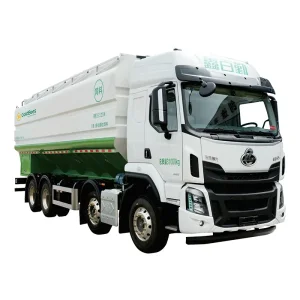
Compound feed mills in Poland face strict particulate emission standards under local environmental regulations. Our bulk feed carriers utilize balanced augers and sound-insulated roots blowers that achieve up to 1.5 tons/min unloading with negligible pellet breakdown and minimal airborne dust release.
Discuss your regional chassis preferences (MAN, Scania, Volvo, DAF), volume targets, and biosecurity specifications directly with CP M&E and GoldBees engineering consultants.
From sustainable electric transit solutions to automated processing machinery, explore the complete equipment suite available for export and deployment across Poland.
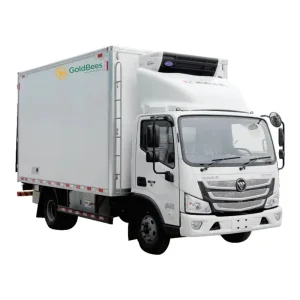
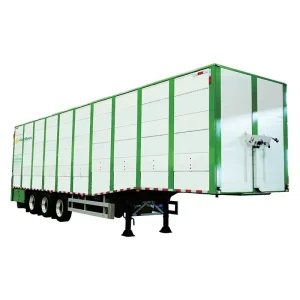
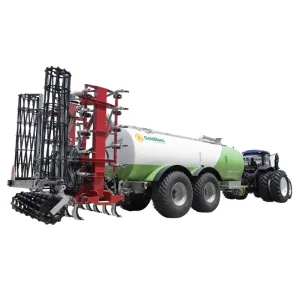
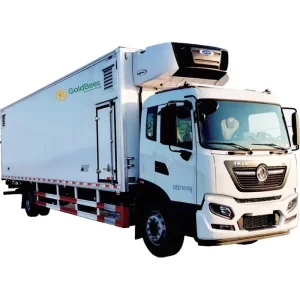
Key information regarding European homologation, custom chassis compatibility, Polish winter durability, and factory-direct technical backing.
Yes. Our vehicle upper-structures (superstructures) and semi-trailers are engineered to interface seamlessly with primary European heavy commercial chassis models commonly utilized across Poland, including Scania, Volvo, MAN, Mercedes-Benz, and DAF. We deliver either fully assembled vehicles or custom semi-trailers and kit superstructures ready for chassis mounting through certified local bodybuilder partners.
Our livestock and day-old chick transport vehicles are manufactured strictly according to Council Regulation (EC) No 1/2005. They incorporate automated temperature regulation, active ventilation with continuous CFM monitoring, drinking nipples with heated water reservoir circuits to prevent winter freezing, GPS tracking with integrated microclimate logging, and non-slip hydraulic lifting decks designed to prevent animal stress and transit injuries.
We deploy cold-weather defense packages including closed-cell polyurethane foam insulation barriers, heated hydraulic tanks, heat-traced water lines, insulated tank discharge cones, and low-temperature electrical harnesses protected inside IP69K-rated sealed conduits. This configuration preserves pellet flowability, avoids feed caking, and prevents mechanical jamming during cold winter cycles.
Custom vehicle fabrications and feed mill equipment suites undergo an average 30 to 45 day production cycle at our specialized Cixi manufacturing campus. Shipping is managed via direct ocean freight to the Port of Gdańsk or Gdynia, or alternatively via the trans-Eurasian rail corridor terminating in Małaszewice for accelerated time-sensitive project installations.
Working within CP M&E (Charoen Pokphand Group electromechanical division), we back our machinery with global warranty coverage. Key electrical, hydraulic, and sensor components are sourced from globally recognized brands with EU distribution channels, backed by rapid dispatch of replacement modules directly to Polish facilities to maximize fleet uptime.
Connect with our international engineering team today to receive detailed technical datasheets, CAD dimensional diagrams, and a factory-direct commercial proposal tailored to your facility requirements.
