Direct factory supply of integrated feed manufacturing lines, precision electric/hydraulic auger transporters, and SPF biosecurity livestock logistics equipment certified for European highway standards.

Heavy-duty hammer mills, multi-stage conditioners, and computer-controlled batching lines for high-efficiency commercial feed production in Berlin-Brandenburg.
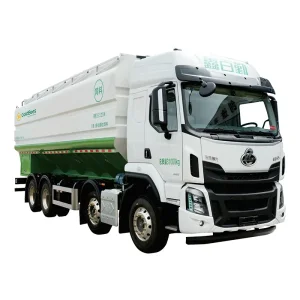
Zero-breakage screw conveyor discharge trucks with isolated multibin chambers, engineered to deliver compound feed into regional tall farm silos cleanly.

Constant negative/positive pressure filtered ventilation, onboard drinking nipples, and insulated aluminum body ensuring zero heat-stress swine transit.
Veterinary-level hydraulic lifting decks, integrated high-pressure spray misting, and complete thermo-fogging washdown disinfection compatibility.
The Federal State of Berlin, while predominantly an administrative, financial, and consumer powerhouse, functions as the logistical epicenter and demand anchor for the broader Brandenburg agrarian territory. Surrounding Berlin lies one of Germany's most expansive agricultural landmasses, encompassing more than 1.3 million hectares of utilized agricultural area (UAA). This regional ecosystem is characterized by large-scale enterprise structures—historically consolidated cooperatives and modernized agricultural joint-stock companies (Agrargenossenschaften)—that operate at scales far exceeding the small-plot family farmsteads typical of southern Germany.
Livestock and poultry production in this eastern German territory faces an unprecedented operational dichotomy. On one flank, metropolitan consumer demand in Berlin relentlessly pushes for the highest tier of the national *Haltungsform* labeling scheme (Tierwohl-Audit standard), requiring verified animal welfare, antibiotic minimization, and radical reductions in transit mortalities. On the opposing flank, agro-industrialists must comply with rigorous European and federal environmental mandates, notably the *TA-Luft* (Technical Instructions on Air Quality Control), strict nitrogen surplus limits outlined in the revised *Düngeverordnung* (German Fertilizer Ordinance), and stringent European Union animal transport regulations (EC No 1/2005).
Simultaneously, the proximity of Brandenburg to the Polish border has rendered biosecurity against African Swine Fever (ASF) and Highly Pathogenic Avian Influenza (HPAI) an existential imperative. Feed milling facilities supplying livestock operators within the Berlin distribution ring can no longer rely on unsealed, archaic batching plants or conventional open-hopper delivery trucks. Modern procurement directors require hermetically sealed, positive-pressure automated housing equipment, continuous inline micro-ingredient dosing systems, and cleanroom-standard livestock transport vehicles engineered to withstand aggressive hot-water thermal washdowns and caustic chemical disinfection without structural or electrical degradation.
Brandenburg's high-risk vector zones demand zero-cross-contamination logistics. Equipment must integrate automated chassis wash barriers, sealed multi-stage feed compartments, and HEPA-grade air filtration arrays.
Industrial feed mills must eliminate localized dust emissions and comply with stringent VDI guidelines. Our low-kWh hammer mills and electric auxiliary PTO bulk augers dramatically lower overall operational carbon footprints.
Unlike fragmented regional farming, the Berlin periphery features mega-farms managing herds exceeding 5,000 sows or 200,000 broilers. Scalability, automated telemetry, and robust TCO reduction govern procurement decisions.
Evaluating the convergence of automated sensory networks, aerodynamic low-tare metallurgy, and computerized conditioning systems across European livestock clusters.
Modern compound animal nutrition requires exceptional uniformity to optimize Feed Conversion Ratios (FCR). In broiler and nursery pig formulations, micro-ingredient segregation and pellet degradation represent unacceptable yield losses. Current industry developments center around multi-differential double-shaft paddle mixers achieving variation coefficients (CV) ≤ 2.5%, paired with long-retention conditioners where high-pressure steam infusion guarantees salmonella and pathogen eradication without denaturing essential synthetic amino acids or sensitive enzymatic additives.
Furthermore, continuous vacuum liquid coating allows for the application of post-pellet fats, digestive enzymes, and probiotics directly into the microscopic core of cooled pellets. This eliminates heat-induced nutrient breakdown during pellet extrusion, directly matching the rigorous nutritional and environmental feeding guidelines enforced across German livestock complexes.
The global supply chain is transitioning rapidly from heavy, corrosion-susceptible structural carbon steels to aerospace-grade 6061 and 5083 aluminum alloys in animal husbandry logistics. For bulk feed transport tankers serving the Berlin peri-urban region, tare weight reduction is the single most effective lever to maximize net payload within the German legal gross vehicle weight (GVW) ceiling of 40 metric tons.
For live animal transport, the paradigm shift incorporates full-climate telemetry. Transporters are built with autonomous climate control modules capable of maintaining a stable internal thermal band (+18°C to +24°C) regardless of external sub-zero Central European winters or blistering +38°C summer heatwaves. Integrated carbon dioxide (CO2) sensors, ammonia (NH3) monitors, and automatic ceiling water nebulizers ensure compliance with the most stringent interpretations of animal transport audits.
| System Parameter | Conventional Market Benchmark | GoldBees / CP M&E Next-Gen Standard | Operational Impact for Berlin Integrators |
|---|---|---|---|
| Feed Pellet Breakage Rate | 1.8% – 3.5% (screw auger) | ≤ 0.5% (hydraulic soft-touch auger / low-pressure pneumatic) | Minimizes fines; preserves nutritional intake and silo flowability. |
| Body Tare Weight (3-Axle Semi-Trailer) | 8,200 – 9,000 kg | 6,800 – 7,100 kg (high-yield structural aluminum) | Increases net payload by up to 1.4 metric tons per haul; reduces fuel burn. |
| Mixer Homogeneity (CV) | CV ≤ 5.0% within 180 sec | CV ≤ 2.5% within 90 sec (double-shaft paddle) | Precise micro-dosing of vitamins/enzymes without hot spots. |
| Livestock Transit Climate Integrity | Passive open-slat natural airflow | Closed-loop positive pressure, HEPA filtered with multi-zone HVAC | Eliminates airborne disease vectors; zero transit heat stress. |
Rigorous engineering metrics governing how multi-site agribusinesses, feed milling syndicates, and processing integrators evaluate equipment acquisitions.
Enterprise procurement within the modern livestock equipment and bulk logistics sector has fundamentally detached from simplistic initial capital expenditure (CapEx) metrics. Tier-1 integrators operating in Germany and across international markets perform exhaustive 8-to-12-year Total Cost of Ownership (TCO) lifecycle assessments. The primary financial drains in animal husbandry machinery are not the acquisition price tags, but rather localized downtime, energy consumption per metric ton of milled feed, recurring wear-part maintenance costs, and biological losses resulting from biosecurity breaches or animal transit stress.
When assessing feed manufacturing facilities, the decisive metric is specific power consumption (kWh per metric ton). Through computational fluid dynamics (CFD) optimized grinding chambers, dynamically balanced rotors, and high-wear tungsten carbide tipped beaters, our processing systems reduce specific energy draw during pre-grinding by up to 18% compared to traditional European mill installations. In an era where European industrial electricity tariffs fluctuate dramatically, this reduction compounds into tens of thousands of Euros saved per production line annually.
Bulk feed transport units equipped with independent electric-drive auxiliary power units (APU) eliminate the necessity of running the prime mover truck engine during silo unloading, cutting localized diesel consumption and noise emissions by over 60%.
Livestock chassis harnesses, hydraulic fittings, and valve bodies utilize IP69K marine-grade sealed connectors. Resistance to caustic alkaline detergents, acidic foam disinfectants, and high-pressure steam ensures 12+ years of chassis life.
Standard integrated CAN-bus J1939 telematics broadcast hydraulic pressures, temperature differentials, motor vibration signatures, and deck lift cycles in real time to farm fleet managers, enabling predictive intervention prior to failure.
CP M&E and GoldBees deliver unified turnkey EPC (Engineering, Procurement, Construction) infrastructure, harmonizing the entire chain of feed formulation, bulk handling, and animal transit.
Comprehensive EPC engineering encompassing raw material intake pits, magnetic pre-cleaning drums, hammer mill grinding lines with automated screen exchange, high-speed multi-ribbon micro-ingredient blenders, steam conditioner vessels, pellet presses with automatic roll gap adjustment, counterflow coolers, and intelligent finished product batching bins.
High-volume bulk feed transportation trucks, chassis-mounted bodies, and tri-axle semi-trailers configured with soft-flight variable speed discharge augers or oil-free rotary lobe blowers. Engineered to discharge pelleted or extruded feeds at up to 60 metric tons per hour into towering silos exceeding 14 meters in height with near-zero breakage.
Multi-deck swine, day-old chick, layer, and broiler transport superstructures built with independent hydraulic lifting floors. Fully enclosed biological barriers feature forced-draft ventilation, heating, water cooling, fecal retention tanks, and autonomous electronic monitoring guaranteeing total animal welfare compliance across European roadways.
Direct alignment with European standards ensures rapid vehicle homologation, operator occupational safety, and absolute environmental validation.
Deploying specialized agricultural logistics vehicles and static milling plants within Berlin and the German market requires strict adherence to European Machinery Directive 2006/42/EC, low voltage directive 2014/35/EU, and electromagnetic compatibility directive 2014/30/EU. All GoldBees chassis adaptations, hydraulic lifting mechanisms, and pressurized bulk discharge vessels are accompanied by verified CE declarations of conformity and full technical construction files.
For mobile rolling stock, bodies and trailers are pre-engineered to interface with leading European commercial prime movers (Mercedes-Benz Actros, MAN TGX, Scania, Volvo) in full alignment with the German *Straßenverkehrs-Zulassungs-Ordnung* (StVZO). This includes standard 24V ISO lighting, WABCO/Knorr-Bremse electronic braking systems (EBS), anti-lock systems (ABS), and lane safety compliance.
Our livestock carrier bodies comply directly with the *Tierschutz-Nutztierhaltungsverordnung* (TierSchNutztV) and Council Regulation (EC) No 1/2005 on the protection of animals during transport. Internal head clearances, non-slip profile-ribbed flooring, smooth crevice-free internal welded joins, and mechanical continuous ventilation meet the German veterinary standards required for long-distance animal carriage (>8 hours).
On the feed mill side, dust collection filters, aspiration hoods, and explosion-relief venting conform strictly to ATEX Directive 2014/34/EU (equipment intended for use in potentially explosive atmospheres), while structural frameworks are engineered to Eurocode 3 (EN 1993) steel construction parameters.
Pioneering sustainable agricultural supply chains that integrate alternative drivetrains, autonomous harvesting robotics, and IoT farm-to-cloud interfaces.
Expanding our battery-electric (BEV) and fuel-cell electric (FCEV) commercial transport configurations. Utilizing heavy-duty LFP battery packs to power both highway propulsion and high-load hydraulic/pneumatic auger silo unloading systems without diesel emissions inside Berlin's metropolitan clean air zones.
Deploying end-to-end telemetry architectures that mirror feed mill operating states in real time. Dynamic algorithms forecast screen wear, optimize hammer mill rotational speeds based on incoming cereal grain moisture, and automatically modulate conditioner steam ratios to maximize starch gelatinization.
Refining gentle automated broiler harvesters, robotic litter management vehicles, and computerized produce sorting vehicles. Eliminating manual catching trauma, reducing bird stress indices, and dramatically minimizing labor bottlenecks for poultry producers across Central Europe.
Explore our specialized portfolio of bulk feed semi-trailers, precision fertilizer application vehicles, multi-temperature cold chain trailers, and welfare-certified poultry transporters.

Multi-deck high-capacity aluminum semi-trailer featuring individual pen dividers, water bowls, and full hydraulic tailgate elevators for rapid loading.

Precision flow control, near-ground trailing shoe distribution, and ISOBUS telemetry preventing ammonia volatilization in accordance with German Düngeverordnung.
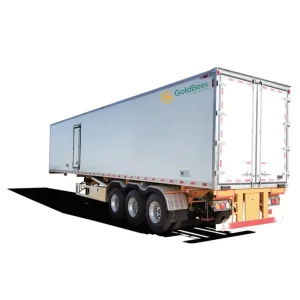
High-thermal-efficiency polyurethane insulated sandwich panels with multi-temperature zone partition walls for fresh meat, egg, and dairy delivery.

Low-pressure, high-velocity pneumatic fluidization conveying system ensuring zero mechanical attrition of fragile feed pellets during tall silo discharge.

100% zero-tailpipe-emission feed logistics platform engineered for metropolitan clean air zones, offering quiet residential night delivery and instant torque.
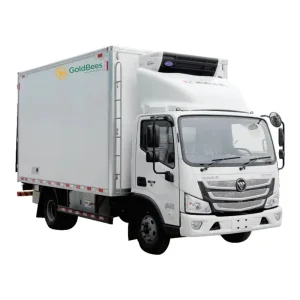
On-the-go grading, atmospheric climate buffering, and dynamic payload stabilization built for perishable agricultural commodities supplying Berlin.

Precision laminar air distribution, auxiliary diesel generator backup, and active CO2 air scrubbing eliminating chick mortalities from hatchery to farm shed.
Triple-deck anti-slip self-cleaning aluminum deck carrier with integrated drinking lines, temperature mapping, and GPS-linked veterinary logging.
Direct engineering clarity regarding road approvals, feed mill commissioning timelines, biosecurity protocols, and aftermarket technical support.
Pellet degradation typically occurs due to high-shear mechanical friction in undersized augers or excessive pneumatic impingement velocities. GoldBees electric/hydraulic auger systems employ enlarged flight diameters rotating at continuous low RPM, regulated by proportional load-sensing hydraulic valves. This ensures pellets are gently carried rather than compressed. For our pneumatic discharge tankers, we integrate low-pressure, high-air-volume rotary lobe blowers paired with smooth-radius stainless steel transition bends, limiting particle velocity below critical shattering thresholds while achieving discharge rates of up to 60 tons per hour at discharge heights exceeding 14 meters.
Our livestock carriers and feed transport superstructures are constructed without blind spots, open seams, or exposed raw wiring harnesses. Bodies are built with seamless continuous TIG welding on all internal aluminum decks, paired with IP69K sealed electrical distributions. During farm entry/exit, the vehicles interface with automated tire and undercarriage spray barriers. The enclosed livestock superstructures feature positive-pressure fresh air intakes passed through HEPA and electrostatic pre-filters, while onboard automated thermo-foggers disinfect internal air chambers between loading cycles.
Yes. Our engineering department designs subframes and auxiliary interfaces in strict accordance with the bodybuilder guidelines (Aufbaurichtlinien) of all major European truck OEMs, including Daimler Truck (Mercedes-Benz), MAN Truck & Bus, Scania, Volvo, and DAF. We deliver either fully assembled vehicles built upon factory-ordered European chassis or complete CKD/SKD superstructure kits ready for installation by regional vehicle bodybuilders in Germany.
Standard turnkey feed milling installations (ranging from 10 to 60 tons per hour) feature an engineering-to-delivery timeframe of 12 to 18 weeks, followed by on-site mechanical erection, electrical wiring to DIN/VDE standards, and PLC automated integration over 6 to 10 weeks. Our team oversees cold commissioning, dry batch testing, and live pelleting calibration under real operational conditions until target capacity and coefficient of variation (CV ≤ 2.5%) are verified.
Through our dedicated Global Service infrastructure, critical mechanical components (pellet die rings, press rollers, hammer beaters, hydraulic pumps, pneumatic solenoid valves, and electronic control relays) are stocked in regional European transit hubs for 24-to-48-hour emergency dispatch. Furthermore, all static and mobile systems feature remote diagnostic gateways, allowing our factory automation engineers to troubleshoot PLC software, telemetry alarms, and sensor states via secure cloud connections.
Consult with our lead engineering specialists today for technical feasibility studies, custom chassis CAD drawings, and comprehensive turnkey procurement proposals tailored for Berlin and European operations.
