Engineered to operate reliably across the Absheron Peninsula, Ganja-Dashkasan, and the Karabakh agricultural recovery zones under severe continental conditions.




Evaluating national agricultural self-sufficiency mandates, climate adaptations, and modernization drives across the Republic of Azerbaijan.
Azerbaijan encompasses 9 of the world's 11 climate zones, presenting sharp environmental variances ranging from the arid, saline, wind-swept steppes of the Absheron Peninsula and the central Kur-Araz Lowland (Aran economic region) to the semi-alpine foothills of Ganja-Dashkasan and the liberated Karabakh and East Zangezur economic zones. Deploying generic European or uncalibrated livestock equipment into these conditions frequently results in premature mechanical failure, structural corrosion from marine Caspian salt mists, and severe seasonal thermal stress.
During the scorching summer months in the central plains, ambient temperatures regularly surpass +42°C, accompanied by dry, abrasive dust storms. Conversely, winter temperatures in the foothills drop below -15°C with heavy icing. Modern poultry and livestock farming facilities engineered for Azerbaijan require rigorous environmental control algorithms, reinforced thermal barrier cladding, high-static-pressure tunnel ventilation fans, and evaporative cooling pads built from marine-grade, salt-resistant alloy frames. In the revitalized agricultural valleys of Aghdam, Fuzuli, and Jabrayil, high-efficiency feed milling infrastructure and intelligent automated feeding lines represent the technological foundation for new agro-industrial clusters designed to repopulate regional meat and egg production.
The geopolitical elevation of the Trans-Caspian International Transport Route (TITR or "Middle Corridor") has fundamentally revolutionized procurement mechanics for Azerbaijani agribusinesses. Moving heavy industrial machinery from China's coastal manufacturing hubs (such as Ningbo and Shanghai) across Kazakhstan through the Port of Aktau/Kuryk directly to the Port of Baku (Alat) now achieves dependable transit times of 14 to 18 days. This represents a 60% reduction compared to traditional maritime journeys via the Suez Canal and Black Sea ports, which remain subject to regional bottlenecks and unpredictable demurrage costs.
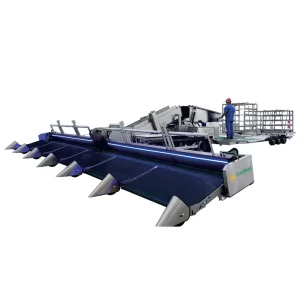
For large-scale EPC livestock and feed mill installations, transit velocity is vital to preventing site delays and minimizing capital tie-up. Standardized 40ft High-Cube containerization, break-bulk capabilities for specialized oversized auger transport trailers, and dedicated flat-rack secures for poultry harvesting units ensure that comprehensive production lines arrive on-site in Azerbaijan intact, pre-assembled, and ready for rapid installation under the supervision of localized field engineering teams.
Detailed technical analysis of modern automated livestock and feed mill systems designed to achieve minimum Feed Conversion Ratios (FCR) and strict veterinary biosecurity.
Equipped with computerized micro-dosing systems (accuracy ±0.1%), high-torque twin-screw extruders, and hygienic double-pass conditioners. Eliminates salmonella, improves starch gelatinization to >92%, and handles challenging Caspian wheat gluten formulations with zero pellet degradation.
Fabricated using continuous hot-dip zinc-aluminum alloy galvanized steel (275g/m²). Includes automated manure removal belts with deep drying tunnels, longitudinal negative-pressure variable frequency ventilation, and nipple drinking lines featuring zero-leak pressure regulators.
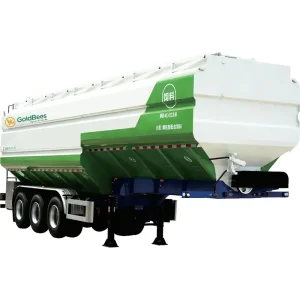
GoldBees specialized agricultural vehicles bridge the critical gap between mill and farm. Enclosed hydraulic/pneumatic feed bulk delivery, HEPA-filtered constant-climate day-old chick transporters, and self-sanitizing multi-deck livestock semi-trailers stop African Swine Fever (ASF) and Avian Influenza.
Modern intensive poultry production in regions such as Shamkir, Barda, or Salyan faces dramatic atmospheric swings. In winter, ventilation systems must introduce sufficient fresh oxygen while preventing chilly draft shocks that trigger respiratory epidemics. In summer, the heat load of 50,000 birds inside a single 120-meter shed requires massive air movement exceeding 2.5 m/s across the birds' bodies to produce effective wind-chill cooling.
Our CP M&E intelligent environmental controllers utilize integrated algorithms that harmonize variable-speed ceiling intake dampers with tunnel fan banks and high-pressure atomizing misting lines. By incorporating real-time enthalpy sensors rather than simplistic temperature gauges, the automation system prevents excessive moisture accumulation during high-humidity Caspian summer days, maintaining optimal bird comfort and protecting feed conversion efficiency (FCR target < 1.48 for 42-day broilers).
A transparent breakdown of CAPEX efficiency, precision mechanical fabrication, and long-term lifecycle reliability.
For decades, agricultural development in the CIS region was constrained by the prohibitive capital expenditures associated with Western European equipment brands. In addition to high initial equipment costs, replacement parts incurred exorbitant air-freight tariffs and prolonged delivery windows. Today, premier Chinese specialized manufacturers operating within the CP M&E ecosystem deliver equipment built to identical or superior technical tolerances, utilizing world-class components (including Siemens PLCs, SEW-Eurodrive gearmotors, and Schneider electrical switchgear), while saving Azerbaijani investors between 35% and 50% in total delivered CAPEX.
Furthermore, Chinese engineering accommodates deep modular customization. While traditional suppliers demand that Azerbaijani farms construct buildings around inflexible standard catalogue dimensions, our engineering teams tailor feed augers, silo layouts, multi-tier poultry batteries, and livestock transport chassis directly to the client's pre-existing agricultural civil layouts, concrete pads, and municipal electrical grid constraints.
Complete product range supporting biosecure supply chains from feed manufacturing through commercial processing.



Expert answers addressing customs clearance, Middle Corridor transit, technical adaptation, and warranty support.
Partner with an established manufacturer offering direct EPC capabilities, CP M&E agricultural technology, and dedicated logistics support along the Middle Corridor.
