Engineered for heavy-duty bulk material movement and high-biosecurity transport across the Northern German transit corridors connecting the Port of Hamburg with regional breeding hubs.




The Free and Hanseatic City of Hamburg represents far more than Germany’s maritime gateway; it is the vital logistical axis for the massive livestock and compound feed production centers spanning Lower Saxony (Niedersachsen) and Schleswig-Holstein. With major grain and oilseed import facilities handling millions of tonnes annually along the Elbe River—such as the specialized terminals at Hansaport—the region requires ultra-reliable equipment to store, process, and convey agricultural commodities directly to high-density poultry and swine operations.
In this demanding ecosystem, farm operators and agricultural contractors face dual pressures: stringent German animal welfare mandates (including the updated Tierschutztransport-Verordnung - TierSchTrV and EU Regulation (EC) No 1/2005) alongside rigorous environmental emissions frameworks. Outdated vehicles and mechanical transport systems with high pellet degradation rates or biosecurity leakage are rapidly being retired in favor of smart, fully sealed, and aerodynamically optimized transport systems.
Our engineering division collaborates with global logistics partners and German testing authorities to ensure that all bulk feed trailers and live poultry transports are built to integrate seamlessly with European standard prime movers (MAN, Mercedes-Benz Actros, Scania, DAF, Volvo). Chassis designs, pneumatic braking systems with standard WABCO/Knorr-Bremse EBS, lighting packages compliant with ECE R48, and material selections adhere strictly to German TÜV inspection criteria and StVZO road homologation standards.
From deep-water bulk discharging at Hamburg Harbor to biosecure finishing farms in surrounding agricultural districts, our equipment executes mission-critical tasks where downtime translates into immediate commercial losses.
Imported soybean meal, amino acids, and grain fractions arriving at Hamburg’s multi-purpose river berths require immediate dispatch into regional compounding mills. Our high-capacity GoldBees Pneumatic & Auger Conveyor Semi-Trailers provide swift, low-noise unloading into tall storage silos, reducing dock waiting times and demurrage expenses.
Navigating the recurring biosecurity alerts surrounding African Swine Fever (ASF) and Avian Influenza requires impermeable transport barriers. Our Fully Enclosed Pig & Day-Old Chick Transporters feature automated positive-pressure air intake, integrated HEPA filtration, multi-tier automated climate adjustment, and internal waste containment sumps that prevent roadside biohazard dripping.
Severe agricultural labor shortages in Northern Germany have accelerated the adoption of automated harvesting. Operating across regional broiler facilities, the GoldBees Intelligent Chicken Harvester Machine captures up to 8,000 birds per hour with negligible bruising rates, moving directly onto specialized transport cassettes for rapid transit to regional slaughterhouses.
Worldwide animal agriculture is experiencing a structural pivot. Rising feed ingredient price volatility, escalating carbon border adjustment pressures, and stricter multi-species welfare accords have rendered traditional, low-tech farming equipment obsolete. In high-output markets across Europe, North America, Southeast Asia, and Latin America, commercial profitability directly correlates with Feed Conversion Ratio (FCR) efficiency and mortality suppression during transit.
Modern feed processing equipment must achieve precise micronutrient blending without thermal destruction of synthetic enzymes, probiotics, and heat-labile vitamins. Simultaneously, logistics vehicles are no longer mere "dump trucks with screws"; they are high-precision, isolated biological transfer chambers equipped with real-time telemetry, automated disinfection channels, and pneumatic self-cleaning sumps.
As the international supply chain demands end-to-end traceability, Xinbaiqin and CP M&E have responded by establishing smart manufacturing platforms that merge heavy structural durability with digital monitoring, positioning equipment fleets serving Hamburg and international corridors at the technical apex of modern agribusiness.
| Operational Metric | Conventional Industry Standard | GoldBees / CP M&E Next-Gen Standard |
|---|---|---|
| Feed Pellet Breakage | 1.50% - 3.20% per cycle | < 0.15% (Variable pitch screw design) |
| Transit Stress Mortality | 0.8% - 1.4% (extreme seasons) | < 0.05% (Closed microclimate HVAC) |
| Washout & Turnaround | 90 - 120 minutes manual | 35 minutes (Patented hygienic deck profiles) |
| Tare Weight Ratio | Heavy carbon steel designs | Aluminum Alloy Hybrid (up to +18% legal payload) |
| Telemetry & Biosecurity | Analog manual logs | IoT Cloud Logging (CO2, Temp, Door Airlocks) |
By pairing the massive industrial scaling power of our 66,667 m² specialized manufacturing campus with the agricultural domain heritage of CP M&E (Charoen Pokphand Group), we deliver unmatched economic and technological value to European operations.
Every vehicle body, pneumatic piping module, hydraulic lifting tower, and electronic control cabinet is manufactured internally in Cixi, Zhejiang. By eliminating fragmented sub-contracting layers, we guarantee strict metallurgical testing, full batch material traceability, and rapid engineering iterations based on project-specific European dimensional mandates.
Unlike purely commercial trailer builders, our prototypes undergo intensive operational stress tests across industrial mega-farms operated within the CP agricultural network. Vehicles face extreme temperature swings, corrosive chemical disinfectants, high-pressure wash cycles, and abrasive bulk feed loads before any commercial series enters global shipping routes.
By optimizing our global raw materials procurement and automated robotic welding cells, we provide complete specialized vehicle superstructures and full turnkey feed mill equipment packages at a 25% to 40% capital reduction compared to domestic Western European vehicle fabricators, without sacrificing component tier-one quality.
As European carbon reduction targets tighten through 2030, livestock logistics must evolve beyond diesel reliance. Our forward-looking engineering roadmap focuses on three technological pillars already entering trial production:
Developing fully electric commercial bulk feed transport trucks and battery-assisted electric Power Take-Off (e-PTO) systems. In suburban Hamburg and residential farming perimeters, our e-PTO units allow silent, zero-emission auger and pneumatic silo discharging directly on 380V/400V farm grid power or onboard high-capacity LFP battery packs.
Integrating multi-point environmental sensor arrays across all livestock and chick transport cabins. Data encompassing cabin temperature, air velocity, relative humidity, carbon dioxide (CO2), and ammonia (NH3) concentrations are uploaded in real time to the farm management ERP, triggering automated variable-frequency exhaust louvers and misting cooling systems.
Next-generation vehicle superstructures featuring built-in internal hot air recirculation ducting and steam sanitization manifolds. After unloading at German pig fattening facilities or poultry slaughterhouses, the cabin executes an automated 70°C thermal bake cycle for 30 minutes, actively neutralizing heat-resistant virus strains before departing the premises.
Procuring specialized machinery from overseas requires absolute certainty regarding customs clearance, technical approvals, and ongoing after-sales spare parts velocity. Xinbaiqin operates a dedicated International Logistics & Homologation Desk ensuring seamless execution for German and EU buyers:
Need specific CAD dimensional drawings for German chassis homologation or complete feed mill project blueprints?
Send Inquiry NowExplore our full lineup of specialized livestock trailers, temperature-managed poultry transporters, cold-chain distribution units, and automated field harvesting machines.

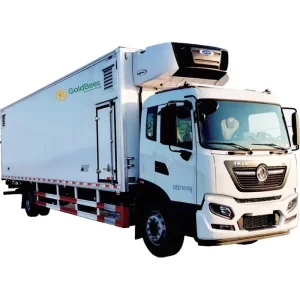


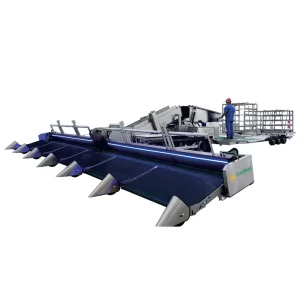
Detailed clarifications regarding road homologation, biosecurity validation, feed integrity protection, and shipping logistics.
Whether you are modernizing a bulk feed logistics fleet operating from the Port of Hamburg, upgrading a multi-deck swine transport fleet to meet strict TierSchTrV animal welfare rules, or planning a turnkey compound feed mill expansion across Northern Germany—our engineering team is ready to evaluate your specifications.
