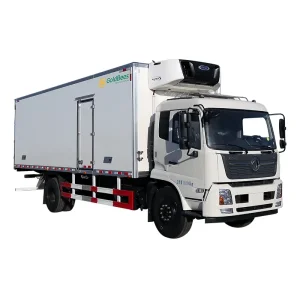
Precision AgTech & Biosecure Logistics

Poultry/Livestock Farming Equipment & Feed Mill Equipment Manufacturers & Companies in the Melbourne Market

Strategic engineering, specialized biosecure vehicles, and smart feed-milling ecosystems tailored for Victoria’s intensive livestock infrastructure and global commercial agribusiness.

High-Efficiency Logistics for Melbourne & Regional Corridors

Commercial livestock containment, clean auger feed discharge systems, and cold-chain equipment engineered to Victorian road safety and operational mandates.
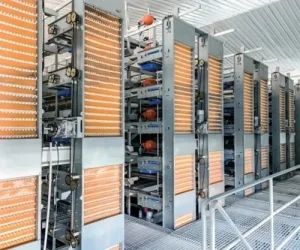
The Victorian Agribusiness Environment: Biosecurity, Scale & Port Demands

Melbourne functions as Australia’s logistical nexus, connecting Victorian protein production belts in Gippsland, the Goulburn Valley, and the Western District directly to international markets via the Port of Melbourne.

3.2M+
Annual TEU Port Volume (Melbourne)
<2.5%
Max Allowable Pellet Friability Rate
100%
Thermal & Carbon Enclosed Biosecurity
42t+
High-Payload GCM Road Compatibility

Stringent Biosecurity Protocols

Victoria's agricultural density requires intense biosecurity safeguards against cross-contamination vectors such as Avian Influenza (HPAI) and endemic enteric pathogens.

Fully sealed transport chassis and wash-down structural envelopes allow complete chemical disinfection without degrading wiring harnesses or sensitive hydraulic valves.

Long-Distance Corridor Durability

Moving feeds and livestock across the Hume Freeway, Princes Highway, and regional arterial corridors exposes equipment to extreme vibrational loads, heat waves, and corrugated unpaved roads.

Our structures utilize stress-relieved high-tensile steel and aerospace-grade aluminium alloys, preserving structural integrity under continuous Australian heavy-duty cycles.

Energy Transition & Sustainability

Victorian feed mill aggregators face escalating carbon compliance and diesel excise levies, accelerating the shift toward clean logistics infrastructure.

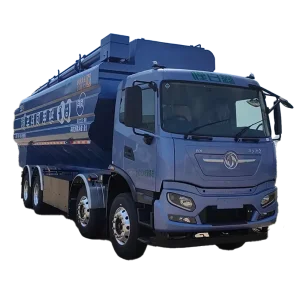
GoldBees has engineered zero-emission NEV electric bulk feed carriers and energy-optimized hydraulic augers, directly aligning with Australia's net-zero 2050 framework.

Global Technological Trends & Advanced Factory Engineering

Combining world-scale supply chain advantages, robotic manufacturing precision, and turnkey integration for livestock logistics and industrial milling.

Global Livestock & Milling Trends

The modernization of the global feed-to-food sector is driven by three main macro factors:

  • Automated Pellet Integrity Protection: High-performance pneumatic systems and variable-pitch screw conveyers reduce pellet degradation below 2%, preventing digestive issues in broilers and pigs.
  • Intelligent Climate-Controlled Transport: Day-old chicks and live animal haulage require real-time telemetry for CO2 levels, relative humidity, and negative-pressure ventilation to eliminate stress-induced mortality.
  • Modular Mill Architecture: Rapid commissioning of modular grain pre-cleaning, batch weighing, and micro-dosing feed systems reduces capital expenditure cycles by 35%.

The Chinese Manufacturing Efficiency Edge

Xinbaiqin Special Vehicle Co., Ltd. (operating within CP M&E) provides clear procurement advantages for international operators:

  • Full Supply-Chain Clustering: Structural extrusion, laser-welded pressure tanks, precision augers, and PLC telematics are designed and manufactured within our integrated 66,667 m² facility in Cixi, Zhejiang.
  • Strict Quality Control & Cost Control: We run automated robotic welding lines and multi-stage anti-corrosion cathodics, ensuring reliable quality at an optimal total cost of ownership.
  • Field-Validated R&D: Co-developed alongside Charoen Pokphand Group's extensive swine and broiler farms, our equipment is built on real farm operational feedback, not static catalog blueprints.

Victorian Applications & Enterprise Procurement Criteria

Aligning capital investments with specific on-farm handling dynamics, animal welfare requirements, and biosecure logistics.

Gippsland Broiler Operations

Victoria's Gippsland belt handles dense broiler populations requiring high biosecurity and rapid movement of day-old chicks and market-weight birds.

GoldBees Day-Old Chick Vehicles feature automated HEPA filtration and balanced micro-climates, keeping core temperatures stable regardless of extreme external weather.

Goulburn Valley Swine Corridors

Intensive pig producers require multi-deck transport trailers that maintain animal welfare, provide fresh air, and reduce stress during transit.

Patented Anti-Slip Easy-Clean Decks speed up washout cycles at receiving bays while minimizing limb injuries during loading and transit.

Commercial Feed Mills & Pastoral Silos

Milling operations supplying grain feed to dairy herds and poultry houses need fast, clean, and reliable discharge performance.

Electric & Hydraulic Dual-Drive Augers allow operators to plug directly into 415V farm shore-power, eliminating diesel noise and local emissions near livestock housing.

Request Detailed Technical Data & Export Quotations

Our engineering team can evaluate your specific route profiles, legal axle ratings, and silo loading configurations to provide a custom-engineered fleet proposal.

Send Inquiry Now

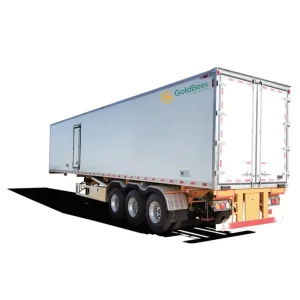
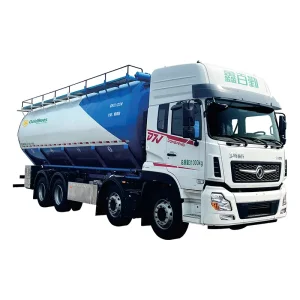
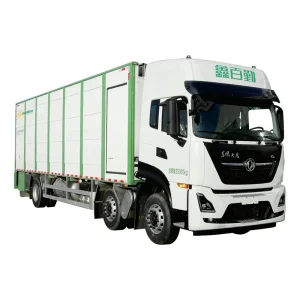
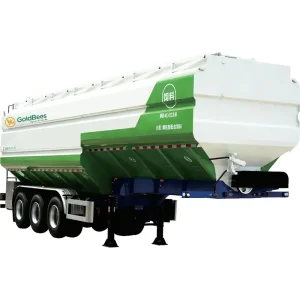
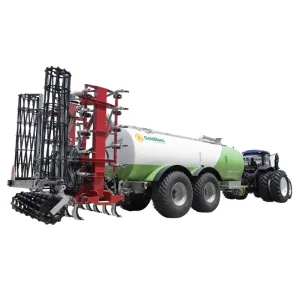
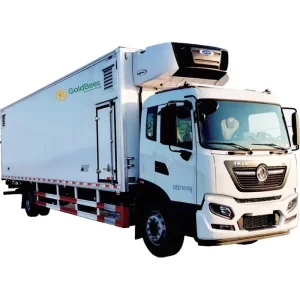
Precision Animal Husbandry & Bulk Handling Equipment Line-up

Robust, export-grade special vehicles and automated machinery built for enterprise integrators and commercial farming fleets worldwide.
Frequently Asked Questions by Commercial Agribusiness Purchasers

Clear, direct technical answers covering regulatory compliance, chassis compatibility, biosecure cleaning procedures, and global export shipping logistics.

Are GoldBees bulk feed trucks and trailers compliant with Australian Design Rules (ADR)?
Yes. Our specialized vehicle superstructures can be designed to match Australian Design Rules (ADR), including axle group spacings, emergency braking (EBS/ABS), underrun protection, lighting geometries, and Victorian Performance-Based Standards (PBS). We frequently build bodies for assembly on Australian-delivered European and Japanese cab-chassis platforms (such as Scania, Volvo, Isuzu, and UD), or export integrated semi-trailer assemblies designed specifically for Australian road and axle loading limits.
How do electric/hydraulic auger systems protect feed quality during high-volume discharge?
Our auger systems utilize continuous-flight, variable-pitch screw geometries paired with low-vibration electric motor drives. This ensures a consistent mass-flow discharge without high-shear pinch points. Pelleted feeds move steadily through the discharge tube, keeping pellet fracture and fines generation below 2%, well within optimal feed conversion ratio (FCR) requirements for modern commercial operations.
What measures protect onboard electrical harnesses and ECUs during high-pressure chemical washdowns?
All livestock and feed delivery superstructures feature IP67/IP69K-rated electrical enclosures and automotive-grade wiring harnesses protected by braided, chemical-resistant conduits. Critical junction boxes, sensors, and actuators are positioned away from direct washdown spray paths. Body surfaces are smooth, self-draining, and constructed without hidden pockets, ensuring thorough disinfection and fast drying between farm deliveries.
What shipping methods and lead times apply for delivery to the Port of Melbourne?
Completed vehicles, modular trailers, and feed mill components are shipped directly from Ningbo-Zhoushan or Shanghai ports via Roll-on/Roll-off (RoRo) or containerized flat-rack shipping directly to the Port of Melbourne. Manufacturing turnaround typically ranges from 45 to 60 days depending on custom engineering, with oceanic transit times taking roughly 14 to 20 days. Full export customs documentation, bills of lading, and fumigation certificates are handled in-house by our International Trade Division.
Connect with an Engineering Specialist